50mm Lenses
206 lenses in the catalogue, 1925 to 2026
50mm is the standard lens. The magnification is close to what your eye does, without the stretch of a wide angle or the compression of a telephoto, so what you saw is roughly what you get.
For decades this was the lens that came with the camera, and that history shows in the catalogue. There are more 50mm designs than any other focal length, they are usually the fastest lenses a maker builds, and they are often the sharpest.
What to expect
- The most neutral perspective available, close to how you saw the scene.
- The fastest apertures in the system, down to f/0.95.
- Usable for portraits, though you have to stand closer than you might want.
What is on this list
Every 50mm M and LTM lens I have records for: Leica Noctilux, Summilux and Summicron, Zeiss Planar and Sonnar, Voigtländer Nokton, Heliar and APO-LANTHAR, and the newer makers. Filter by aperture, minimum focus or weight, and sort by price.
Not sure which 50mm fits you? It depends on how you shoot. Answer a few questions in the lens finder or compare any two lenses side by side.
The cheapest 50mm M / LTM-mount lens right now is KMZ Jupiter-8 50mm f/2 at €53. Across 90 tracked 50mm lenses, prices run from €53 to €32,047 (median €653). See the live price index →
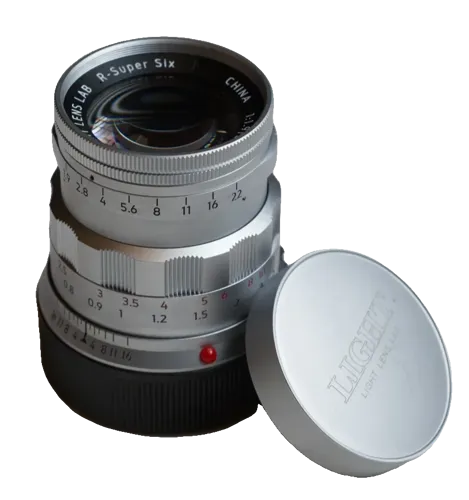
The Light Lens Lab 50mm f/1.9 "Rigid-ZS6" is a compact six-element M-mount rangefinder lens, a recent collector-oriented release from the Chinese maker.
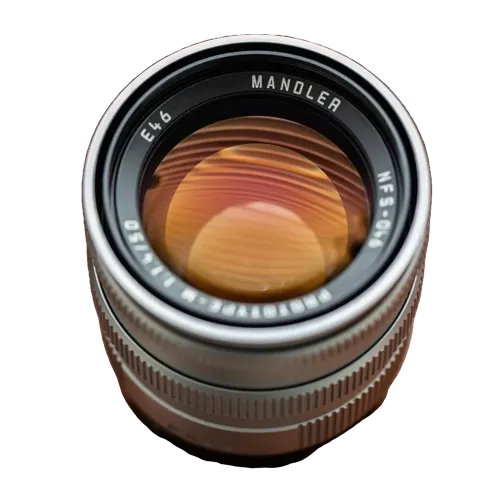
The Mandler 50mm f/1.4 E46 PRE-A is a modern Leica M lens inspired by the spherical Pre-ASPH Summilux, with 0.5m close focus and 12 blades.
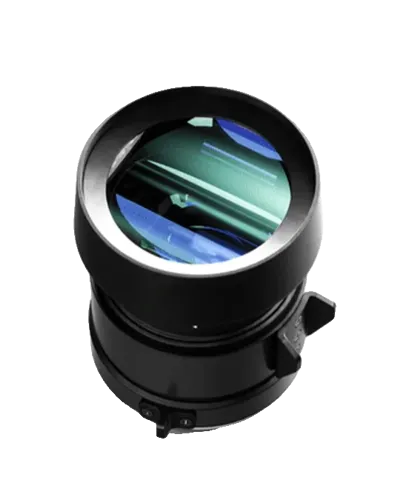
The Panomicron Bismuth 50mm f/2.8 is a rangefinder-coupled Leica M-mount anamorphic lens developed by independent Swiss designer Oscar Oweson. Its 7-element, 7-group optical system combines an Elcan-derived 50mm taking-lens concept with integrated cylindrical elements to produce an approximately 1.5x anamorphic image.
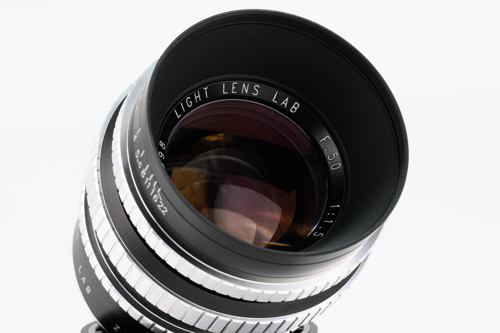
The Light Lens Lab 50mm f/1.5 "Z21" is a Leica M-mount homage to the 1950s Angenieux S21, a six-element character lens prized for its painterly, swirling rendering.
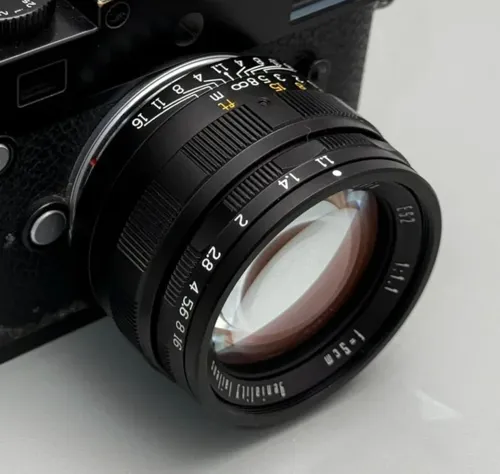
The Lailens 50mm f/1.1 is a fast manual-focus standard lens in Leica M mount, a recent uncoupled fifty for rangefinder bodies and mirrorless adapting.
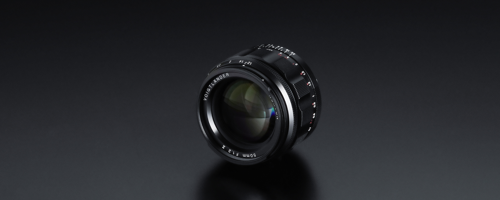
Voigtländer's Nokton 50mm f/1.2 ASPH. II VM is a compact, fast Leica M-mount standard lens from 2025, redesigned for both rangefinders and mirrorless adapting.
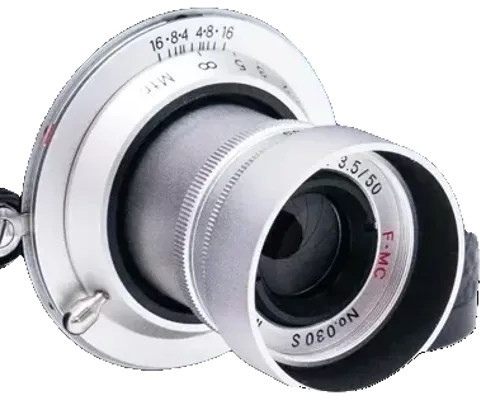
The MS-Optics LUMITAR 3.5/50 is a featherweight 50mm f/3.5 collapsible Leica M lens reviving Max Berek's ELMAX design for modern rangefinder collectors.
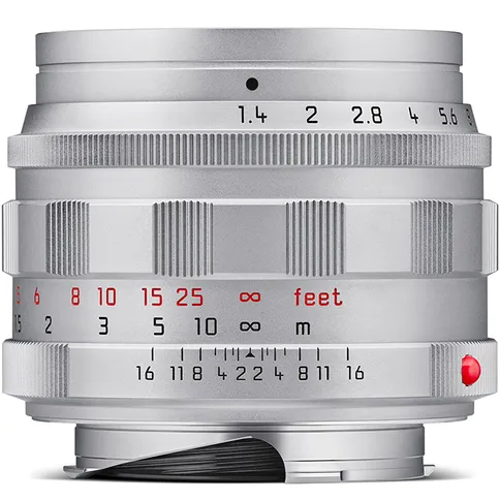
The Leica Summilux-M 50mm f/1.4 Classic is a 2025 reissue M-mount lens reviving the pre-ASPH 50mm Summilux character that collectors prize in brass.
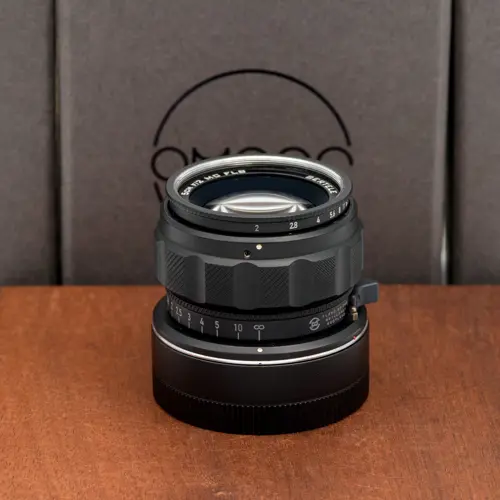
The Omnar Bertele 5cm f/2 MC FLB is a UK-built M-mount recreation of the 1934 Sonnar formula, prized by collectors for solving its classic focus shift.
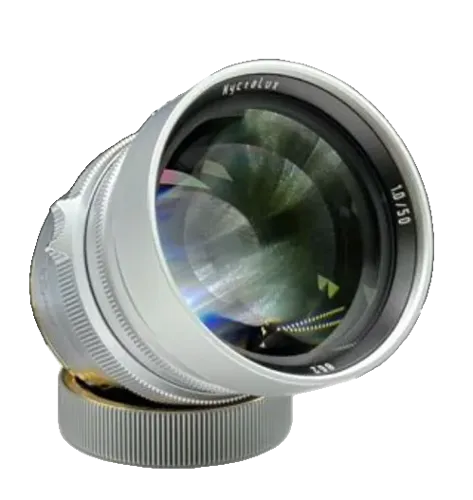
The DJ-Optical 50mm f/1.0 Noctis Lux is a modern, rangefinder-coupled Leica M lens with ten elements, 0.7m close focus and a 62mm filter thread.
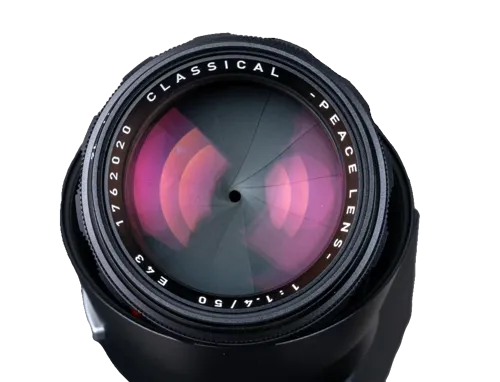
A modern 50mm f/1.4 rangefinder-coupled Leica M lens from Peace Lens Optics, with seven elements, 0.7m close focus and E43 filters.
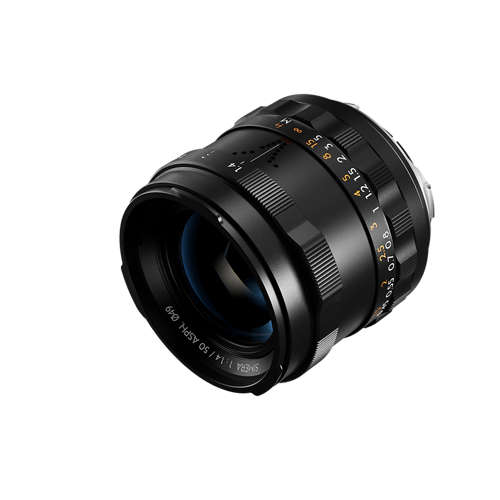
The Thypoch Simera 50mm f/1.4 is a fast manual normal lens for Leica M mount, notable for floating elements and a 0.45 m close-focus that undercuts rival fast fifties.
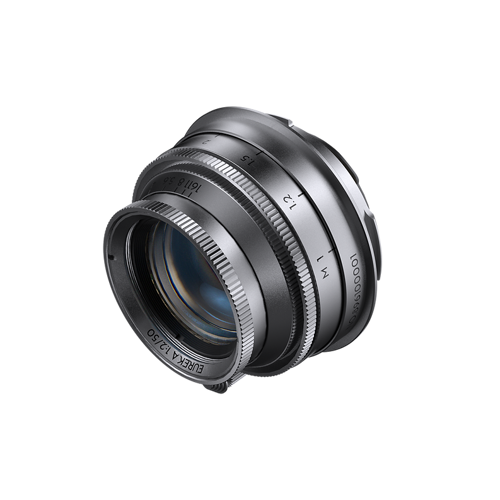
The Thypoch Eureka 50mm f/2 is a modern manual focus lens introduced in 2024, designed as a mechanical and aesthetic tribute to the classic collapsible lenses of the 1950s. Available in both lightweight aluminum and solid brass finishes, it incorporates a retractable barrel mechanism that reduces the lens profile for storage. Internally, it utilizes a modernized six-element optical formula with Extra-Low Dispersion glass, offering a balance between vintage rendering characteristics and modern contrast, while its 12-blade aperture ensures circular bokeh highlights at all settings.
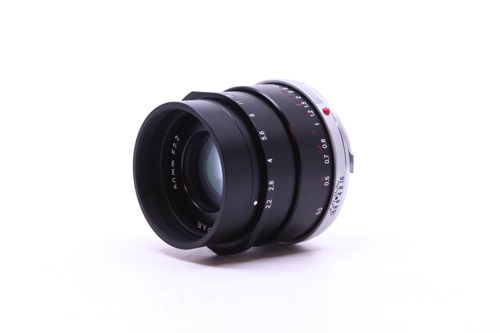
The Voigtländer Color-Skopar 50mm f/2.2 is an ultra-light aluminum M-mount rangefinder lens, a compact modern 50 that draws growing collector interest.
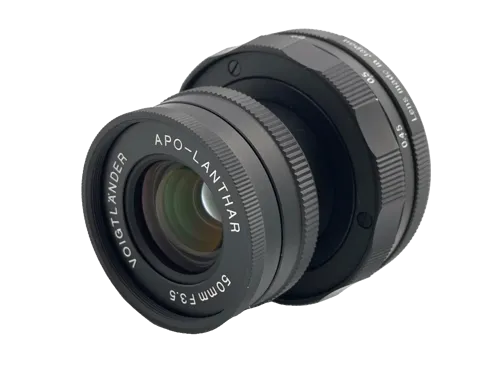
The Voigtländer APO-LANTHAR 50mm f/3.5 Type I is a compact apochromatic M-mount rangefinder lens that revives a classic name with modern corrected optics.</parameter> <parameter name="long_description">## Voigtländer APO-LANTHAR 50mm f/3.5 Type I The APO-LANTHAR 50mm f/3.5 Type I revives one of Voigtländer's most prestigious names in a compact, slow-aperture standard prime built by Cosina for the Leica M mount. Announced in July 2024, it pairs a deliberately classical exterior with a fully corrected modern optical design, and the "APO-LANTHAR" engraving signals an apochromatic formula intended to suppress chromatic aberration across the visible spectrum [1][4]. Although its profile recalls older collapsible normal lenses, the Type I is a rigid, non-collapsing barrel despite a styling that some observers compare to vintage designs [2]. Optically the lens uses eight elements in six groups, four of which are made of anomalous partial-dispersion glass, an arrangement Cosina describes as delivering uncompromising performance with very little distortion. The aperture relies on ten straight blades, which produce ten-pointed sunstars from roughly f/4 to f/16, a trait common to Cosina-made lenses. The Type I focuses to 0.45 m by means of a linear all-metal helicoid that extends past the 0.7 m point where rangefinder coupling ends, with a tactile click marking the transition from the coupled range to live-view focusing on capable bodies [3][6]. The lens is rangefinder coupled, takes a 34 mm filter, and its compatible optical design makes it adaptable to mirrorless cameras through an M adapter[5]. The "Type" designation refers to barrel design rather than optics: the Type I is the slimmer, more compact variant with a 34 mm filter thread, while the Type II adopts a more traditional, slightly larger barrel with a 39 mm filter thread and a closer 0.35 m minimum focus. Within the Type I family Voigtländer offers two finishes, a two-tone black paint and chrome version of heavier brass construction and a lighter matte black version using aluminium, which accounts for the difference between the heavier and lighter recorded weights. None of these versions is six-bit coded for Leica bodies. --- ## Optical qualities **Rendering** Reviewers position the lens as a refinement of the long-running Voigtländer 50mm f/3.5 Heliar, a design noted for high resolution and contrast, with the APO-LANTHAR said to build on those qualities while keeping a broadly similar rendering. The apochromatic correction is intended to remove longitudinal and lateral chromatic aberration, and Cosina states there is effectively no visible distortion. **Flare resistance** The simple optical layout and small front element give the lens strong resistance to flare, which reviewers rate among the best of Cosina's lenses. **Bokeh and transitions** The ten-blade diaphragm is intended to keep the aperture nearly circular for smoother out-of-focus rendering, in addition to producing its characteristic ten-point sunstars when stopped down. --- ## History **Development and Launch** Voigtländer unveiled the APO-LANTHAR 50mm f/3.5 in Type I and Type II forms in July 2024, with pre-orders opening in September 2024. The lens reuses the historic APO-LANTHAR name, which Cosina applies to designs intended to demonstrate the highest level of optical correction, and it follows the company's long-produced 50mm f/3.5 Heliar in the slow-normal segment of the M-mount lineup. **Special editions** To mark 25 years of Cosina Voigtländer production, the company released a 25th Anniversary Limited Edition of the Type I in late 2024, totalling 750 lenses split across navy, gray, and olive painted finishes, with 250 of each colour [7][8]. Each carries an individually engraved limited-edition number and a matching colour pouch, and includes a heavy knurled brass hood, a chrome-finished brass hood cap, and an all-metal brass rear cap; the limited run reportedly sold out quickly. **Collector Notes** Buyers should distinguish the Type I from the Type II, since the two share optics but differ in barrel size, filter thread (34 mm versus 39 mm), and minimum focus, and they should confirm which Type I finish they hold, as the brass two-tone and aluminium matte black versions differ substantially in weight. The standard catalogue colours are the matte black and the two-tone black and chrome (sometimes referred to as a panda finish), while navy, gray, and olive indicate the numbered anniversary editions. As with most current Cosina lenses, the standard versions ship with a dedicated metal hood and caps worth verifying as present and matching on the used market. --- ## Sources * [1] PRONEWS. *Voigtländer APO-LANTHAR 50mm F3.5 Type I/II VM Unveiled*. https://en.pronews.com/news/2024071614288155.html * [2] Leica Rumors. *Voigtländer APO-LANTHAR 50mm f/3.5 Type I / II VM lens review*. https://leicarumors.com/2024/09/23/voigtlander-apo-lanthar-50mm-f-3-5-type-i-ii-vm-lens-review.aspx/ * [3] Mainline Photographics. *Voigtländer 50mm f3.5 APO-LANTHAR VM Type I Black Paint & Chrome Lens*. https://mainlinephoto.com.au/voigtlander-50mm-f3-5-apo-lanthar-vm-type-i-black-paint-chrome-lens/ * [4] PetaPixel. *Voigtländer's New APO-Lanthar 50mm f/3.5 Lenses Promise Vintage Vibes*. https://petapixel.com/2024/07/12/voigtlanders-new-apo-lanthar-50mm-f-3-5-lenses-promise-vintage-vibes/ * [5] Leica Rumors. *The new Voigtländer APO-LANTHAR 50mm f/3.5 Type I / II VM lenses are now available for pre-order*. https://leicarumors.com/2024/09/17/the-new-voigtlander-apo-lanthar-50mm-f-3-5-type-i-ii-vm-lenses-are-now-available-for-pre-order.aspx/ * [6] CameraQuest. *Voigtländer 50mm f/3.5 APO-Lanthar Limited Navy*. https://shop.cameraquest.com/voigtlander-leica-mount-lenses/voigtlander-50mm-f/3.5-apo-lanthar-limited-navy/ * [7] Robert White. *Voigtländer 50mm f3.5 APO-LANTHAR VM Type I Limited Edition Olive Lens*. https://www.robertwhite.co.uk/voigtlander-50mm-f3-5-apo-lanthar-vm-type-i-limited-edition-olive-lens.html * [8] Rangefinder Forum. *Voigtländer APO-LANTHAR 50mm F3.5 VM Limited coming in December 2024*. https://rangefinderforum.com/threads/voigtlander-apo-lanthar-50mm-f3-5-vm-limited-coming-in-december-2024.4817230/
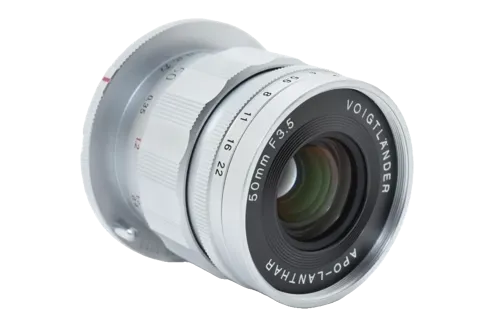
The Voigtländer APO-LANTHAR 50mm f/3.5 Type II is a compact apochromatic standard lens in Leica M mount, prized for near-perfect optics in a classic body.
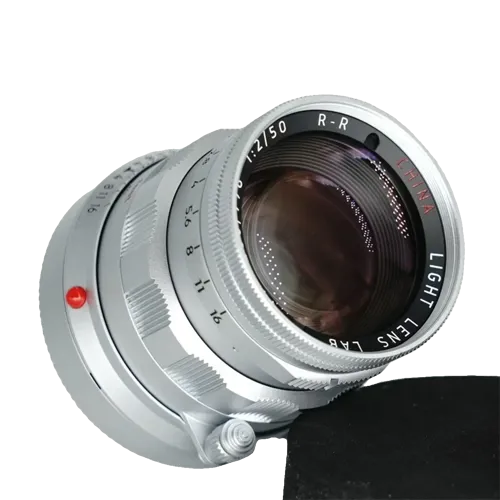
The Light Lens Lab 50mm f/2 "Rigid" is a chrome M-mount homage to Leica's 1950s rigid Summicron, prized by collectors for faithful build at a fraction of the cost.
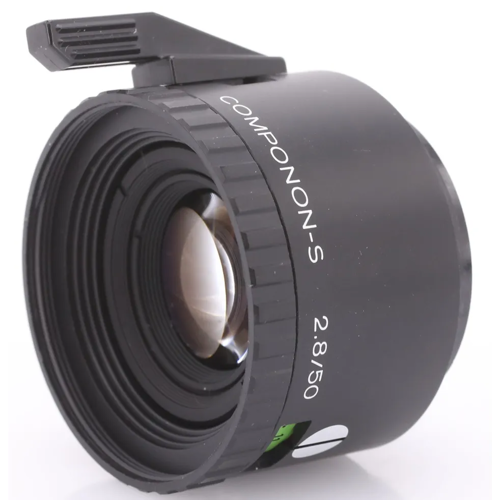
The Schneider-Kreuznach Componon-S 50mm f/2.8 is a six-element enlarging lens listed in Leica M mount, prized by macro shooters for high-magnification sharpness.
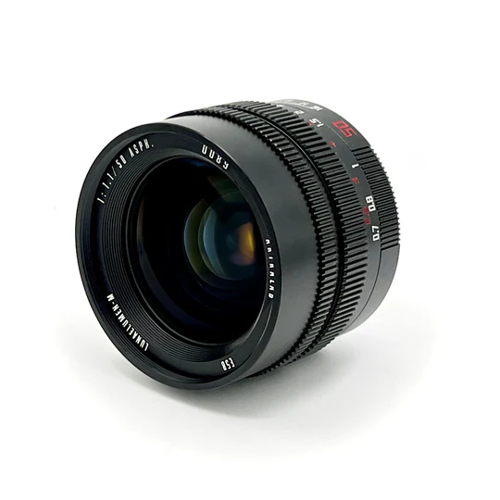
The Artralab 50mm f/1.1 Lunaelumen-M V3 is a fast manual M-mount prime, a low-cost large-aperture fifty drawing interest from Leica and mirrorless shooters.
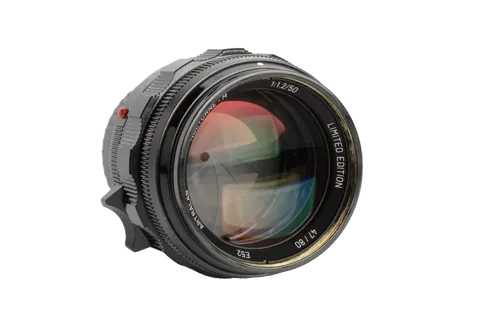
The Artra Lab 50mm f/1.2 Nocturne is a manual, non-coupled Leica M-mount fast fifty from Hong Kong, sold in numbered brass and silver chrome editions.
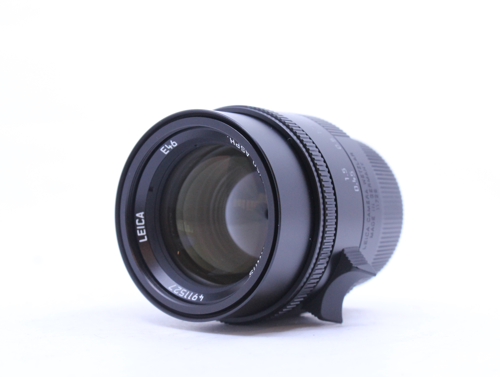
The Leica Summilux-M 50mm f/1.4 ASPH. II is a refreshed M-mount fast standard prime with close focus to 0.45 m and 11 aperture blades.
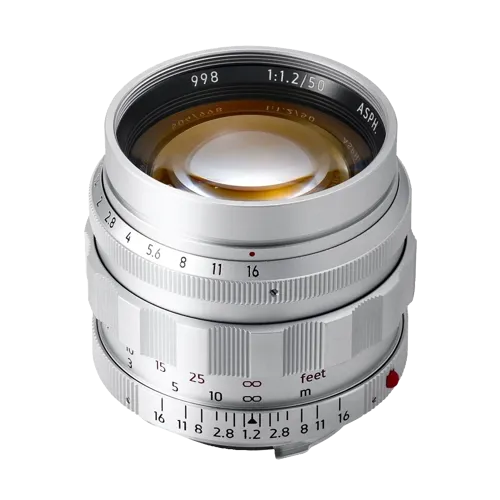
The Light Lens Lab 50mm f/1.2 ASPH. "1966" is an M-mount recreation of Leica's rare double-aspherical Noctilux, prized by collectors for faithful vintage rendering.
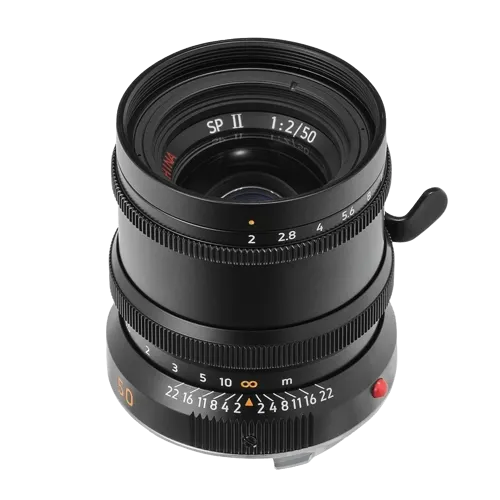
The Light Lens Lab 50mm f/2 "SP II" is an M-mount rangefinder lens that recreates the Cooke Speed Panchro cine look at a fraction of the original's cost.
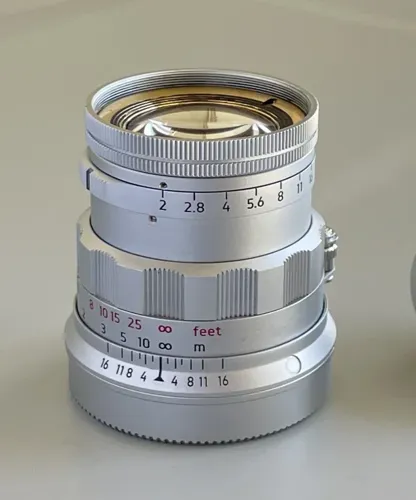
The Light Lens Lab 50mm f/2 "Rigid SP II" is a Leica M-mount lens reviving a Cooke Speed Panchro cine design in a classic Summicron Rigid body.
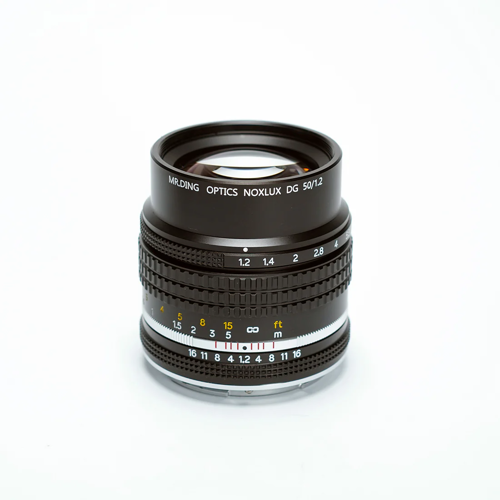
The Mr. Ding Noxlux DG 50mm f/1.1 is a fast double-Gauss 50mm M-mount lens from China, prized by collectors for creamy bokeh at a low price.
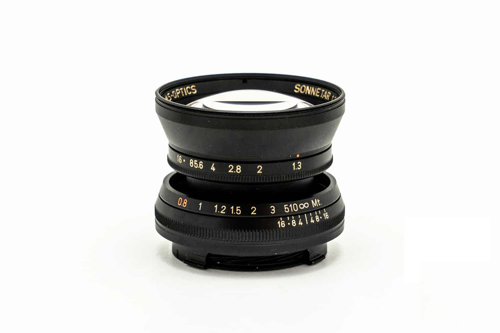
MS-Optics Sonnetar 50mm f/1.3 Slim, a compact Sonnar-type Leica M lens by Miyazaki, prized by collectors for vintage glow and tiny boutique build.
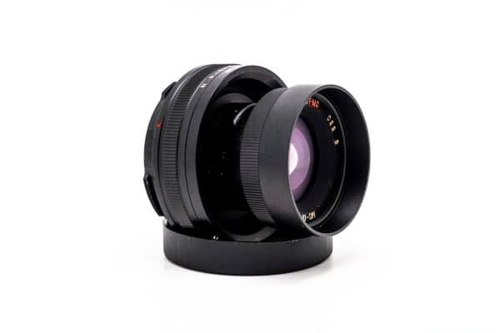
The MS-Optics Xenomax 50mm f/3.5 is a Leica M-mount standard lens by Miyazaki Sadayasu, a compact Xenotar-type prized by collectors of his work.
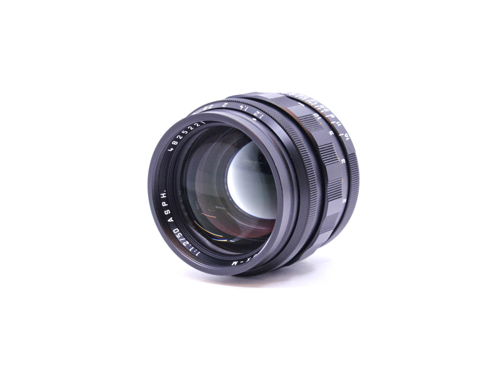
The Leica Noctilux-M 50mm f/1.2 ASPH is a faithful M-mount reissue of the 1966 f/1.2 Noctilux, prized by collectors for vintage rendering in a compact body.
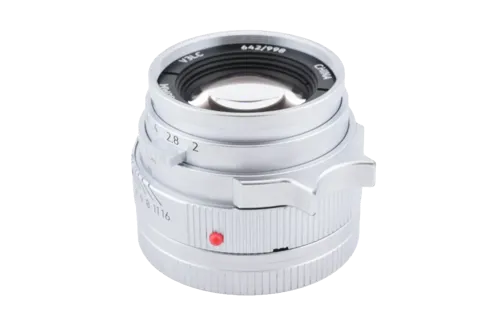
The Light Lens Lab 50mm f/2 ELCAN is an LTM-mount replica of Leica's rare military KE-7A lens, prized by collectors for its tiny size and distinct rendering.
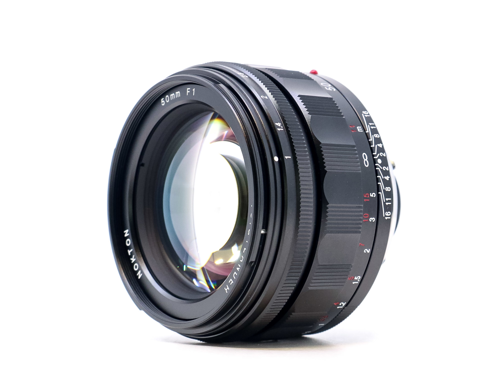
The Voigtländer Nokton 50mm f/1 Aspherical is Cosina's fastest full-frame M-mount lens, a rangefinder-coupled 50mm prime that rivals the Leica Noctilux.
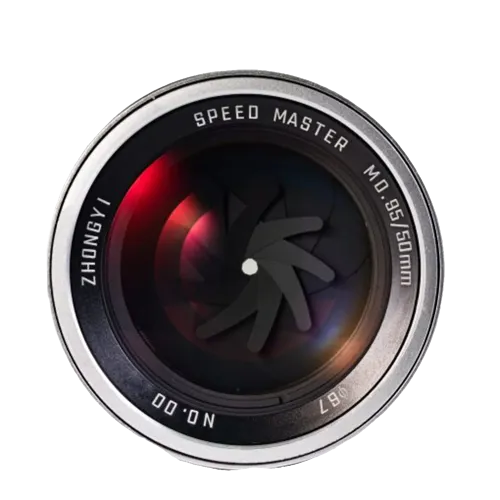
The Zhong Yi Mitakon Speedmaster 50mm f/0.95 is an affordable rangefinder-coupled ultra-fast normal lens for Leica M mount, a budget Noctilux alternative.
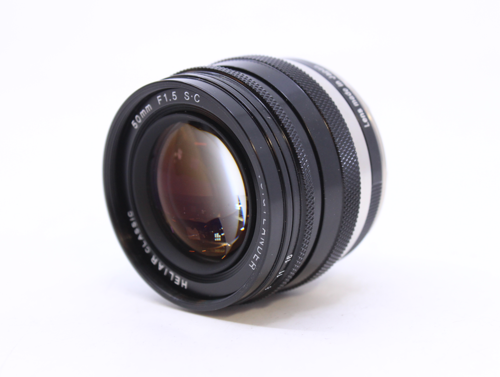
The Voigtländer Heliar Classic 50mm f/1.5 is an M-mount normal lens that revives the Heliar formula for a soft, vintage rendering wide open.
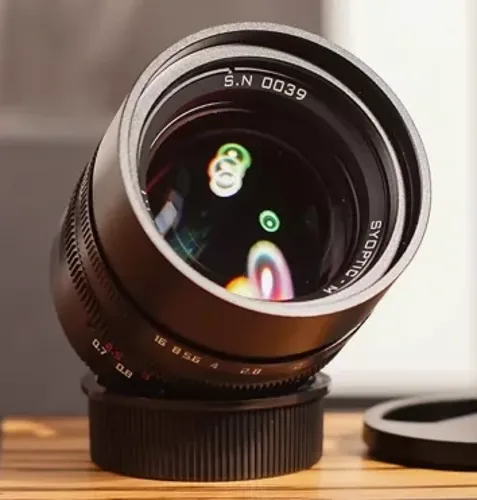
The Syoptic 50mm f/1.1 is an early, rangefinder-coupled Leica M fast normal lens with eight elements, eleven blades and 0.7m close focus.
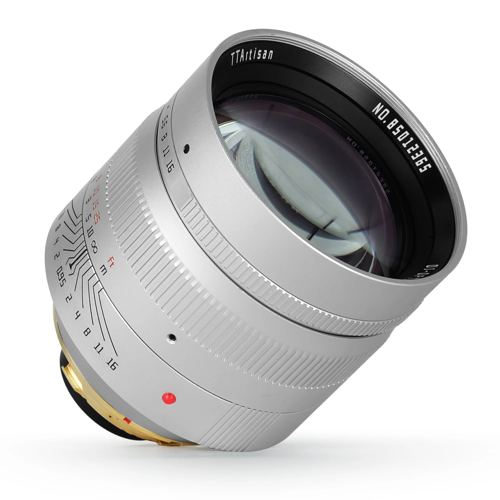
The TTArtisan 50mm f/0.95 ASPH is an ultra-fast manual M-mount lens, a budget Noctilux alternative drawing collector and Leica-user interest.
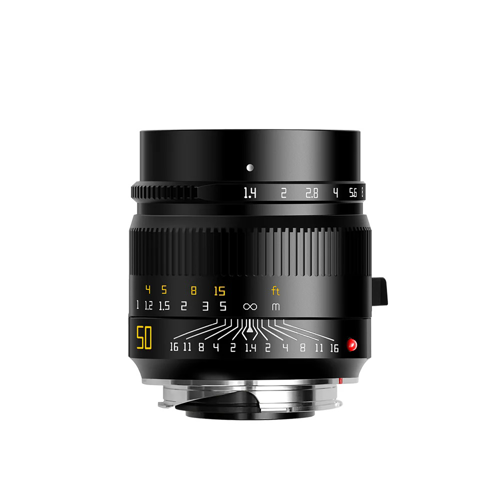
The TTArtisan 50mm f/1.4 ASPH. is a budget-priced manual-focus standard lens in Leica M mount, a rangefinder-coupled alternative to the Summilux.
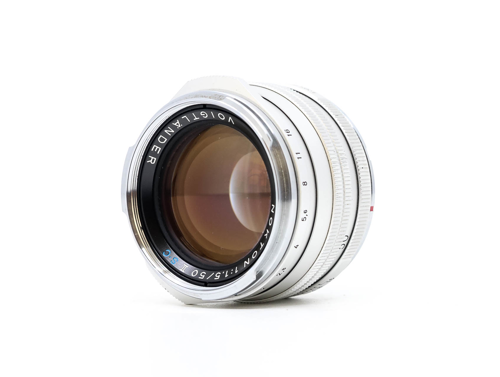
The Voigtländer Nokton 50mm f/1.5 II is a compact NOKTON Vintage Line M-mount lens, redesigned with eight elements and offered in MC and SC coatings.
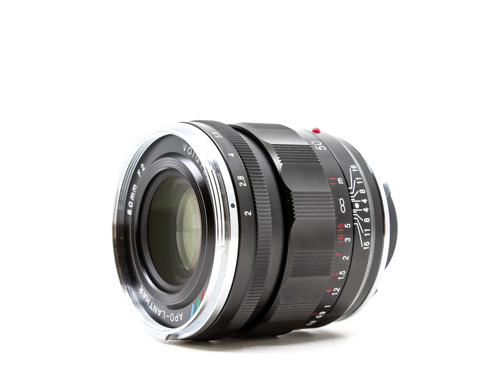
The Voigtländer APO-LANTHAR 50mm f/2 Aspherical VM is a modern apochromatic standard prime in Leica M mount prized for exceptional sharpness and color correction.
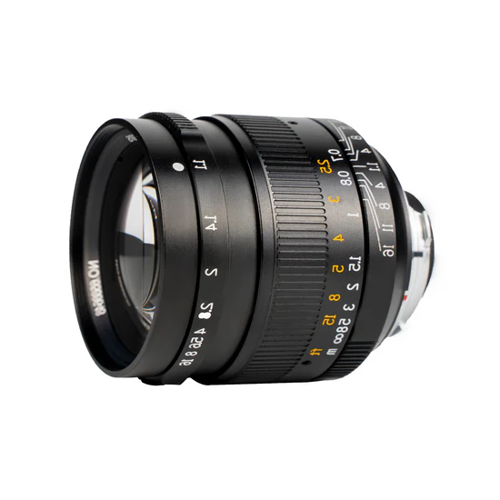
The 7artisans 50mm f/1.1 is a Sonnar-derived Leica M-mount lens whose ultra-fast aperture and budget price made it a popular entry into M-mount fast fifties.
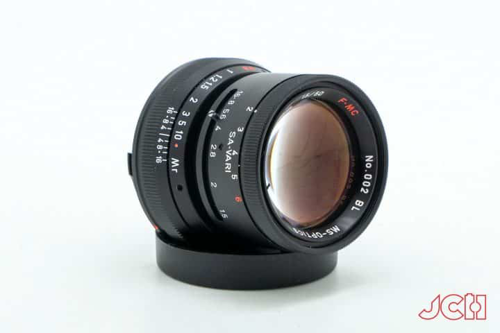
The MS-Optics Varioprasma 50mm f/1.5 is a Leica M-mount lens by Miyazaki that revives the Kino-Plasmat with an adjustable spherical-aberration ring.
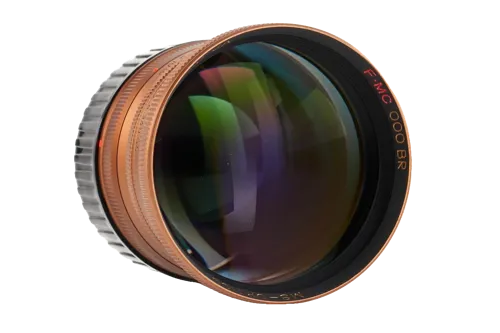
The MS-Optics ISM 50mm f/1 is a handmade Leica M lens that packs a full-stop f/1 aperture into one of the smallest, lightest fast-fifty bodies made.
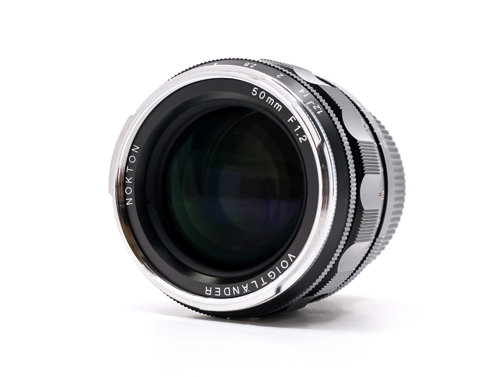
The Voigtländer Nokton 50mm f/1.2 is a compact, fast aspherical M-mount standard lens that gives rangefinder users an affordable alternative to Leica's fast 50s.
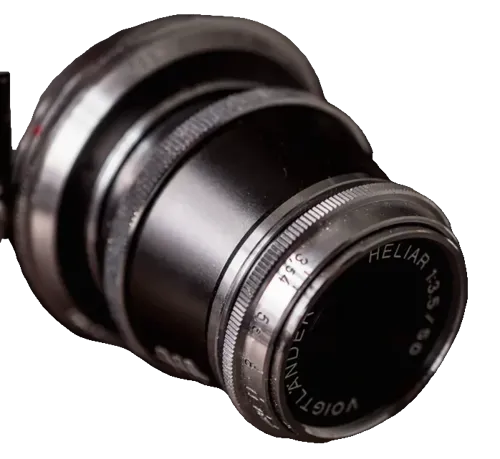
The Voigtländer Heliar 50mm f/3.5, a five-element classic-design lens in Leica M mount, revived Cosina's vintage Heliar look for modern rangefinders.
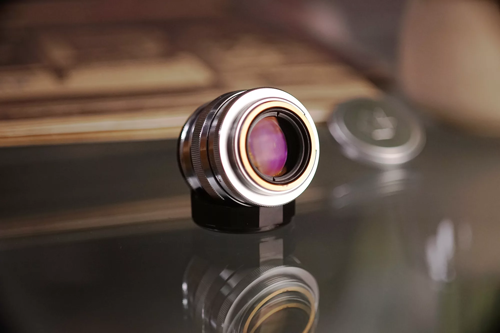
The Lomography New Jupiter 3+ 50mm f/1.5 Art is a modern LTM Sonnar revival, prized by rangefinder collectors for vintage rendering with current build quality.
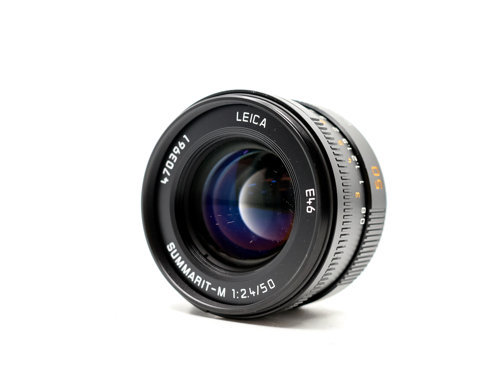
The Leica Summarit-M 50mm f/2.4 is a compact, lightweight aluminum-barrel M-mount normal lens, the entry point into Leica's 50mm rangefinder lineup.</parameter> <parameter name="long_description">## Leica Summarit-M 50mm f/2.4 The Summarit-M 50mm f/2.4 sits at the affordable end of Leica's 50mm M-mount range, offering the rangefinder look in a smaller, lighter, and less expensive package than the Summicron, Summilux, and Noctilux above it [1][2]. It replaced the earlier f/2.5 Summarit-M, and reviewers report that the optics carried over largely unchanged from that lens, with the main differences being the marginally faster marked aperture and a redesigned, more integrated lens hood [3]. Many photographers value it as a practical everyday normal lens, arguing that modern digital M sensors make a moderate maximum aperture far less of a limitation than it once was [1]. Optically the lens uses six elements in four groups, including high-refraction glass with anomalous partial dispersion, and it stops down with nine aperture blades for a rounded iris [2]. The barrel is built from aluminum rather than the brass used on some pricier silver Leica lenses, which keeps weight to around 190 grams and makes for one of the most compact 50mm options in the system [2][3]. Build quality is generally praised, with a smooth, well-damped focus action and a firm, positive aperture ring that resists accidental movement [1][3]. It is fully rangefinder coupled, focuses to 0.8 m, takes 46 mm filters, and mounts on M cameras; it is not factory six-bit coded [2]. The most useful identification point is the lens hood and the marked aperture. The first-generation Summarit-M was an f/2.5 lens supplied with a square, clip-on hood, while the f/2.4 version that followed it has a heavier screw-in metal hood, a difference reviewers single out as the easiest way to tell the two generations apart [3]. The f/2.4 is offered in black, with model numbers 11680 and 11682 noted for the family. --- ## Optical qualities **Rendering** The Summarit-M 50mm f/2.4 is described as a competent, modern-rendering normal lens rather than a character lens. Close-up performance shows smooth bokeh and a pleasing transition from sharp to out-of-focus areas [1]. Flare resistance is rated as good, helped by the substantial metal hood [1]. Reviewers position its overall look as closer to Leica's contemporary aspherical lenses than to older designs, while noting it gives up a stop or so of speed and a little close-focus reach to the Summicron [1]. **Bokeh and transitions** At its closest distances the lens produces a soft background and a gentle focus falloff that several users single out as one of its strengths [1]. **Flare resistance** The deep, well-made screw-in hood contributes to good control of flare and veiling glare in everyday shooting [1][3]. --- ## History **Development and Launch** The Summarit-M line was created as a more accessible tier within Leica's M lens range, giving buyers of a first M camera a 50mm option below the cost of the Summicron and faster lenses [2][3]. The 50mm f/2.4 reviewed here is the second iteration of that idea, following the original f/2.5 Summarit-M [3]. **Production Evolution** The transition from the f/2.5 to the f/2.4 brought a slightly faster marked maximum aperture and a new hood design, with the optical layout reported to be essentially carried over between the two versions [3]. The aluminum barrel construction and light weight that characterized the line were retained [2][3]. **Special editions** No widely documented factory special editions of the f/2.4 are established in the consulted sources; the lens is principally known in its standard black finish. **Collector Notes** When buying, the clearest check is to match the marked aperture and hood type to the version intended: the f/2.5 came with a square clip-on hood, while the f/2.4 uses a screw-in metal hood [3]. Because the barrel is aluminum rather than brass, it is noticeably lighter than equivalent silver Summicron or Summilux lenses, which can be a quick tactile identifier [3]. As with any used M lens, confirm smooth focus, a positive aperture ring, and clean glass, and verify that the hood and caps are present, since the integrated hood is part of the f/2.4's identity [1][3]. --- ## Sources * [1] Joeri van der Kloet. *The Leica Summarit-M 50/2.4 review*. http://joerivanderkloet.com/leica-summarit-m-502-4-review/ * [2] Camera Decision. *Leica Summarit-M 50mm F2.4 ASPH Lens Review and Specs*. https://cameradecision.com/lenses/review/Leica-Summarit-M-50mm-F2.4-ASPH * [3] Leica Lenses for Normal People. *Leica Summarit-M 50mm f/2.4 Review*. https://www.leicalensesfornormalpeople.com/2020/05/17/leica-summarit-m-50mm-f-2-4-review/
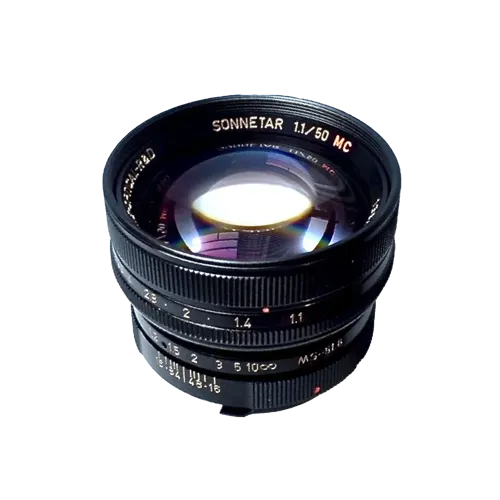
The MS-Optics Sonnetar 50mm f/1.1 is a handmade Sonnar-derived M and LTM mount lens by Sadayasu Miyazaki, prized by collectors for its tiny size and classic glow.
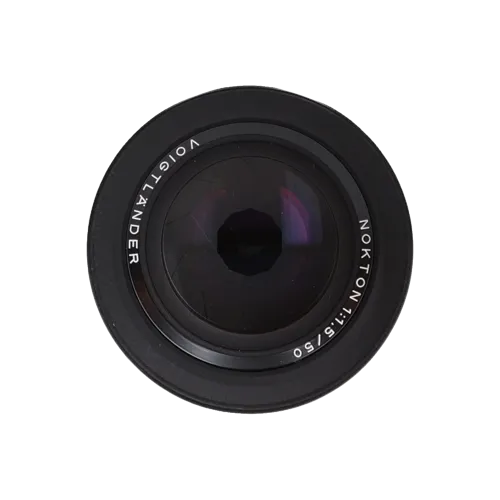
Voigtländer's Nokton 50mm f/1.5 I is a compact aspherical M-mount rangefinder lens, a fast 50mm standard prime favored for its modern optics and small size.
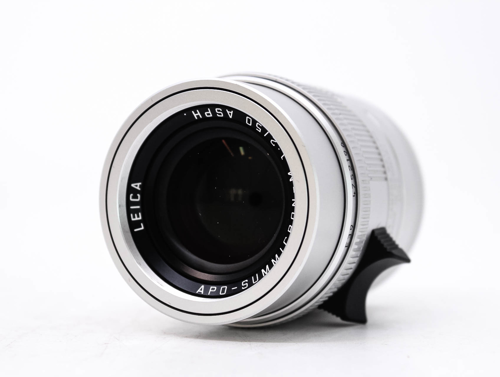
Leica APO-Summicron-M 50mm f/2 ASPH is a high-performance apochromatic Leica M lens with 8/5 optics, floating elements and modern 50mm rendering.
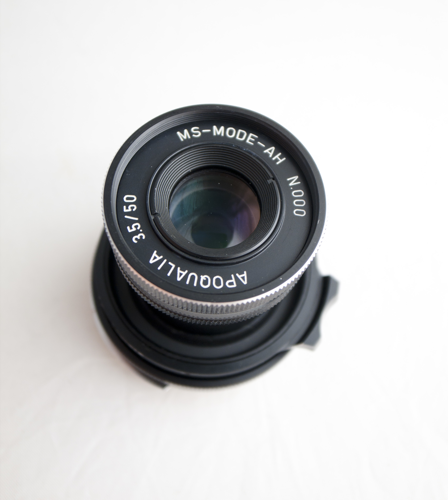
The MS-Optics MS-Mode 50mm f/3.5 Apoqualia is a collapsible screw-mount Heliar-type lens by Sadayasu Miyazaki, scarce and prized by Leica collectors.
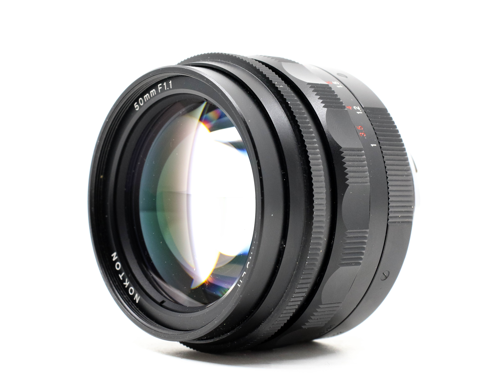
The Voigtländer Nokton 50mm f/1.1 is a fast spherical Leica M-mount lens from Cosina, long valued as an affordable alternative to the 50mm Noctilux look.
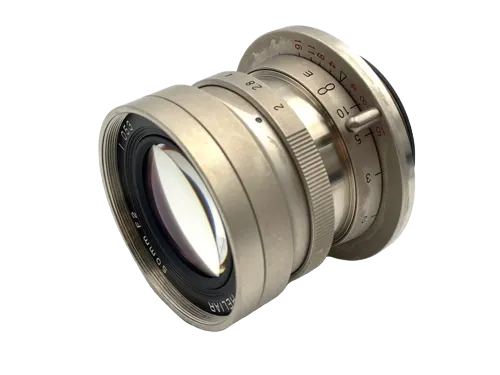
The Voigtländer Nickel Heliar 50mm f/2 is a limited Leica M-mount standard lens whose nickel-plated barrel and classic 5-element optics draw collector interest.
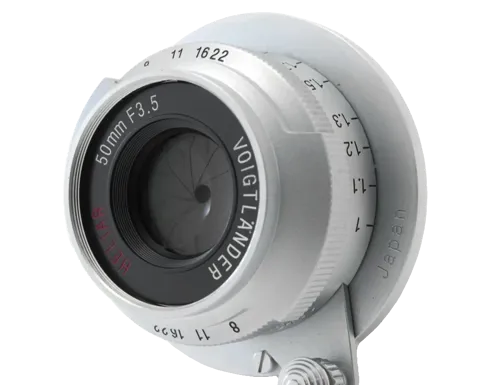
A silver LTM revival of the classic Voigtländer Heliar, the 50mm f/3.5 III pairs a five-element triplet-derived design with M39 rangefinder coupling.
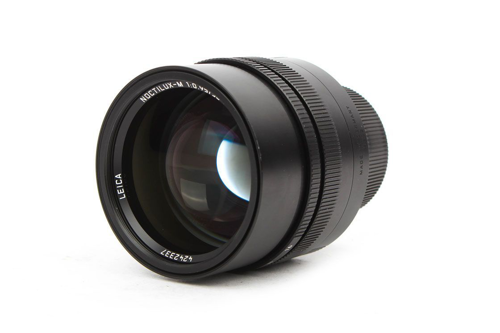
The Leica Noctilux-M 50mm f/0.95 ASPH. is an M-mount standard lens and the brand's fastest, a coveted low-light optic prized by collectors.
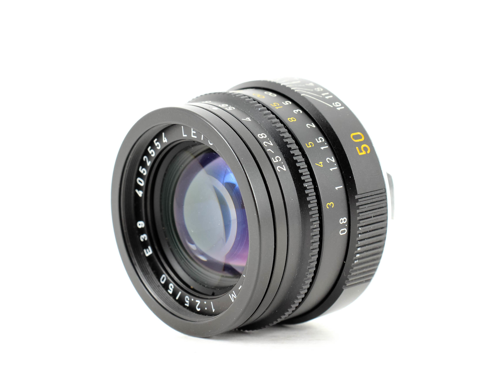
The Leica Summarit-M 50mm f/2.5 is a compact M-mount double-Gauss standard lens from Leica's 2007 affordable Summarit line, valued for neutral rendering.
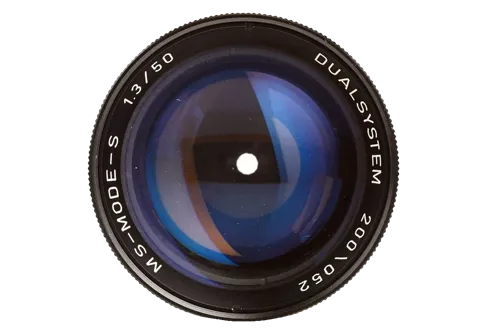
The MS-Optics MS-Mode 50mm f/1.3 is the Sonnar-type lens that launched Sadayasu Miyazaki's M-mount line, prized by collectors as his first original design.
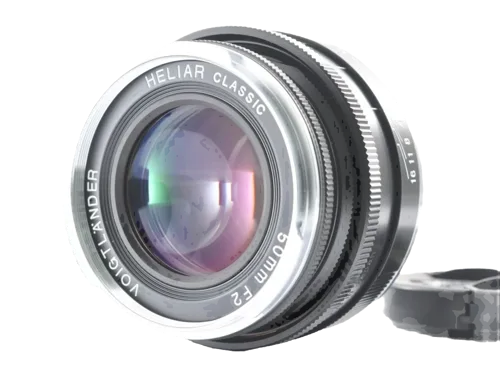
The Voigtländer Heliar 50mm f/2 is an M-mount rangefinder lens reviving the classic Heliar formula, made by Cosina and prized by collectors.
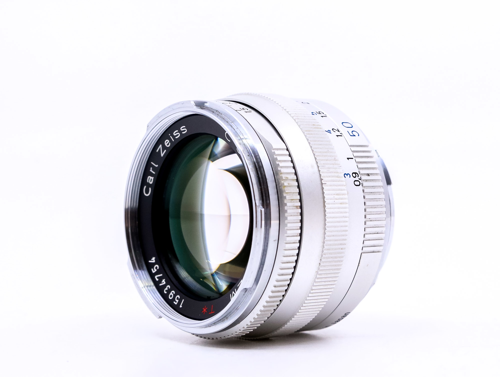
The Zeiss C Sonnar T* 50mm f/1.5 ZM is a fast standard prime lens manufactured by Cosina in Japan under license from Carl Zeiss AG. Part of the Zeiss ZM family for the Leica M-mount, it is distinguished by its adherence to a historic optical formula from the 1930s rather than modern computer-optimized designs. The "C" in its designation stands for both "Classic" and "Compact," referencing its vintage rendering characteristics and small physical form factor. It is noted for its high contrast, distinct bokeh, and a susceptibility to focus shift, a byproduct of its deliberate optical residue.
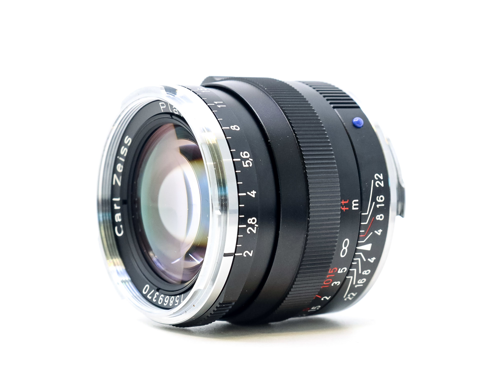
The Carl Zeiss Planar T* 50mm f/2 ZM is a Cosina-built six-element double-Gauss standard lens in Leica M mount, prized for sharpness and flare control.
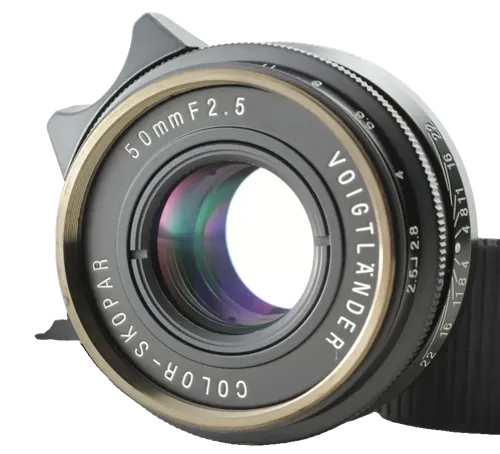
The Voigtländer Color-Skopar 50mm f/2.5 is a compact LTM rangefinder lens from Cosina, prized by collectors for German-rivaling build in a pocketable package.
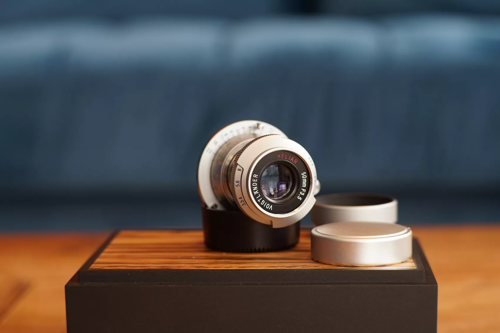
The Voigtländer Heliar 50mm f/3.5 I is a collapsible LTM screw-mount normal lens reviving the classic Heliar formula, prized by rangefinder collectors.
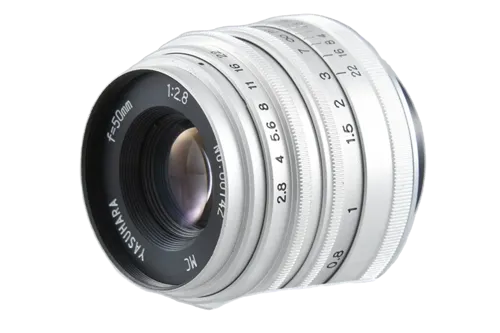
The Yasuhara MC 50mm f/2.8 is a rigid, rangefinder-coupled LTM normal lens for the T981, with four-element optics and 0.8m close focus.
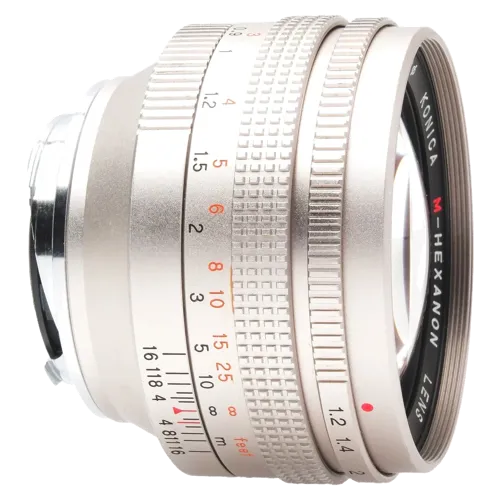
The Konica M-Hexanon 50mm f/1.2 Limited is a 2,001-piece M-mount fast normal lens, prized for rarity, refined build and wide-open character.
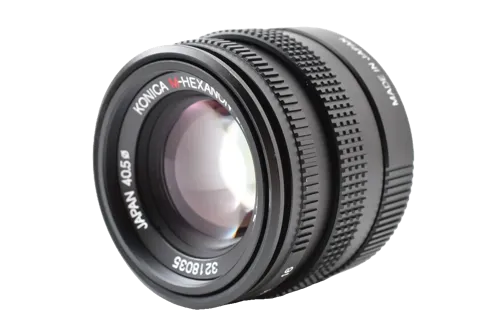
The Konica M-Hexanon 50mm f/2 is a double-Gauss Leica M-mount standard lens from the Hexar RF system, prized by rangefinder collectors.
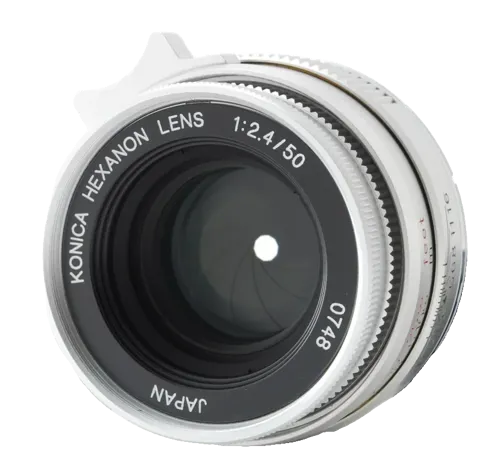
Konica Hexanon 50mm f/2.4 LTM is a limited collapsible Leica screw-mount rangefinder lens from 1997 with 6/4 optics and 10 blades.
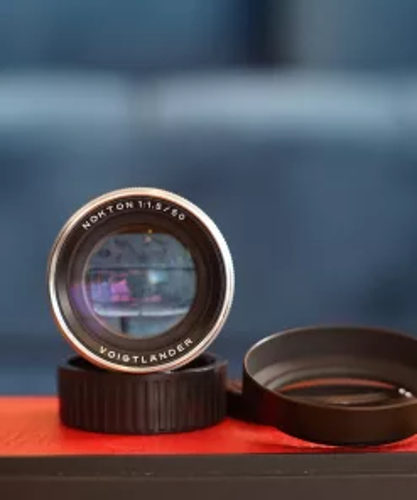
The Voigtländer Nokton 50mm f/1.5 LTM is a fast, brass-bodied screw-mount 50mm from Cosina, prized by Leica rangefinder users for its sharp, characterful rendering.
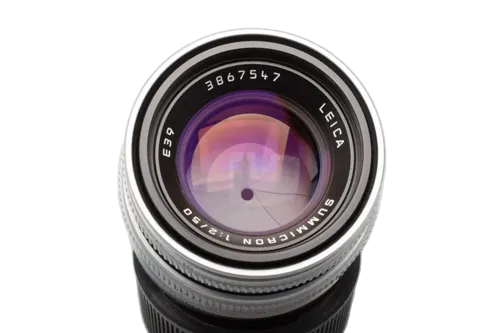
Leica Summicron 50mm f/2 M39 11619 is a rare 1999 silver chrome LTM lens made for Leica screw-mount collectors.
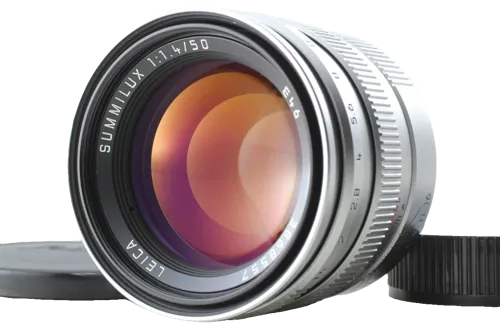
The Leica Summilux 50mm f/1.4 M39 11621 is a rare silver screw-mount Pre-ASPH special edition produced around 1999 and 2000 in a reported 900 examples.
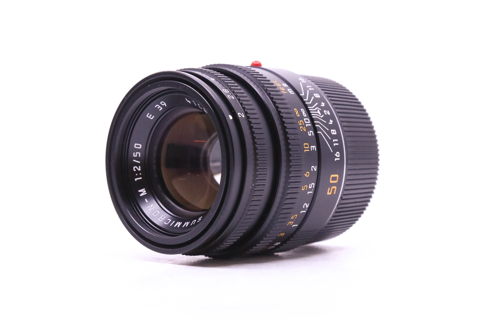
Leica Summicron-M 50mm f/2 V5, introduced in 1994 with classic 6/4 optics, built-in hood, and collectible Safari, silver and titanium M variants.
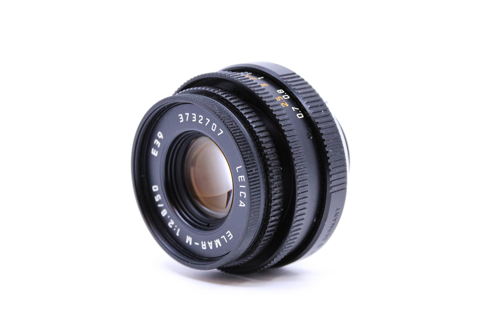
The Leica Elmar-M 50mm f/2.8 is a compact collapsible M-mount standard lens (1994 to 2007) prized by collectors for its small size and modern optics.
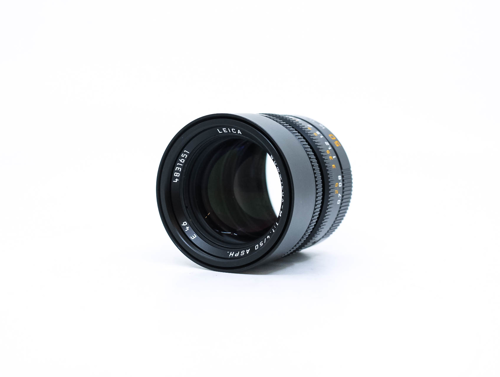
The Leica Summilux-M 50mm f/1.4 ASPH. I is Peter Karbe's M-mount fast fifty, the first to pair an aspherical surface with a floating element.
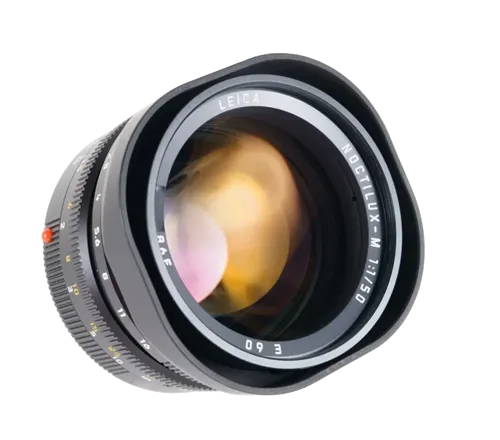
The Leica Noctilux-M 50mm f/1 Type 4 is the 11822 E60 version with an integrated sliding hood, retaining the classic seven-element f/1 optics.
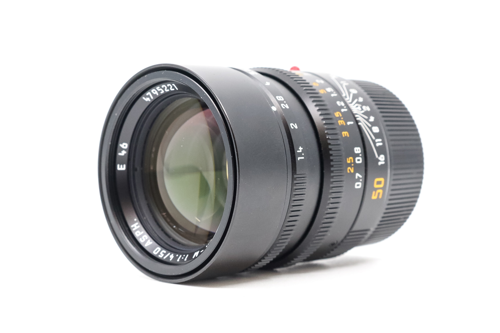
The Leica Summilux-M 50mm f/1.4 (third version) is an M-mount fast standard lens with a built-in hood and E46 filter, prized as the last pre-aspherical 50.
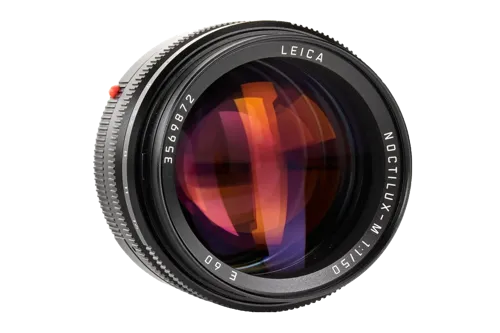
The Leica Noctilux-M 50mm f/1 Type 3 is the later 11821 E60 version, identified by its clamp-on 12544 hood and revised barrel details.
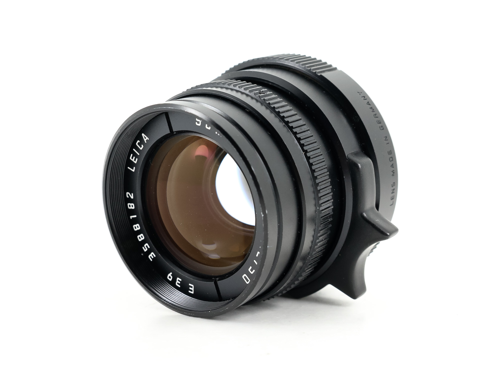
The Leica Summicron 50mm f/2 IV is a six-element M-mount standard lens designed by Walter Mandler's team, prized by collectors for its compact form and rendering.
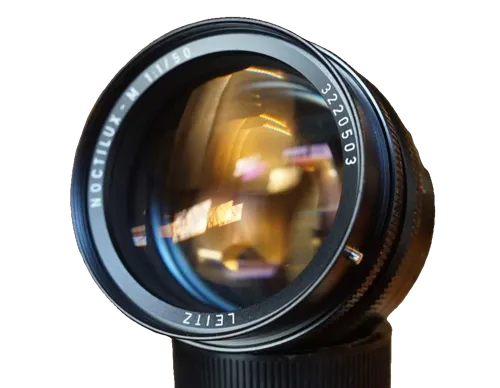
The Leica Noctilux-M 50mm f/1 Type 2 is the early E60 11821 version, identified by its detachable vented 12539 hood and one-metre close focus.
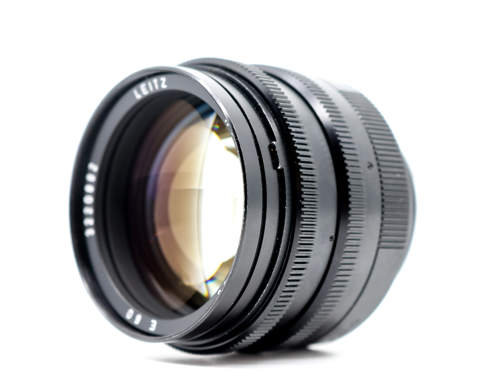
The Leica Noctilux-M 50mm f/1 Type 1, a spherical M-mount fast normal lens (1976-2008), is a landmark collector favorite for its low-light rendering.
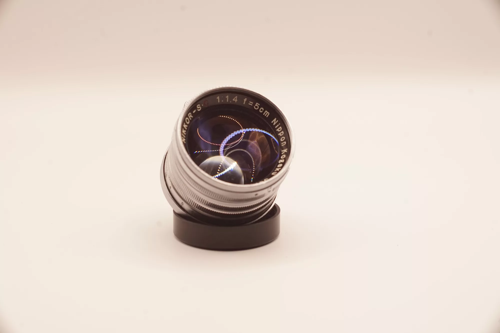
A Sonnar-derived Nippon-Kogaku Nikkor-SC 50mm f/1.4 in Leica screw mount (LTM), a single-coated fast fifty prized by rangefinder collectors for classic rendering.
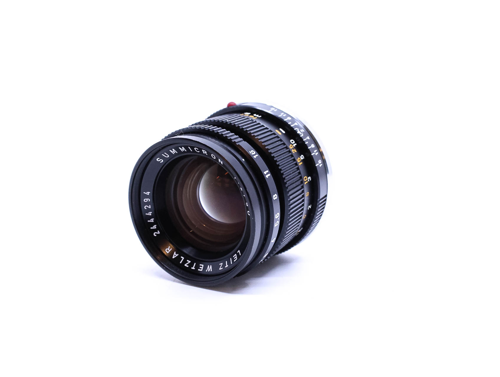
The Leica Summicron 50mm f/2 III is a six-element M-mount rangefinder lens from 1969, the lightweight black "black sheep" version collectors prize.
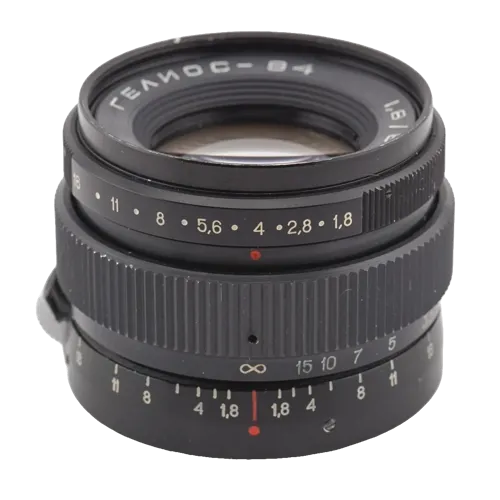
A rare 50mm f/1.8 standard lens made specifically for the Kiev-5, with a six-element design, its own helicoid and a modified external bayonet.
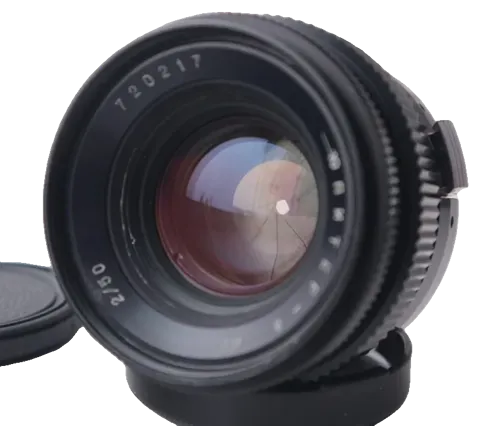
A Kiev-5-specific 50mm f/2 Sonnar-type lens with six elements, its own helicoid and a modified external bayonet not intended for earlier Kiev bodies.
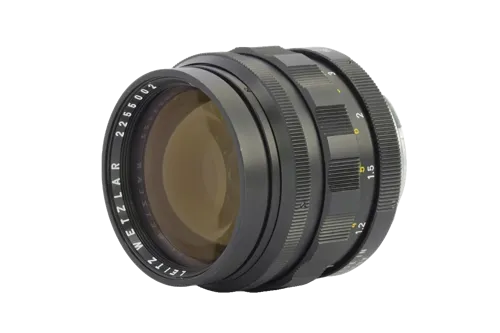
The Leica Noctilux 50mm f/1.2 is a rare 1960s M-mount lens, the first in series with two aspherical elements, prized by collectors.
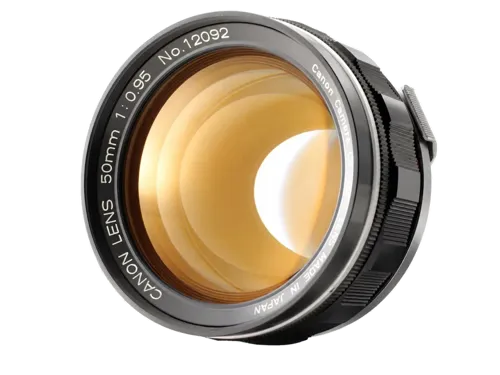
The Canon 50mm f/0.95, the "Dream Lens" for the Canon 7 rangefinder, prized by collectors and used on Leica M after conversion from its native bayonet.
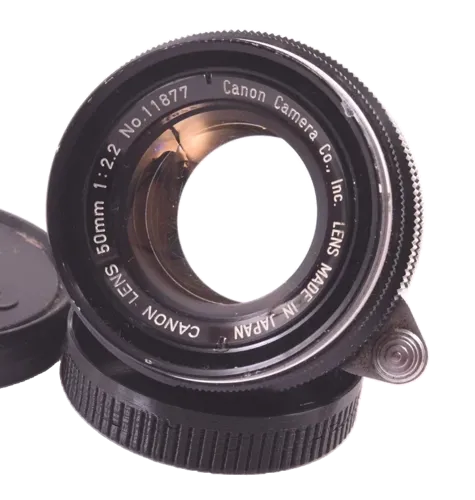
The Canon 50mm f/2.2 is a rare LTM rangefinder lens, a 1961 economy normal sold only in Japan, prized by collectors for its gentle rendering.
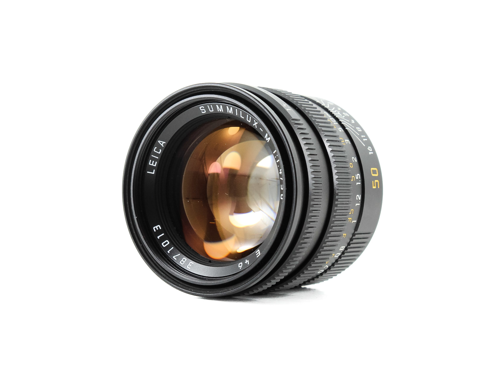
The Leica Summilux-M 50mm f/1.4 second version, a Walter Mandler M-mount fast standard lens prized by collectors for its long run and classic rendering.
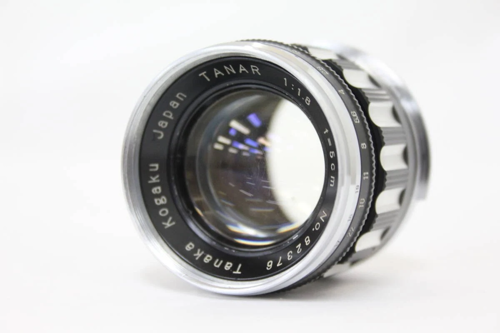
The Tanaka Kogaku Tanar 5cm f/1.8 is a rare LTM rangefinder lens built for the unreleased Tanack VP, sought after by collectors of Japanese Leica copies.
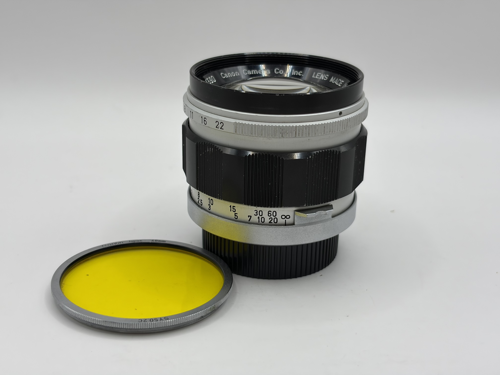
The Canon 50mm f/1.4 II is a fast six-element LTM rangefinder lens prized by collectors as among the best Canon screw-mount fifties.
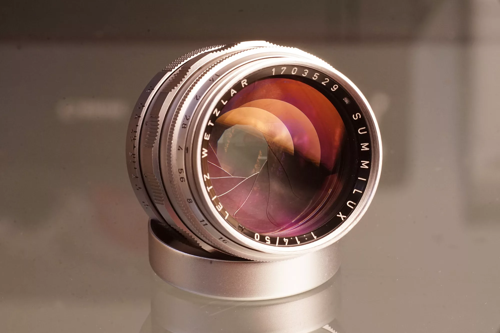
Leica Summilux-M 50mm f/1.4 I, the 1959 M-mount first-generation Summilux with 7/5 optics, E43 filter thread and major collector relevance.
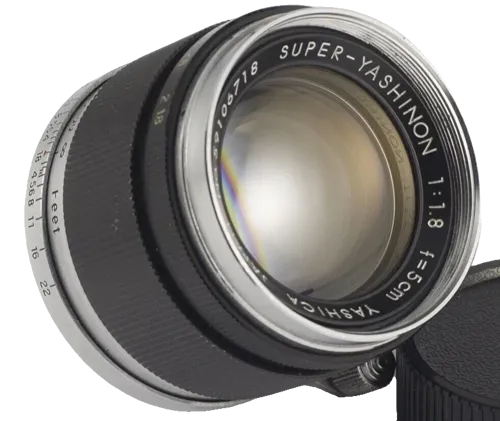
The Yashica Super-Yashinon 50mm f/1.8 is a six-element LTM rangefinder lens from the 1959 Yashica YF, a scarce post-Nicca screw-mount collectible.
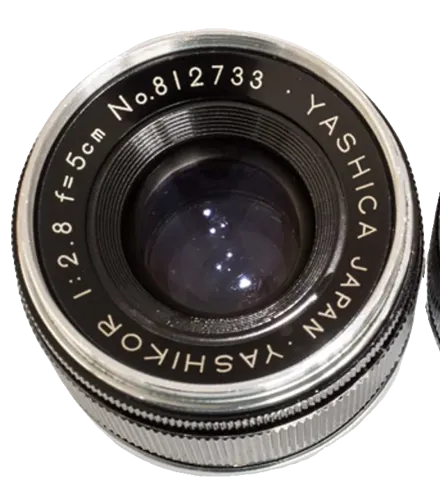
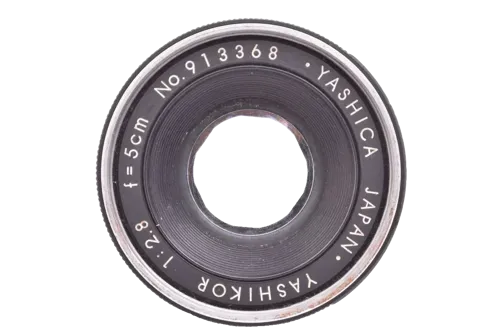
The Yashica Yashikor 50mm f/2.8 (first type) is a Tessar-type LTM rangefinder lens supplied with the Yashica YE, a scarce late Japanese Leica copy.
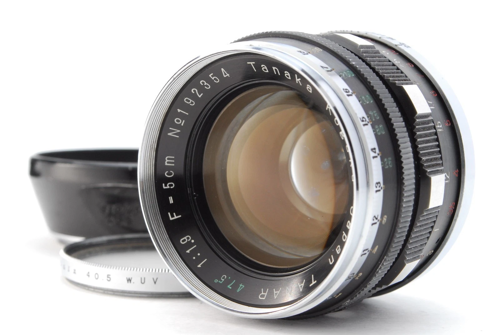
The Tanaka Kogaku Tanar 50mm f/1.9 is a six-element Sonnar-type LTM standard lens built for the Tanack V3 rangefinder, prized by Japanese-camera collectors.
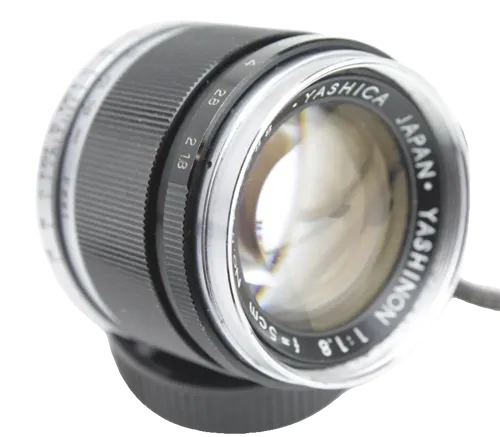
The Yashica Yashinon 50mm f/1.8 is an early rangefinder-coupled LTM standard lens with six elements, made for the short-lived Yashica YF system.
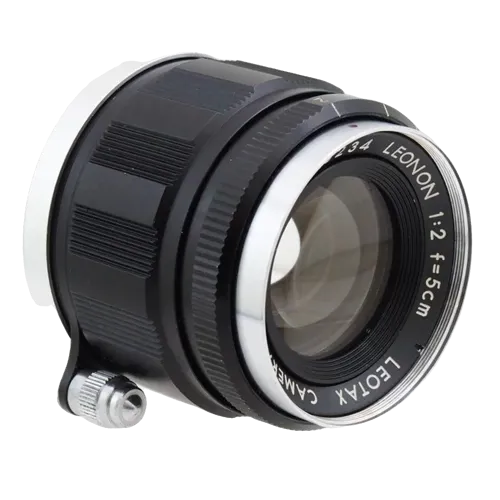
A rare 1959 Leotax 5cm f/2 coupled LTM standard lens with six elements in five groups, a ten-blade diaphragm and 40.5mm filters for Leica cameras.
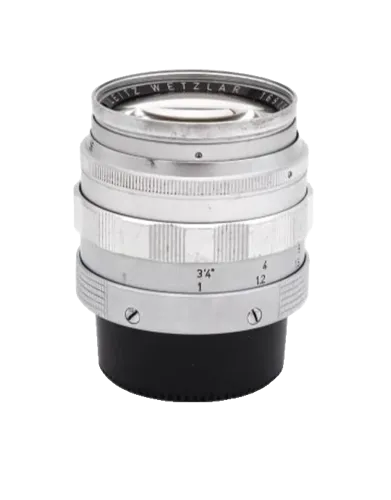
The rare Leica 50mm f/1.4 Summilux I in coupled LTM, catalogue 11014, with seven elements, an E43 filter thread and a 16-blade diaphragm.
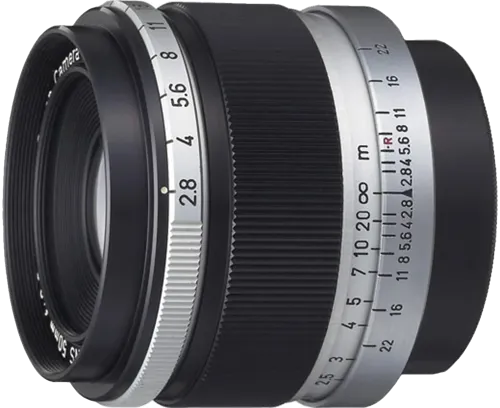
Canon’s final 50mm f/2.8 Leica-thread rangefinder lens, introduced in February 1959 with four elements in three groups and a compact 159g barrel.
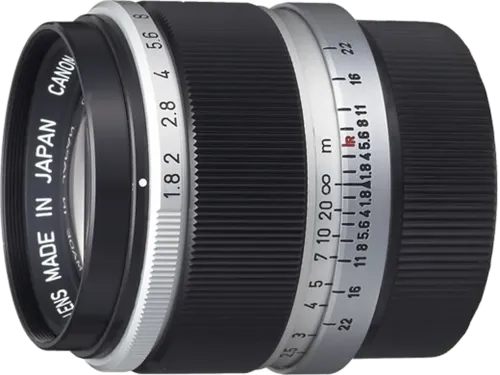
Canon 50mm f/1.8 III is a compact six-element LTM rangefinder standard lens from 1958, a cheap, well-regarded vintage fifty for screw-mount and M bodies.
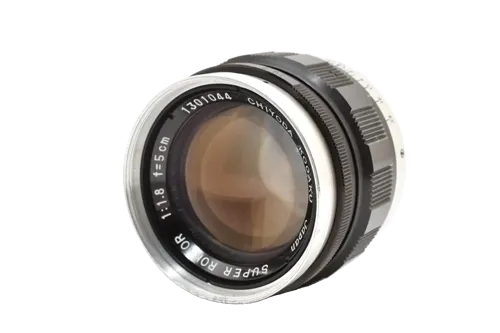
The Chiyoda Kogaku Super Rokkor 50mm f/1.8 is a scarce 1958 LTM normal lens for the Minolta-35 IIB, prized by rangefinder collectors for its sharp rendering.
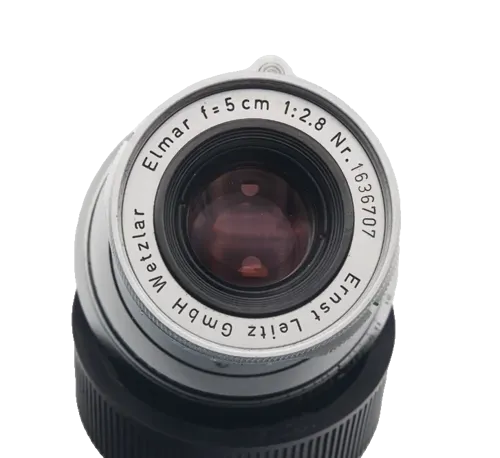
The Leica Elmar 5cm f/2.8 (11612) is a compact collapsible four-element 50mm M-mount lens prized by collectors as the last of Leica's classic Elmar fifties.
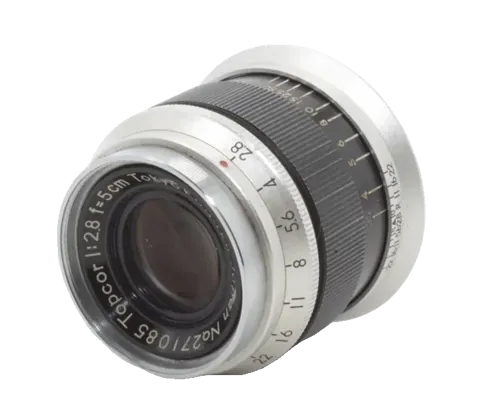
The Tokyo Kogaku Topcor 50mm f/2.8 is a scarce silver Leica thread-mount (LTM) normal lens from the Leotax era, prized by Topcon collectors.
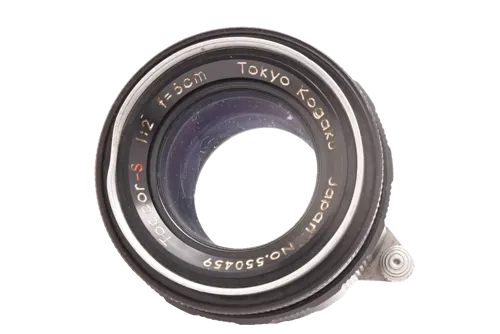
The Tokyo Kogaku Topcor S 5cm f/2 Type 2, a six-element Planar-type 50mm LTM lens from Leotax cameras, prized by collectors for its sharp, swirly rendering.
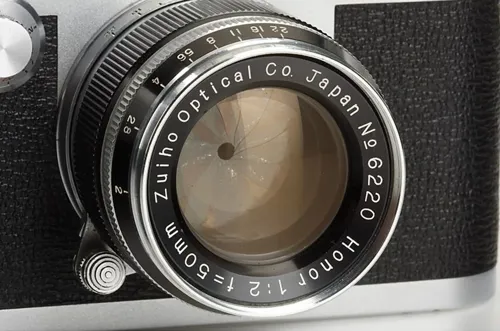
An Honor-branded 50mm f/2 standard lens for the late-1950s Honor S1 Type II, with coupled Leica thread mount and a reported six-in-four formula.
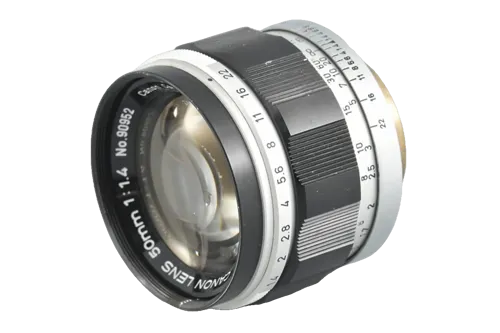
Canon 50mm f/1.4 I, a compact six-element LTM rangefinder lens of the late 1950s, the "Japanese Summilux" prized by collectors as an affordable fast fifty.
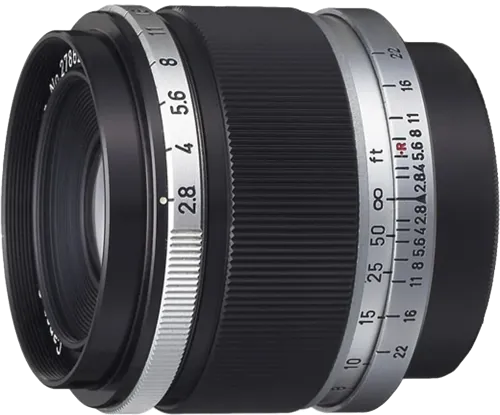
The Canon 50mm f/2.8 II is a compact four-element LTM rangefinder lens of the late 1950s, a collectible screw-mount standard prime for Barnack-style bodies.
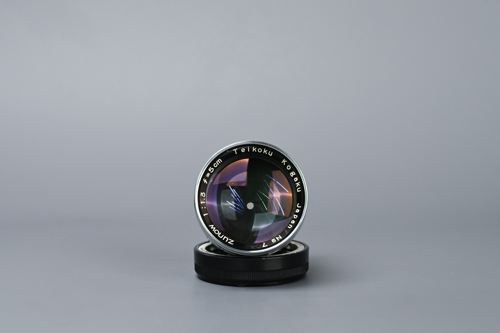
The Zunow 50mm f/1.3 is a rare Sonnar-derived LTM rangefinder lens from Japan's Teikoku Kogaku, a sought-after companion to the famous Zunow 5cm f/1.1.</parameter> <parameter name="long_description">## Zunow 50mm f1.3 Among the small family of fast standard lenses built by Japan's Zunow operation, the 50mm f/1.3 is the lesser known sibling of the celebrated 5cm f/1.1, the lens that in 1953 was the fastest available for any 35mm camera [1]. The f/1.3 belonged to the same ambitious push toward high-speed optics: a 1957 catalogue listing places it alongside the firm's other rangefinder offerings, a 35mm f/1.7, the 50mm f/1.1, a 50mm f/1.9, and a 100mm f/2, all offered in mounts for Leica, Contax, Canon and Nikon bodies. Surviving examples are scarce and trade for high sums, which keeps the f/1.3 firmly in collector territory rather than everyday use [2]. The lens uses a Sonnar-type optical layout and was produced in Leica screw mount. In LeicaLensList's records it is a seven-element design in five groups, with an eight-blade diaphragm and a minimum focusing distance of one metre, and it is not rangefinder coupled, so distance must be set by scale or estimation rather than via the camera's coupled rangefinder. As an LTM (M39) lens it can be adapted to later M-mount bodies and to mirrorless cameras with a screw-mount adapter, though the absence of rangefinder coupling means focusing on a film rangefinder body is approximate. Documented version detail for this particular lens is thin, reflecting how few were made and how rarely they surface. It is marked under the Zunow name, the brand used by Teikoku Kogaku and later Zunow Optical, and is sometimes catalogued as "Zunow Teikoku Kogaku" by dealers. Because the f/1.1 dominates almost all discussion of the marque, buyers should not assume that notes written about the f/1.1 apply to the f/1.3. --- ## Optical qualities **Rendering** Reliable, detailed rendering reports for the 50mm f/1.3 specifically are limited, in keeping with its rarity, so firm performance claims cannot be made with confidence. What is established is the design pedigree: a Sonnar-type formula and a fast f/1.3 maximum aperture from the era of Zunow's high-speed standard lenses. As with other fast Sonnar-derived lenses of the 1950s, the wide-open character would be expected to favour an older drawing style over modern clinical correction, but this should be treated as design context rather than a tested result. --- ## History **Development and Launch** The lens traces to Teikoku Kogaku, founded around 1930 by Suzuki Sakuta as the Imperial Optical Research Institute, a firm that initially ground lenses for other companies. It was renamed Teikoku Kogaku Kogyo in 1954 and became Zunow Optical Industry in 1956. Zunow's reputation rests on its high-speed standard lenses: the 5cm f/1.1 of 1953 was unmatched for speed until Nippon Kogaku's Nikkor 50mm f/1.1 of 1956. The 50mm f/1.3 appears among the company's rangefinder lenses in a 1957 listing, offered for Leica, Contax, Canon and Nikon cameras. **Production Evolution** The company's lenses were generally well regarded, and after the early ultrafast designs Zunow also supplied optics to other camera makers. Zunow's fortunes declined after the failure of its SLR in 1959 and the collapse of customers Arco and Neoca around 1960; rather than be absorbed by another firm, the company closed in 1961, with its work continuing in a new venture, Ace Optical, founded the same year in partnership with Elmo. Detailed production-change records specific to the 50mm f/1.3, such as coating or barrel revisions, are not well documented in available sources. **Collector Notes** This is a rare lens that surfaces mainly on the Japanese market, and asking prices for surviving examples are very high. One dealer listing describes it as a Sonnar-type design and dates the firm's underlying high-speed lens work to wartime aviation optics, but the same listing quotes a nine-element, five-group construction, which conflicts with the seven-element, five-group figure recorded by LeicaLensList; the verified specification should be treated as authoritative. Because the Zunow name is overwhelmingly associated with the f/1.1, verify that any lens offered as an f/1.3 is correctly identified by its engraved maximum aperture, and confirm mount, glass condition and originality given the scarcity and value involved. --- ## Sources * [1] Crafting Pixels. *Vintage lens makers – Zunow (Japan)*. https://pixelcraft.photo.blog/2025/03/06/vintage-lens-makers-zunow-japan/ * [2] LSKamera. *Zunow Teikoku Kogaku 50mm f/1.3 LTM*. https://lskamera.com/zunow-teikoku-kogaku-50mm-f13-ltm
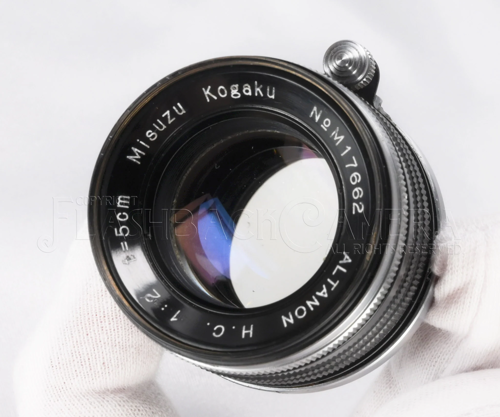
The Misuzu Kogaku Altanon 5cm f/2 is a scarce 1950s Japanese LTM rangefinder lens, a six-element 50mm f/2 in screw mount of interest to collectors.
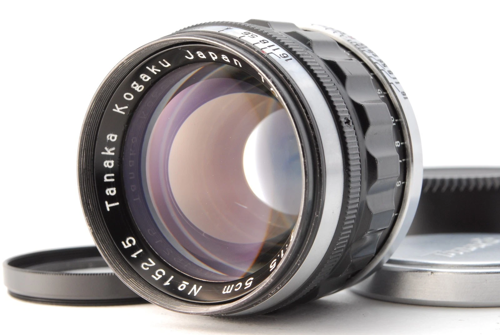
The Tanaka Kogaku Tanar 50mm f/1.5 H.C. is a scarce LTM screw-mount Japanese fast fifty made for the Tanack SD rangefinder, prized by collectors.
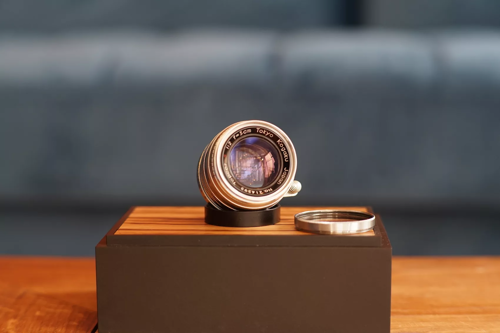
The Tokyo Kogaku Topcor S 5cm f/2 Type 1 is a chrome LTM normal lens for Leotax rangefinders, prized by collectors as a fine pre-Summicron 50mm.
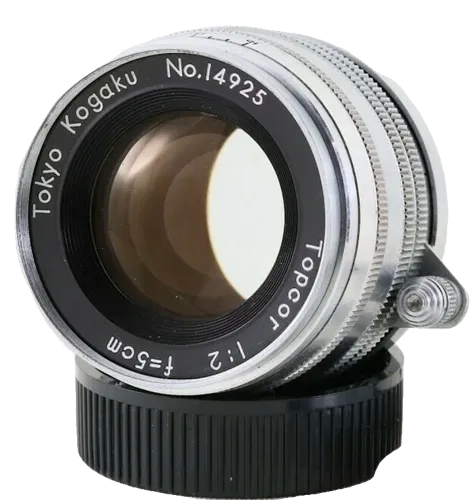
Tokyo Kogaku's Topcor S "Panda" is a 50mm f/2 LTM rangefinder lens, a sought-after double-Gauss Leotax normal prized by Leica screw-mount collectors.
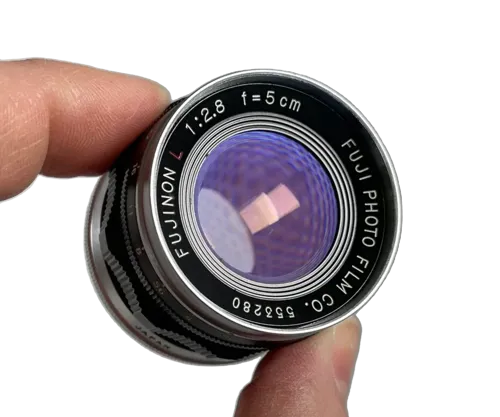
Fujinon-L 5cm f/2.8 LTM is a rare Fuji Leica screw-mount standard lens made for Leotax rangefinder collectors.

A 1957-era Fuji Photo Film 50mm f/2 standard lens for coupled Leica-thread rangefinders, with six elements in five groups and a black-and-chrome barrel.
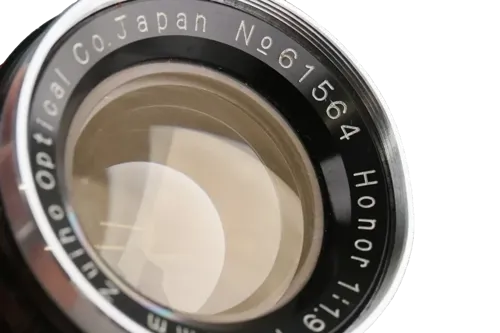
An Honor-branded 50mm f/1.9 standard lens supplied with Honor S1 Type II and SL rangefinders, in coupled Leica thread mount with 1.07m close focus.
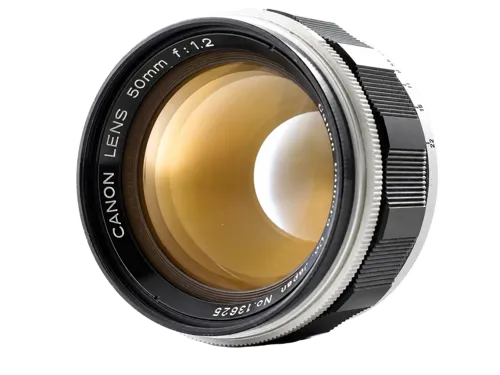
The Canon 50mm f/1.2 is a fast LTM rangefinder lens from the 1950s, prized by collectors for its compact build and distinctive vintage rendering.
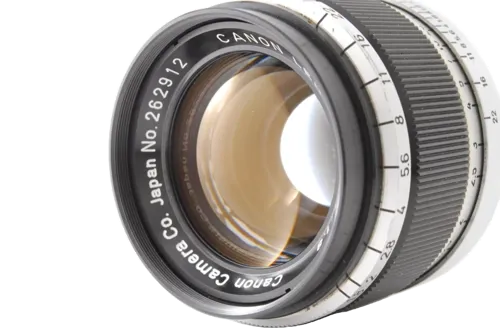
The Canon 50mm f/1.8 II is a compact LTM screw-mount rangefinder normal lens, a well-regarded and affordable double-Gauss fifty favored by film and digital users.
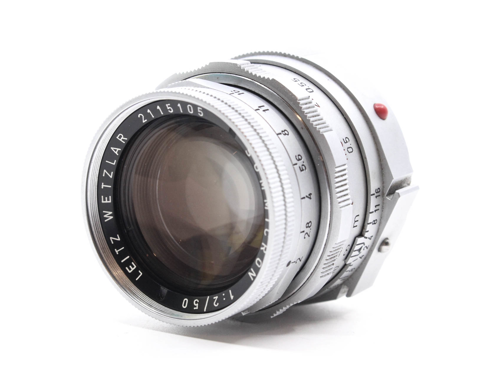
The Leica Summicron 50mm f/2 II Dual Range is a chrome M-mount near-focusing lens (1956 to 1968), prized by collectors for its build and rendering.
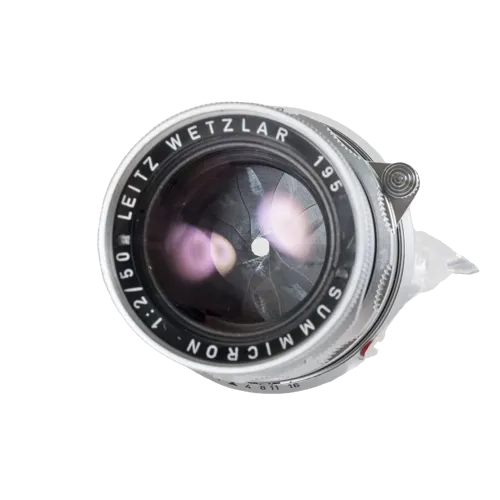
The chrome Leica Summicron 50mm f/2 II Rigid is a collectible M-mount fifty, prized for its compact build, classic optics, and Swiss-watch focusing feel.
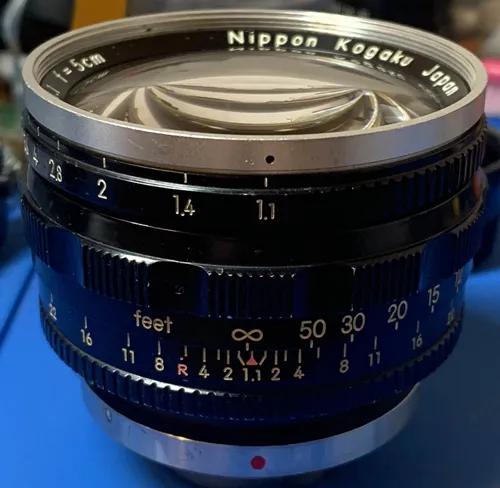
Nippon-Kogaku's 50mm f/1.1 Nikkor for the S-mount and L39 rangefinders, a fast 1950s ultra-speed lens prized by Leica and Nikon collectors.
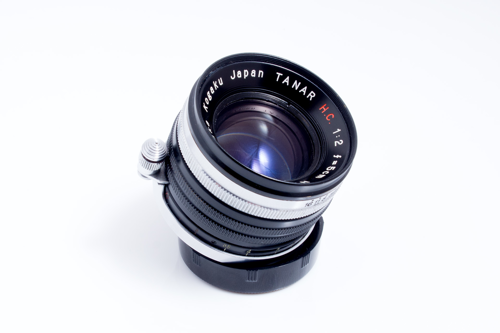
The Tanaka Kogaku Tanar 50mm f/2 H.C. is a Sonnar-type LTM standard lens for Tanack rangefinders, prized by collectors of obscure 1950s Japanese optics.
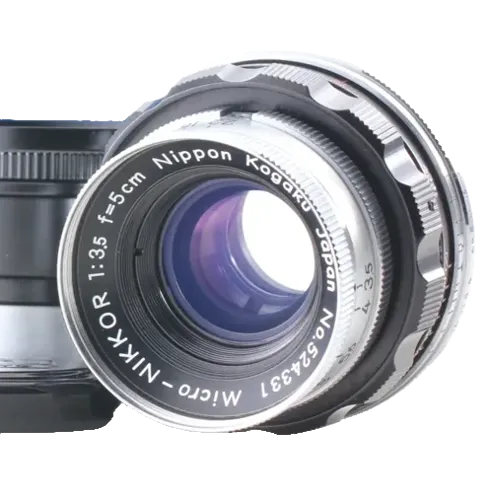
A 1956 Japanese collapsible 50mm f/3.5 macro lens with five elements in four groups, Xenotar-type optics and dual-range LTM focus to 0.46m.
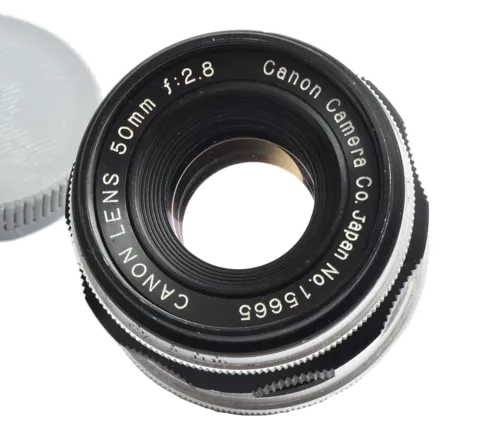
The Canon 50mm f/2.8 I is a compact four-element LTM rangefinder lens from 1955, a less common slower-aperture normal that interests Leica screw-mount collectors.</parameter> <parameter name="long_description">## Canon 50mm f/2.8 I Among Canon's screw-mount normal lenses of the mid-1950s, the 50mm f/2.8 I stands out for being one of the slower and less common members of the line, made at a time when the company was pushing toward faster f/1.8 and f/1.5 optics for its rangefinder bodies. Canon's own museum records list it as marketed in January 1955 at an original price of 16,000 yen, positioning it as a more modest companion to the higher-speed fifties that dominated the catalogue [1]. The lens uses a simple optical layout of four elements in three groups, a classic compact normal-lens arrangement, and it focuses to one meter. Built in the Leica thread mount (LTM / M39), the lens is rangefinder coupled and works on Canon's own screw-mount bodies as well as Leica screw-mount cameras and, with an adapter, on Leica M and mirrorless cameras. It is a small and light optic, weighing 128 grams in a barrel measuring roughly 48 mm in diameter by 37 mm long, which keeps the package modest on a compact rangefinder body. The aperture closes to a minimum of f/16. As recorded by LeicaLensList, the lens was offered in a two-tone finish, the chrome-and-satin styling typical of Canon screw-mount lenses of the era. Documentation specific to this exact f/2.8 variant is limited compared with Canon's faster fifties, and some published figures vary between sources. The Canon Camera Museum, for example, lists a filter diameter of 34 mm and a length of 37.7 mm, while LeicaLensList records a 41 mm filter thread and a 37 mm length; where sources disagree, the verified LeicaLensList values take precedence. A later 50mm f/2.8 II followed in the Canon line, so buyers should confirm which version they are handling. --- ## Optical qualities **Rendering** Detailed, independent test data for this specific lens is scarce, so its rendering is best described from its design type rather than measured performance. The four-element, three-group construction is a compact normal-lens formula of a kind that typically delivers good central sharpness with a restrained, neutral character at moderate apertures. Because the maximum aperture is f/2.8 rather than f/1.5 or f/1.8, the lens is less suited to extreme shallow-depth-of-field work than Canon's faster fifties, and claims about its bokeh, flare, or contrast beyond this cannot be reliably supported from available sources. --- ## History **Development and Launch** The 50mm f/2.8 I appeared in January 1955 during the most active period of Canon's rangefinder development, when the company was expanding its screw-mount lens range to accompany a growing line of Leica-compatible cameras. At 16,000 yen it slotted in as a comparatively affordable standard lens alongside Canon's brighter and more expensive f/1.8 and f/1.5 normals. **Collector Notes** Buyers should distinguish this first f/2.8 from the later 50mm f/2.8 II in the same family, as the two share the same focal length and aperture but are separate products. Because the lens is uncommon and lightly documented, confirming the engraving, mount thread, and overall originality is worthwhile before purchase. As with most chrome screw-mount lenses of this age, internal haze, cleaning marks, and stiff or dried-out focus helicoids are the usual condition concerns to check. --- ## Sources * [1] Canon Camera Museum. *CANON 50mm f/2.8 I*. https://global.canon/en/c-museum/product/s50.html
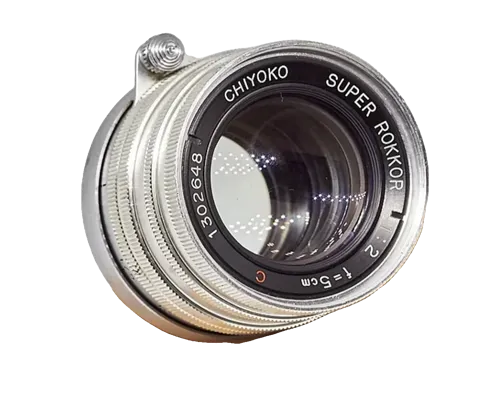
Chiyoda Kogaku Super Rokkor 50mm f/2: a Leica thread mount standard prime for the Minolta-35 rangefinder, prized by collectors for its swirly rendering.
![Chiyoda Kogaku Super Rokkor 50mm f/2 [C]](https://assets.leicalenslist.com/images/2063_medium.webp)
The Chiyoda Kogaku Super Rokkor 50mm f/2 [C], a coated LTM normal lens from Minolta's Minolta 35 rangefinder system, prized by Leica-mount collectors.
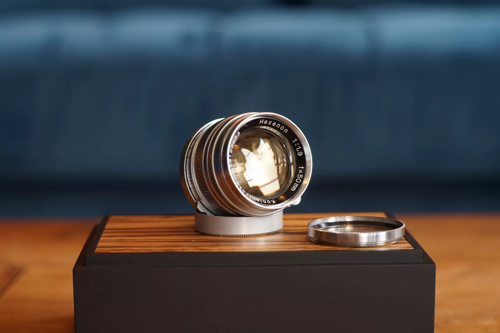
The Konica Hexanon 50mm f/1.9, a scarce LTM screw-mount standard lens from Konishiroku, prized by rangefinder collectors for its Ultron-derived six-element optics.
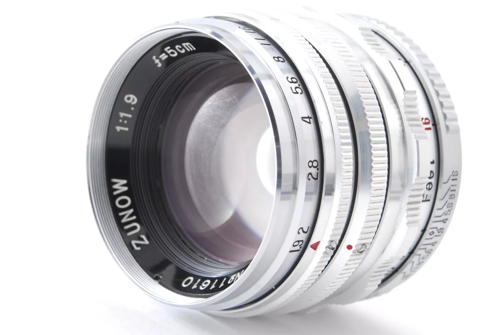
The Zunow 50mm f/1.9 is a scarce 1950s Japanese standard lens in Leica screw mount, a modest companion to Zunow's famous ultra-fast 50/1.1.
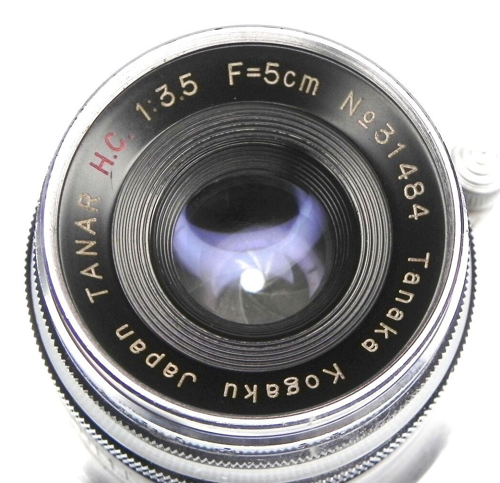
The Tanaka Kogaku Tanar 50mm f/3.5 H.C. Close Focus is a Tessar-type LTM standard lens for Tanack rangefinders, scarce and prized by Japanese-copy collectors.
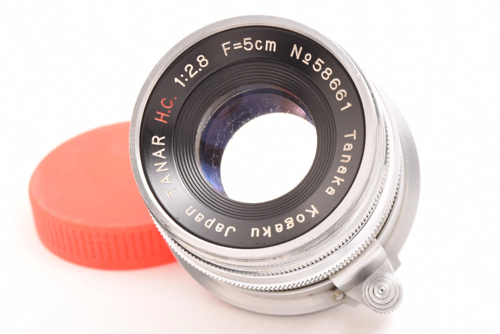
The Tanaka Kogaku Tanar 50mm f/2.8 H.C. Close Focus is a Tessar-type LTM standard lens for the Tanack IV-S, prized by Japanese rangefinder collectors.
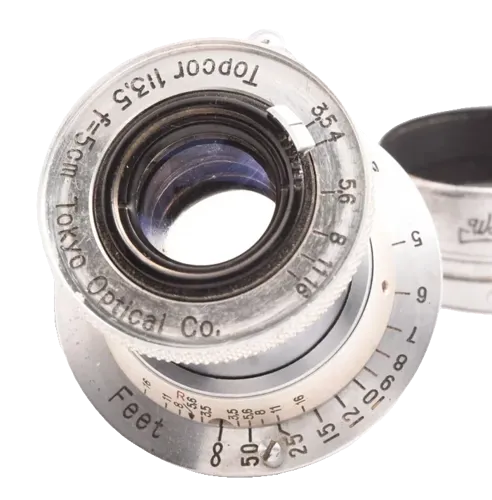
The Tokyo Kogaku Topcor 50mm f/3.5, a four-element LTM screw-mount Elmar-type standard lens for Leotax and other M39 bodies, prized by Topcor collectors.
Tokyo Kogaku's Topcor 50mm f/3.5 is a coated four-element Tessar in Leica screw mount, a scarce Leotax-era standard lens prized by collectors.
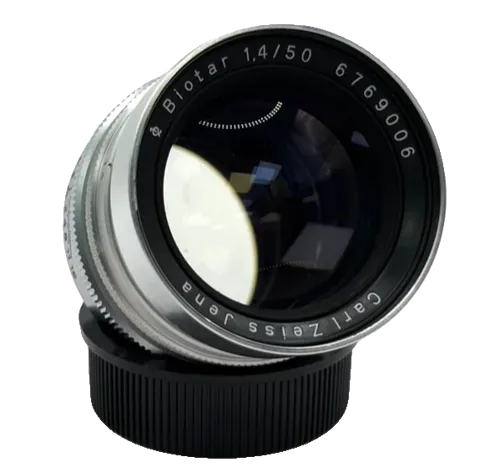
A Carl Zeiss Jena 50mm f/1.4 Biotar cine lens rebuilt for Leica M, with conversion-specific focusing, coverage and rangefinder behaviour.
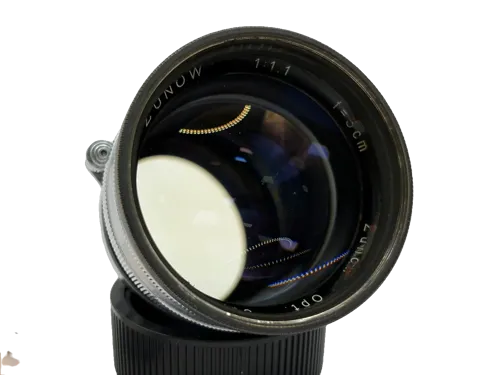
The flat-rear Zunow 5cm f/1.1 Type II, a rare 1950s ultra-fast rangefinder lens made in both coupled Leica M39 and Contax RF versions.
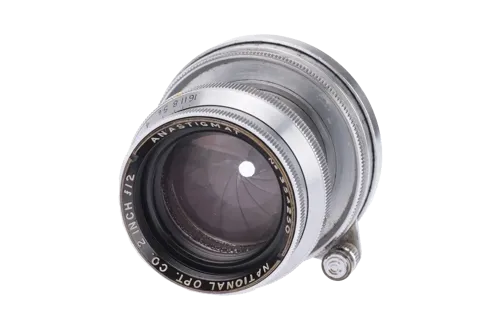
A circa-1955 English collapsible 2-inch f/2 standard lens with six elements in four groups, coupled Leica M39 focusing and 1.07m close focus.
![Chiyoda Kogaku Super Rokkor 50mm f/2.8 [C]](https://assets.leicalenslist.com/images/2065_medium.webp)
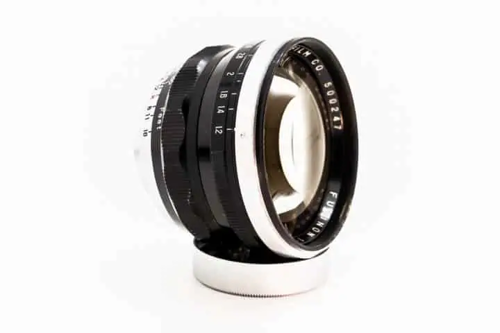
The Fujinon 50mm f/1.2 is a rare 1954 Sonnar-derived ultra-fast LTM rangefinder lens, one of Japan's "Big Four" speed lenses and a prized collector piece.
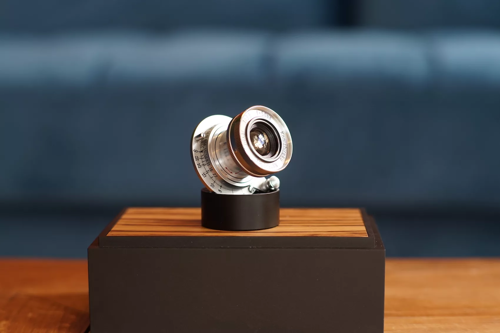
The Konishiroku Hexar 50mm f/3.5 is a collapsible Tessar-type LTM standard lens of the 1950s, fitted to many Japanese Barnack-style rangefinders.
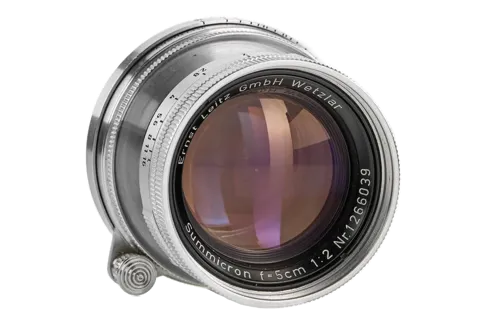
The Leica Summicron 50mm f/2 Version 1 (Collapsible) is the lens that defined the modern "Leica look." Produced between 1953 and 1960, it features a classic 7-element optical design housed in a dense, satin-chrome brass barrel that retracts for portability. Famed for its "radioactive" thorium glass elements that often warm with age, the V1 offers a unique, lower-contrast vintage rendering with a signature glow at f/2, sharpening significantly when stopped down.
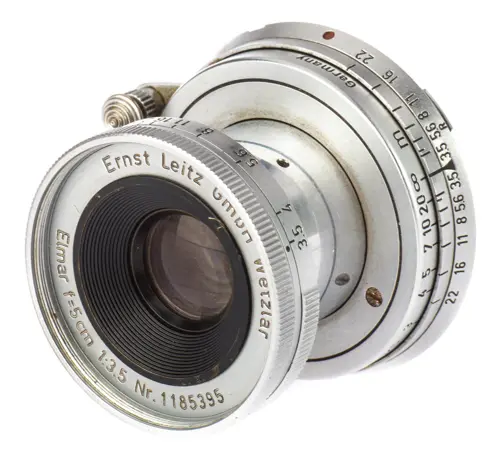
The Leica Elmar 5cm f/3.5 (11110) is the M-bayonet version of the classic collapsible 50mm Tessar-type lens, prized by Leica M rangefinder collectors.
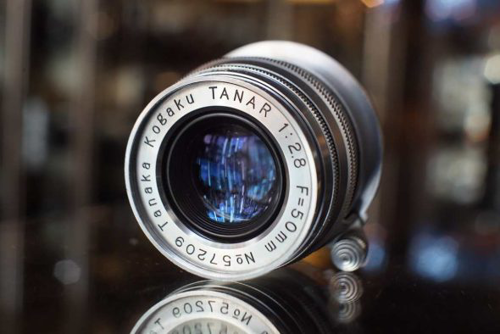
The Tanaka Kogaku Tanar 50mm f/2.8 is a scarce Tessar-type LTM rangefinder lens for Tanack cameras, prized by Japanese vintage collectors.
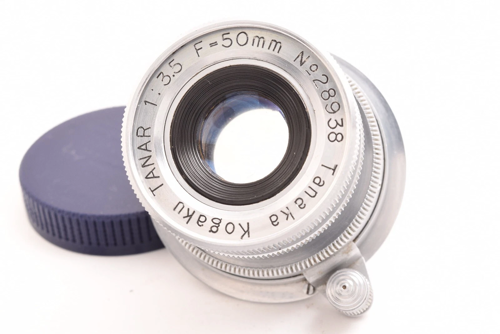
The Tanaka Kogaku Tanar 50mm f/3.5 is a four-element Tessar-type LTM standard lens for 1950s Tanack rangefinders, a scarce Japanese-Leica-copy collectible.
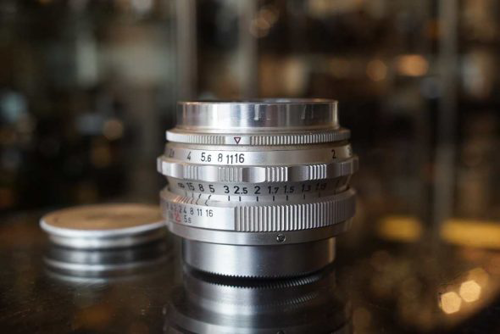
The Steinheil Quinon 50mm f/2 is a chrome LTM normal lens from Munich maker C. A. Steinheil, an uncommon screw-mount alternative for vintage rangefinder collectors.
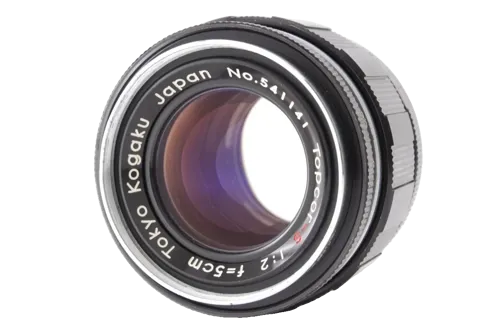
The Tokyo Kogaku Topcor 50mm f/2 is a six-element double-Gauss LTM standard lens supplied with Leotax rangefinders, prized by collectors for its sharpness.
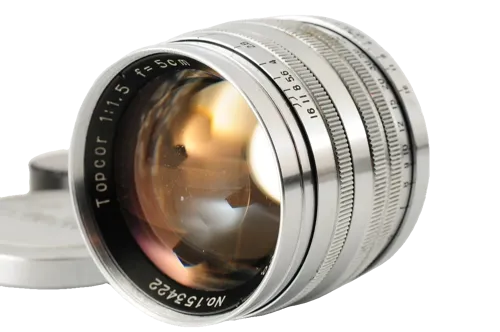
The Tokyo Kogaku Topcor 50mm f/1.5 is a fast LTM rangefinder standard lens from Japan's Topcon maker, prized by collectors of vintage screw-mount optics.
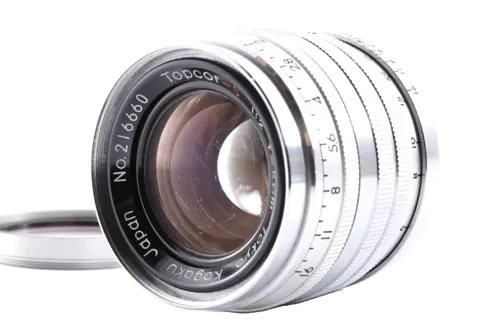
Tokyo Kogaku Topcor-S 5cm f/2 LTM is a rare Japanese Leica screw-mount standard lens for Leotax and rangefinder collectors.
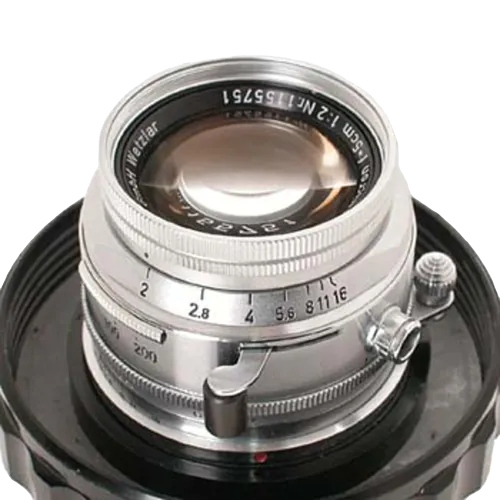
The Leica Compur-Summicron 5cm f/2 is a rare M39 lens with an integral leaf shutter, built for faster electronic-flash synchronization.
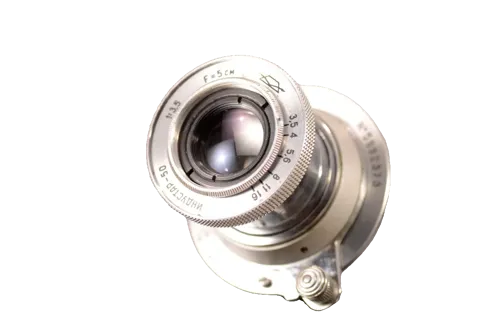
The KMZ Industar-50 50mm f/3.5 is a Tessar-derived M39 standard lens for Soviet rangefinders, valued by collectors as a cheap, sharp Elmar-style classic.
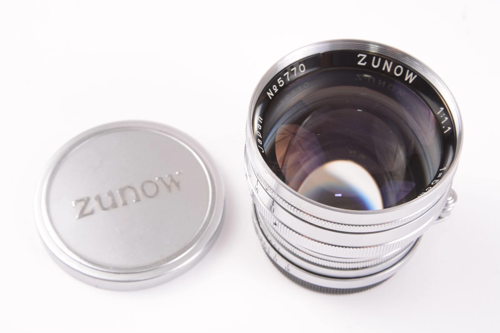
The Zunow 5cm f/1.1 in LTM is a rare 1953 Japanese Sonnar-type optic, the first ultrafast rangefinder lens and a prized collector piece.
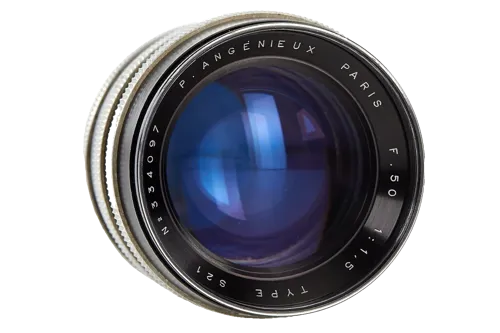
A circa-1953 Angénieux Type S21 50mm f/1.5 fast normal lens with six elements in four groups, original coupled LTM mounting and 1m focus.
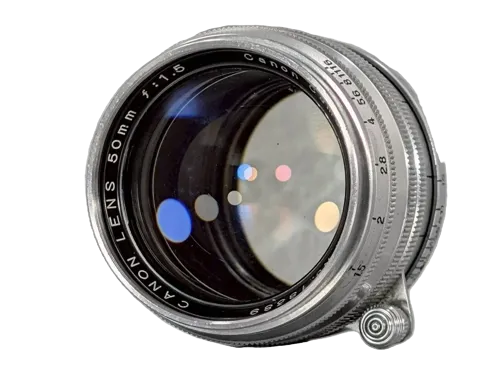
A Sonnar-derived Canon 50mm f/1.5 in Leica thread mount, a 1952 large-aperture standard lens prized by collectors for its classic rendering.
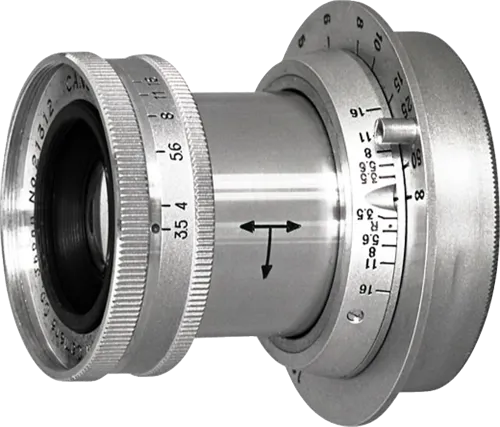
An August 1952 Canon Serenar 50mm f/3.5 standard lens with four elements in three groups, coupled LTM focusing and a collapsible barrel.
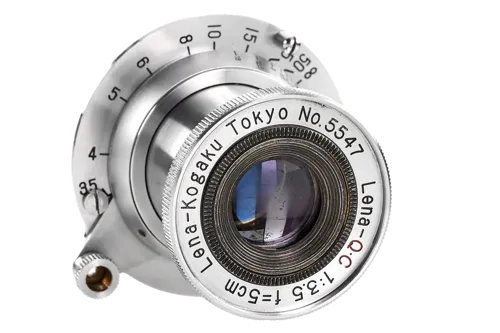
A collapsible Japanese 50mm f/3.5 standard lens in coupled Leica M39 mount, offered with Reise-built Chiyoca IIF rangefinders from 1952.
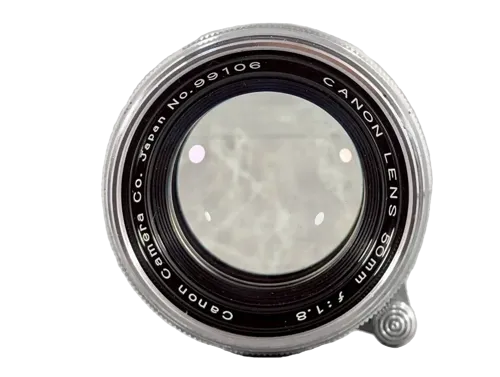
The Canon 50mm f/1.8 I is a compact six-element LTM rangefinder standard lens from 1951, a classic Serenar design popular with screw-mount collectors.
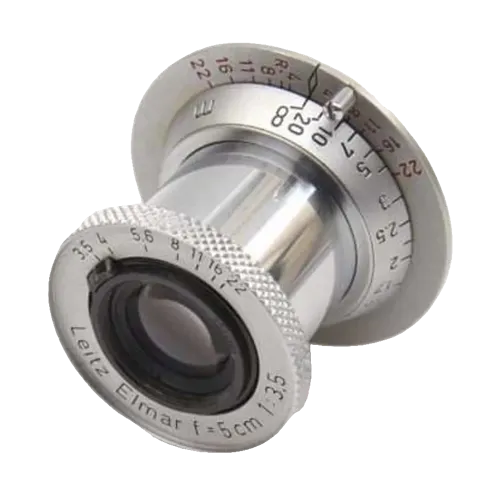
The Leica Elmar 50mm f/3.5 Red Scale is a late collapsible LTM standard lens, recognized by its revised optics and red depth-of-field markings.
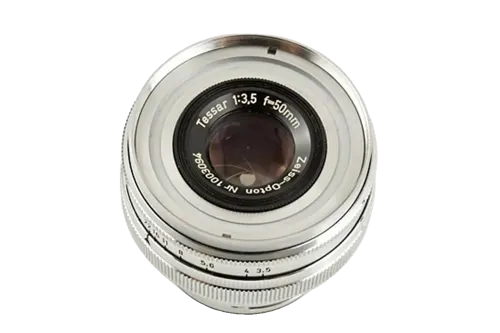
A rigid postwar West German 50mm f/3.5 Tessar for the Contax internal bayonet, with four elements, body-driven focusing and rangefinder coupling.
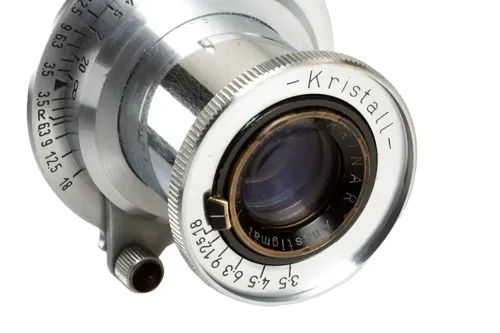
A circa-1951 Italian 50mm f/3.5 collapsible Tessar-type standard lens in coupled Leica M39 mount, made for AFIOM's Kristall rangefinders.
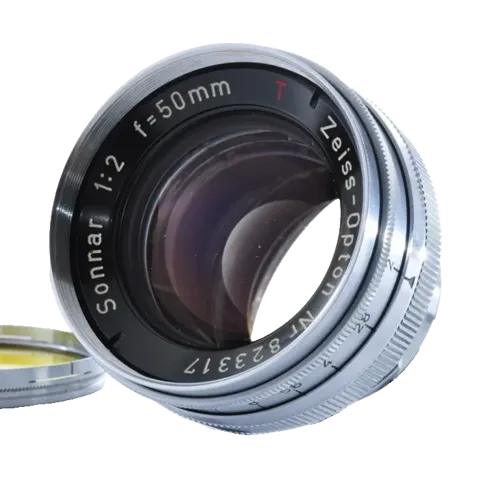
The Carl Zeiss Opton Sonnar 50mm f/2 is a coated postwar West German Contax rangefinder lens, a collectible six-element Bertele Sonnar design.</parameter> <parameter name="long_description">## Carl Zeiss Opton Sonnar 50mm f/2 The Opton Sonnar 50mm f/2 represents the West German continuation of one of the most influential rangefinder lens designs of the twentieth century. It is the slower, more affordable sibling of the famous f/1.5 Sonnar, built on the same optical principle conceived by Ludwig Bertele, who developed the fast Ernostar at Ernemann before that firm was absorbed into Zeiss [1]. The "Opton" marking on the barrel identifies it as a product of the Oberkochen branch of Carl Zeiss after the company was split between East and West Germany following the Second World War, when the western operation relaunched the lens as Zeiss-Opton around 1950. Optically the lens follows the classic Sonnar layout of six elements arranged in three groups, comprising one single element and two cemented groups. This compact three-group structure was central to Bertele's achievement, since reducing the number of air-to-glass surfaces lowered internal reflections and flare in an era before anti-reflective coatings, while still delivering high effective speed. The Opton-era lenses carried the red T anti-reflective coating, a meaningful improvement over the uncoated prewar Sonnars, and the body was built from chrome over brass. It is a compact, all-metal lens for the Contax rangefinder bayonet mount; on these cameras focus is driven through the camera body's helicoid rather than a coupling mechanism on the lens barrel itself, and the lens is finished in silver chrome with an eleven-blade iris. The Opton name is itself a useful identification marker. The branding existed because of the postwar dispute over the Carl Zeiss trademark, and the marking changed as the situation evolved. The final type of these lenses, built around 1953, was no longer marked Zeiss-Opton once Zeiss Ikon regained the rights to use the "Carl Zeiss" brand; that later type also dropped the aperture-ring grips and stopped down to f/16. Earlier in the run, a black filter ring was introduced from 1951, and around 1952 a version that stopped down to f/22 appeared. Because the f/2 Sonnar was produced in both prewar Carl Zeiss Jena form and postwar East and West German forms, the Opton marking together with the coating and chrome-over-brass construction is one of the clearest ways to place a given example in the West German postwar production. --- ## Optical qualities **Rendering** The postwar Opton Sonnar f/2 inherits the rendering reputation of the Sonnar family, which is rooted in its low-flare, high-contrast three-group design and, in this generation, the addition of T coating. Detailed, independently measured optical data for this specific f/2 variant is limited in the sources consulted, so claims about its sharpness, bokeh, and aberration behavior should be treated cautiously. What can be said with confidence is that the coating was a real advance over the uncoated prewar Sonnars in reducing reflections and light loss, which generally improves contrast. --- ## History **Development and Launch** The Sonnar name derives from the German word Sonne, meaning sun, and the modern Sonnar was introduced by Carl Zeiss Jena in 1932 for the Contax rangefinder system as a complete redesign that abandoned the earlier Tessar-derived lens of that name in favor of a layout based on the Ernostar. At its introduction the Contax Sonnar was the fastest lens available at f/1.5, and a slower f/2 budget version was offered alongside it. The f/2 Sonnar therefore existed from the line's earliest days as the more economical normal lens for Contax users. **Production Evolution** After the war Zeiss was divided between East and West Germany, and the western branch in Oberkochen relaunched the lens as Zeiss-Opton around 1950 with a new optical design and red T coating, in a chrome-over-brass body. A black filter ring followed from 1951, and around 1952 apertures extending to f/22 were introduced. The final lenses of 1953 abandoned the Zeiss-Opton marking in favor of "Carl Zeiss," dropped the aperture-ring grips, and stopped down to f/16. **Special editions** No major factory special editions of the postwar Opton f/2 Sonnar are widely documented in the sources consulted; the notable variation within the line concerns the marking, coating, minimum aperture, and filter-ring changes described above rather than distinct commemorative or military versions. **Collector Notes** For buyers, the most useful identification points are the "Zeiss-Opton" marking with the red T, which together signal a postwar West German example rather than a prewar Carl Zeiss Jena lens or an East German postwar build. The presence or absence of the aperture-ring grips and the marked minimum aperture (f/16 versus f/22) help narrow the production period. As with all coated Sonnars of this age, the soft early coatings and the cemented groups make haze and coating condition worth inspecting closely before purchase. Note also that the same f/2 Sonnar design lived on in Soviet form as the ZK and then the Jupiter-3 after the USSR moved Zeiss tooling to Kiev, so the design lineage is easily confused with later copies even though those are differently marked and constructed. --- ## Sources * [1] Camera-wiki.org. *Sonnar 50mm*. https://camera-wiki.org/wiki/Sonnar_50mm * [2] Kamerastore. *Carl Zeiss 50mm f2 Sonnar T* Opton - Lens*. https://kamerastore.com/en-us/products/carl-zeiss-50mm-f2-sonnar-t-opton-contax-kiev * [3] LENS-DB.COM. *Carl Zeiss / Zeiss-Opton Sonnar 50mm F/2*. https://lens-db.com/zeiss-opton-carl-zeiss-contax-sonnar-50mm-f2
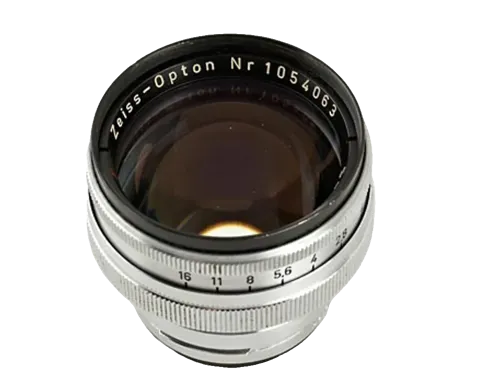
A postwar West German 50mm f/1.5 Sonnar for Contax RF, with seven elements, body-driven internal-bayonet focusing and a thirteen-blade iris.
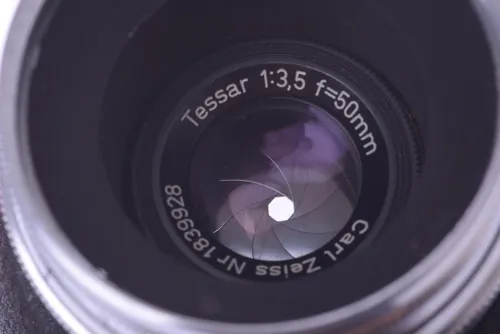
A non-coupled 50mm f/3.5 Tessar focusing head for the Contaprox I, providing its own helicoid and dedicated close-up and reproduction capability.
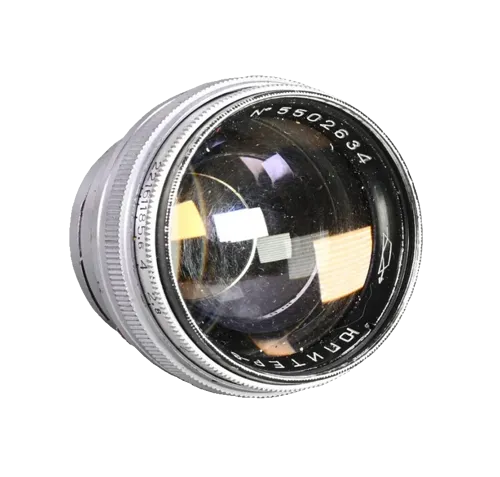
A fast KMZ 50mm f/1.5 seven-element Sonnar-type lens for the Contax/Kiev internal bayonet, focused and rangefinder coupled by the camera body.
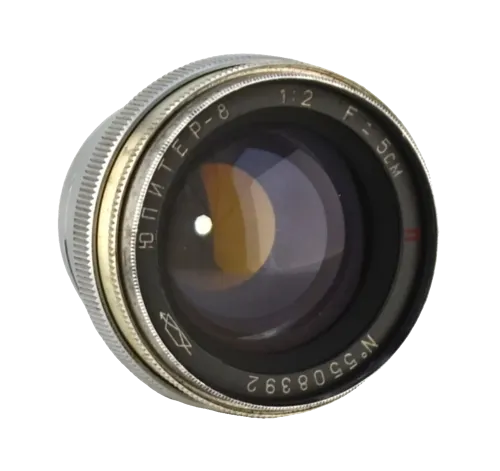
An early KMZ 50mm f/2 six-element Sonnar-type lens for the Contax/Kiev internal bayonet, focused and rangefinder coupled by the camera body.

An early-1950s Japanese rigid 50mm f/3.5 lens with four elements in three groups, coupled LTM focus, 12 blades and a 0.46m near range.

A rigid, coupled 50mm f/1.5 standard lens introduced for the Leotax D IV around 1950, with seven elements, twelve blades and a substantial chrome barrel.
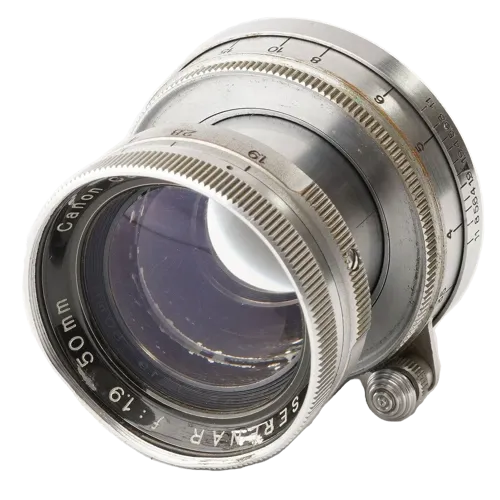
The Canon Serenar 50mm f/1.9 is an early postwar LTM rangefinder lens, Canon's first fast normal optic and a sought-after Japanese Leica-era classic.
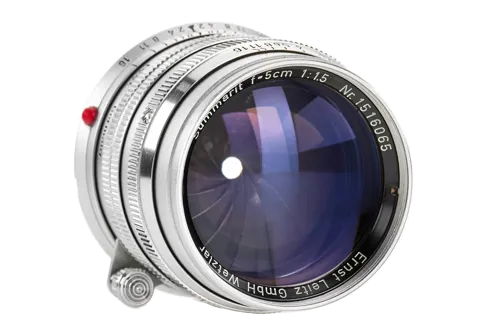
Leica Summarit 50mm (5cm) f/1.5, 1949 fast LTM and M lens with 7/5 optics, Xenon roots, vintage glow, and collectible SOOIA variants.

A 1949 Japanese 50mm f/1.5 Sonnar-type lens with seven elements, coupled LTM focusing, 40.5mm filters and an uncoupled 0.46m near range.
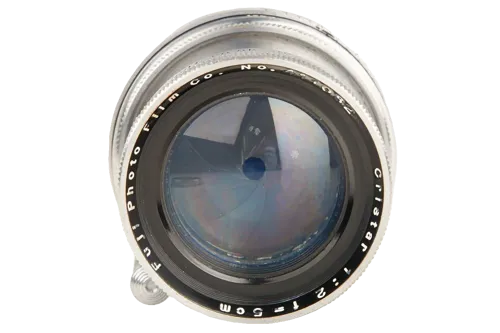
A 1949 Japanese collapsible 50mm f/2 standard lens with six elements in four groups, original coupled Leica M39 focusing and 1.07m close focus.
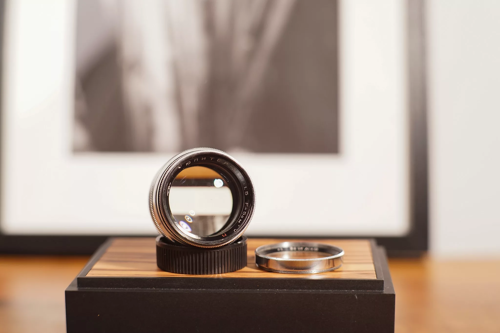
The KMZ Jupiter-3 50mm f/1.5 is a Soviet Sonnar-derived rangefinder lens in M39 mount, prized by Leica thread-mount collectors for its classic glow.
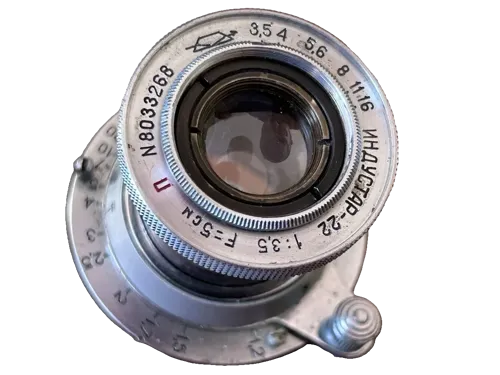
The KMZ Industar-22 is a collapsible 50mm f/3.5 Tessar-type M39 rangefinder lens, an Elmar-style Soviet standard prized by collectors of early KMZ optics.
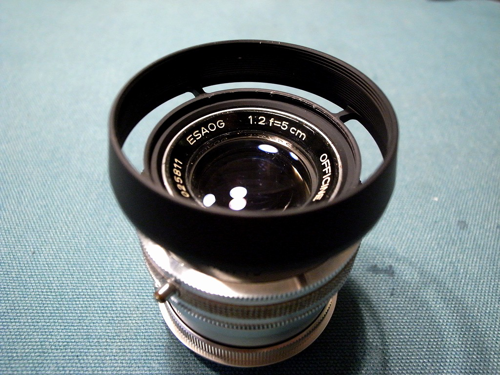
The Officine Galileo ESAOG 5cm f/2 is a six-element Italian 50mm f/2 lens in Leica thread mount (LTM), a scarce and little-documented collector item.
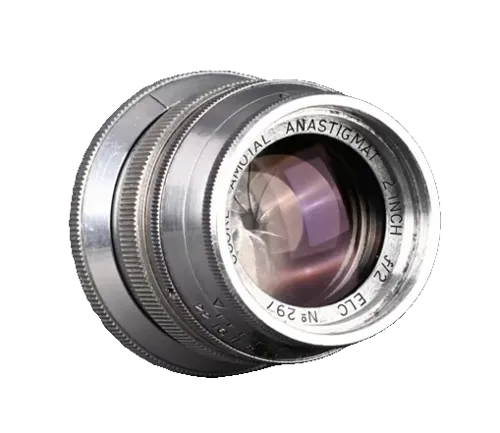
The Cooke Amotal Anastigmat 2 inch f/2 is a rare British, rangefinder-coupled LTM standard lens with six-element Double Gauss optics.
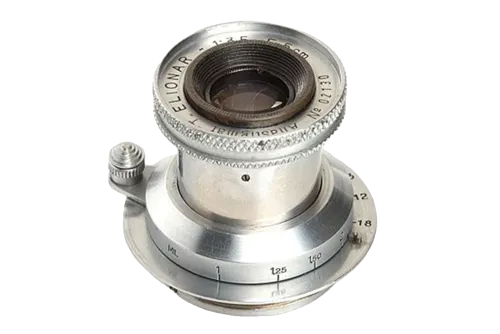
A rare Italian collapsible 5cm f/3.5 lens for Sonne Leica-copy cameras, associated with Officine Galileo and the former Koristka optical works.
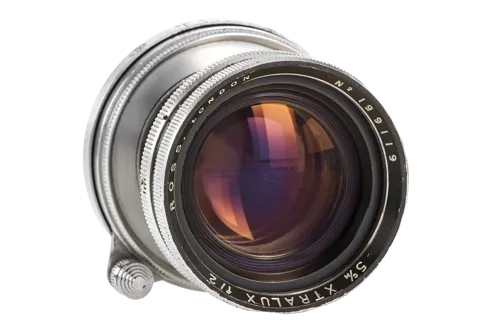
An exceptionally rare British 50mm f/2 Double Gauss lens for Leica Thread Mount, documented in both collapsible and rigid rangefinder barrels.
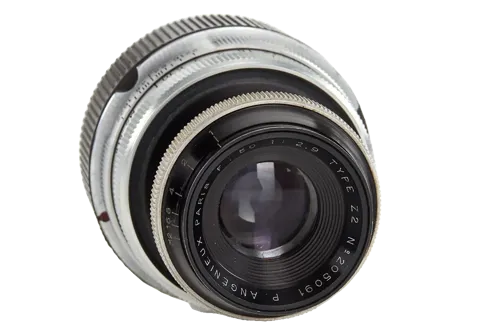
A 1948 Angénieux Type Z2 50mm f/2.9 triplet with a collapsible, rangefinder-coupled LTM barrel, 1m close focus and Gamma-camera links.
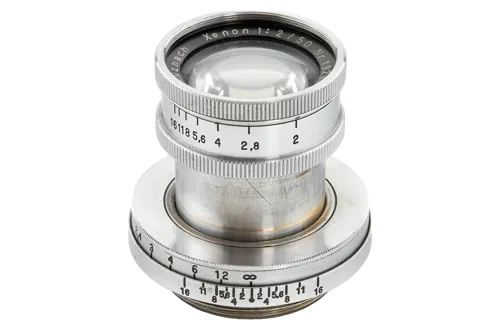
A 1948 German collapsible 50mm f/2 standard lens with a six-element, four-group design, coupled Leica M39 focusing and 1.2m close focus.
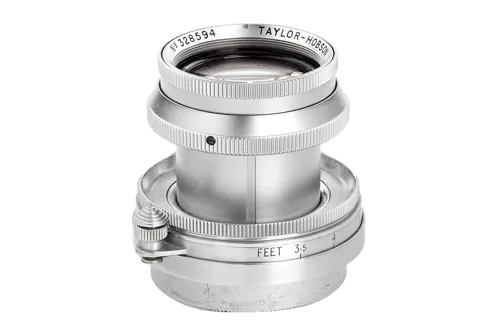
A 1951 British 2-inch f/2 collapsible six-element standard lens, coated and rangefinder-coupled in Leica M39 for the Reid camera system.
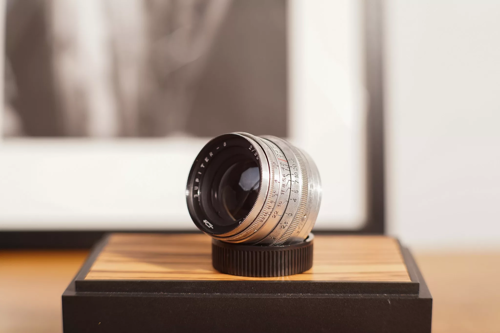
The KMZ Jupiter-8 50mm f/2 is a Soviet Sonnar-derived M39 rangefinder lens, prized by collectors for classic rendering and very low cost.
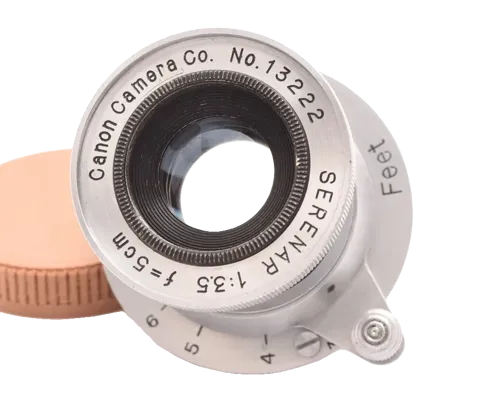
The Canon 5cm f/2 Serenar Collapsible is a scarce postwar Double Gauss LTM rangefinder lens, prized by Canon screw-mount collectors more for rarity than speed.
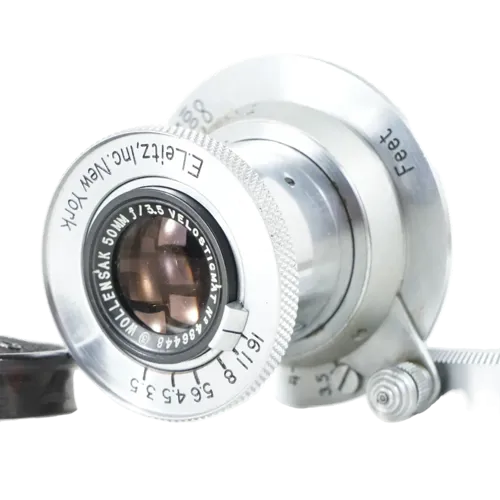
Wollensak Velostigmat 50mm f/3.5 LTM is a rare E. Leitz New York Leica screw-mount standard lens for collectors.
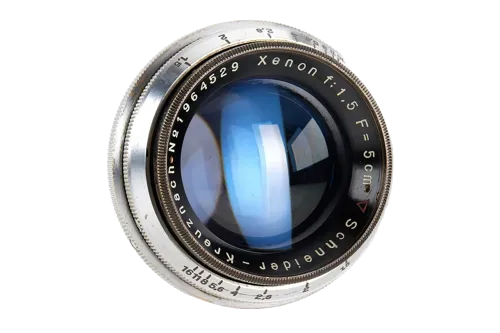
A 1947 German 50mm f/1.5 standard lens with seven elements in five groups, original coupled LTM focusing and a rigid black-painted barrel.
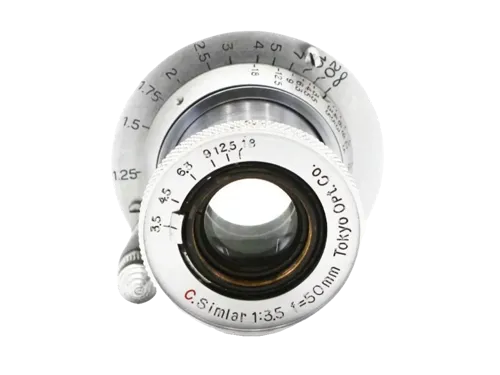
A coated, collapsible 50mm f/3.5 standard lens made by Tokyo Optical for late-1940s Leotax bodies, with coupled LTM focus and an early f/18 scale.
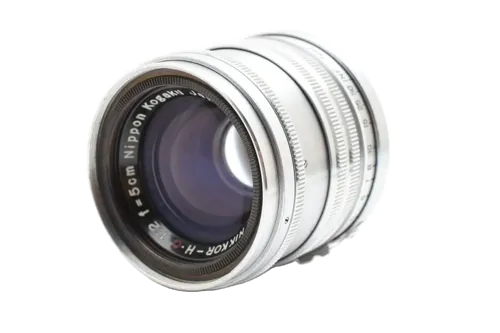
Nippon Kogaku Nikkor-H.C 5cm f/2 LTM is a classic Nikon Leica screw-mount Sonnar-type lens for Japanese rangefinder collectors.
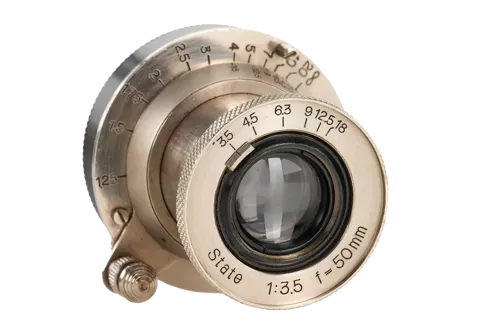
A 1946 Tokyo Optical collapsible 50mm f/3.5 for the coupled Leotax Special, identified by State engraving, nickel finish and an old-style f/18 scale.
A collapsible Tokyo Optical 50mm f/3.5 for Leotax rangefinders, spanning early f/18 and later f/16 versions in native coupled Leica thread mount.
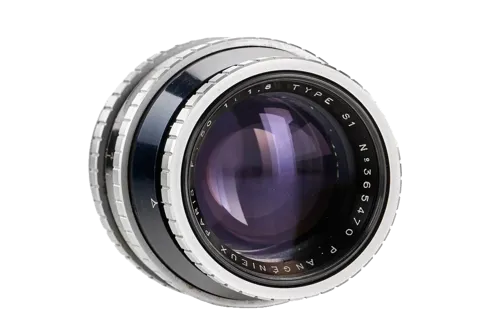
A rare French 50mm f/1.8 six-element Double Gauss lens, documented in original rangefinder-coupled Leica M39 and Contax RF factory mounts.

An early postwar Japanese collapsible 50mm f/3.5 lens with four elements in three groups, coupled LTM focusing and a 0.91m near limit.
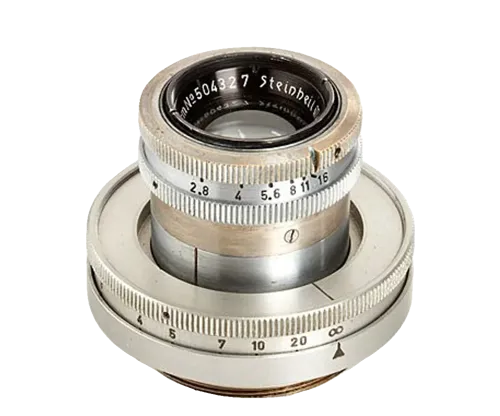
A circa-1945 Steinheil 50mm f/2.8 standard lens in an original collapsible, rangefinder-coupled Leica thread mount, distinct from rigid Triplar forms.
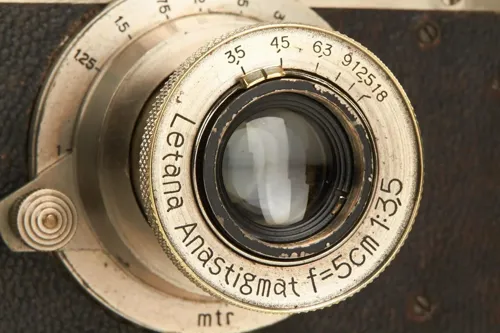
A 1942 Fujita-made 50mm f/3.5 collapsible triplet in coupled Leica M39 mount, supplied with Showa Kogaku's Leotax Special rangefinder.
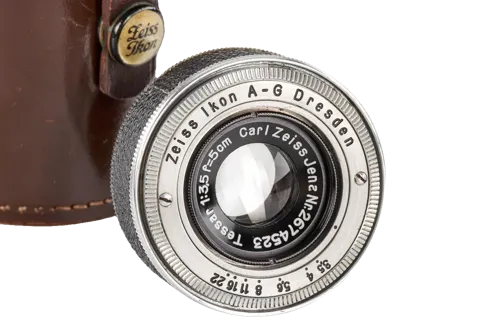
A rigid 50mm f/3.5 Tessar for Contax RF, combining a four-element optical design with compact internal-bayonet, body-driven rangefinder focusing.
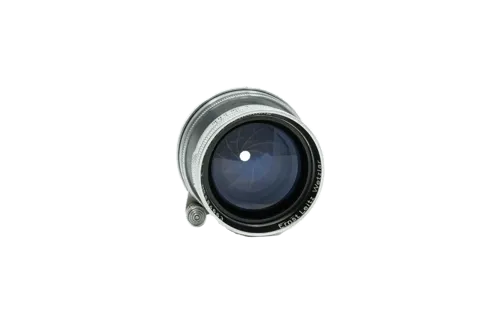
The Leica Summitar 5cm f/2 is a collapsible LTM-mount normal lens of 1939, a seven-element Leitz design prized by screw-mount collectors and film shooters.
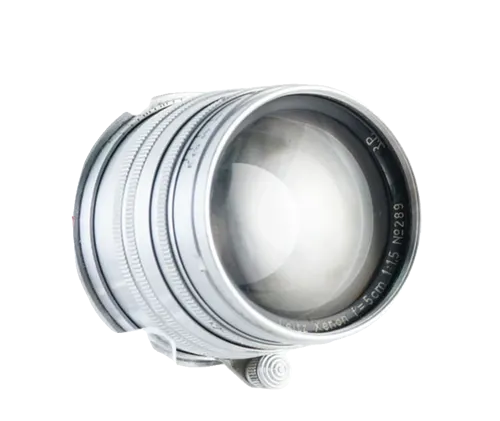
Leica's Xenon 50mm f/1.5 in LTM screw mount was the company's first super-speed standard lens, a 1930s Schneider-built rival to the Zeiss Sonnar prized by collectors.
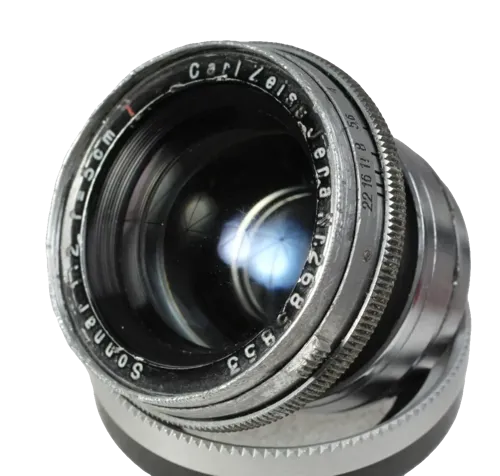
The Carl Zeiss Sonnar 5cm f/2 collapsible, the slower companion to the famous f/1.5, is a six-element Contax rangefinder classic prized by collectors.
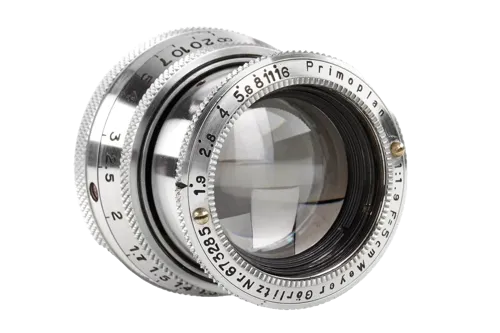
A 1930s German collapsible 50mm f/1.9 standard lens with five elements in four groups, original coupled LTM focusing and a ten-blade iris.
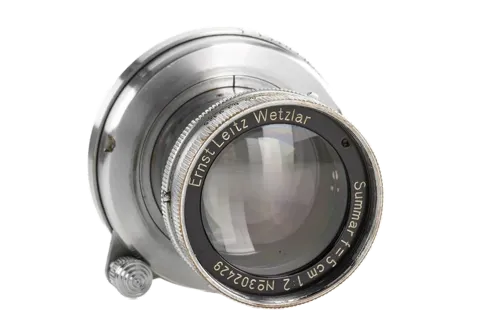
Leica Summar 5cm f/2, 1933 LTM rangefinder lens with 6/4 optics, collapsible build, early f/2 history, and collectible rigid, nickel variants.
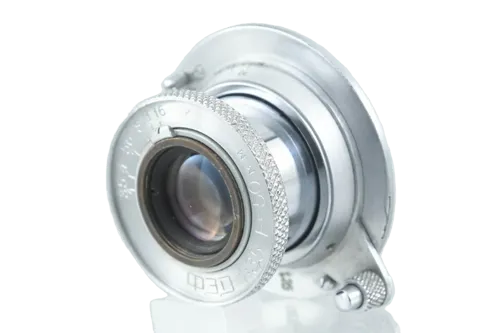
The FED Industar-10 50mm f/3.5 is an early collapsible, rangefinder-coupled LTM normal lens with four-element Tessar-type optics and eight blades.
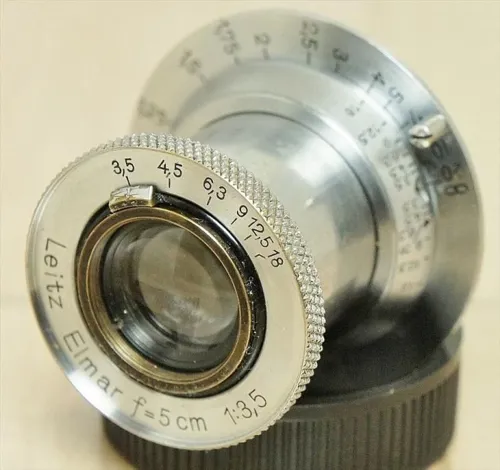
The Leica Elmar 5cm f/3.5 Chrome is a classic collapsible LTM standard lens, known for its compact brass barrel and central role in Barnack Leica history.
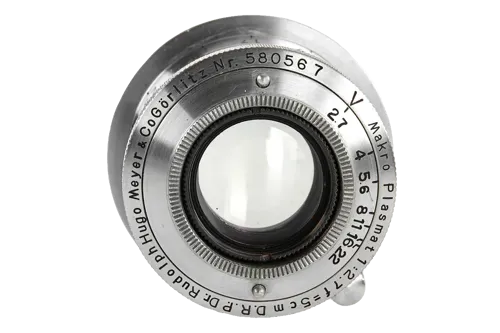
A 1933 German collapsible 50mm f/2.7 lens with six elements in five groups, original rangefinder-coupled Leica M39 focusing and 1m close focus.
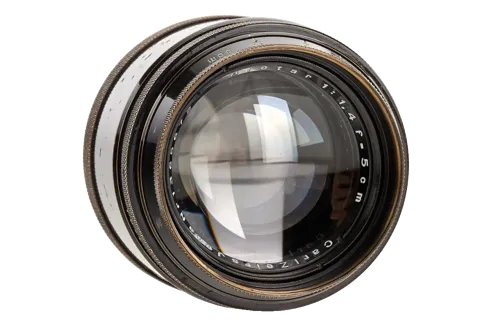
An exceptionally rare Carl Zeiss Jena 5cm f/1.4 Biotar in standardized coupled Leica screw mount, with six elements in four groups.
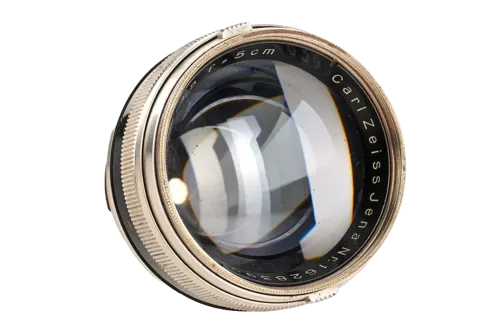
The classic fast 50mm f/1.5 Sonnar for Contax RF, using seven elements in three groups and body-driven focusing through the internal bayonet.
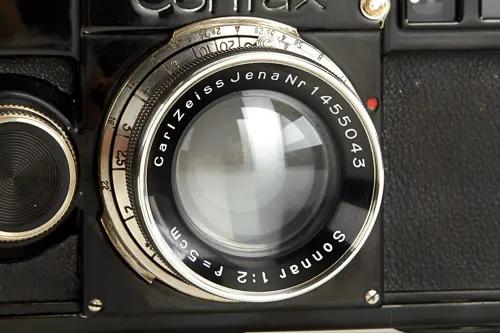
A rigid 50mm f/2 Sonnar for Contax RF, with six elements in three groups and internal-bayonet focusing driven and coupled by the camera body.
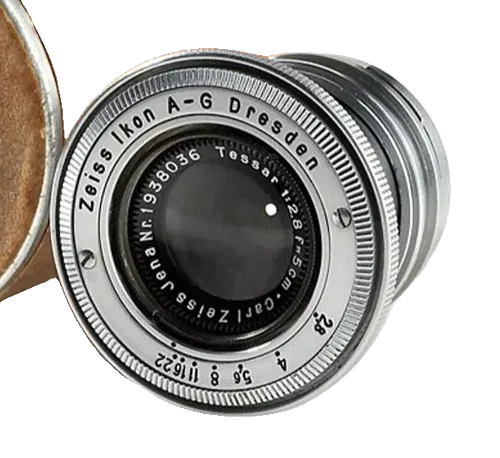
A collapsible 50mm f/3.5 Tessar for early Contax RF cameras, using four elements, internal-bayonet body focusing and a compact retractable barrel.
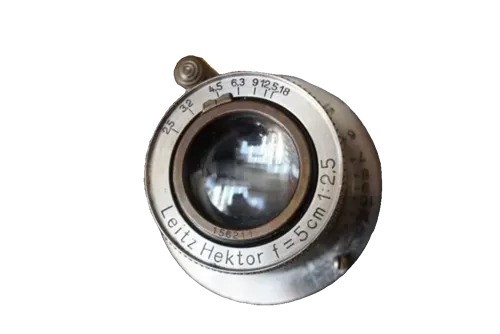
The Leica Hektor 5cm f/2.5 is a 1930s LTM standard lens, the fastest early screw-mount Leitz fifty and a sought-after Barnack-era collector piece.
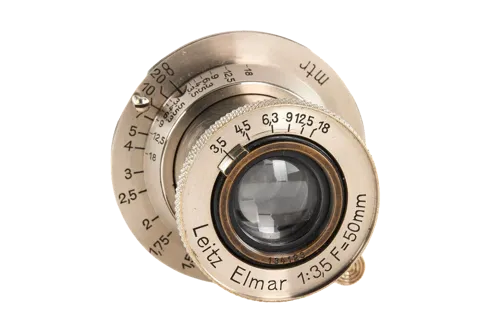
The Leica Elmar 50mm f/3.5 Nickel is an early collapsible LTM standard lens from Leica's transition to standardized, rangefinder-coupled lenses.
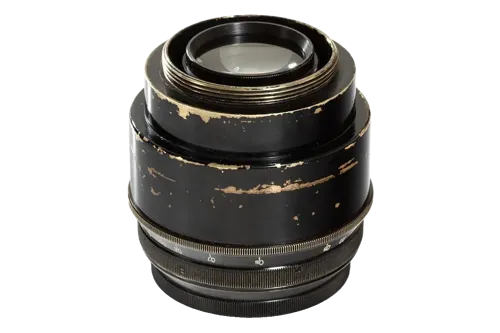
An exceptionally rare 1929 Carl Zeiss Jena 5cm f/1.4 Biotar in non-standard Leica screw mount, uncoupled and individually calibrated.
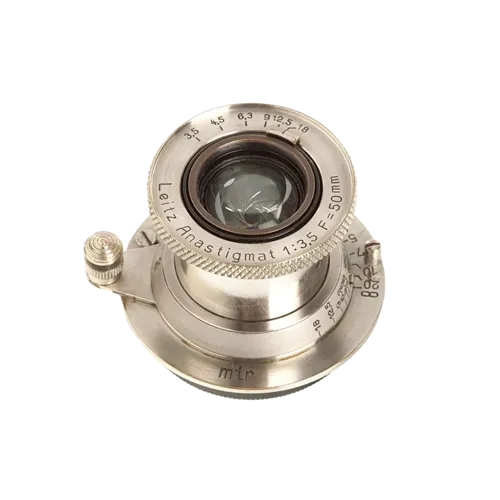
The Leica Anastigmat 50mm f/3.5 RF conversion is an exceptionally rare five-element LTM lens converted from an early fixed Leica I optic.
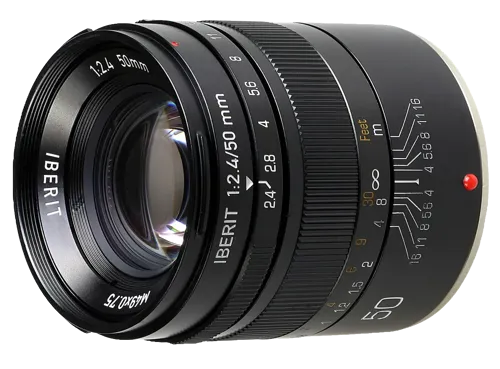
The KIPON Iberit (Elegant) 50mm f/2.4 is a compact all-metal manual prime in Leica M mount, valued by collectors for its deliberately classic rendering.
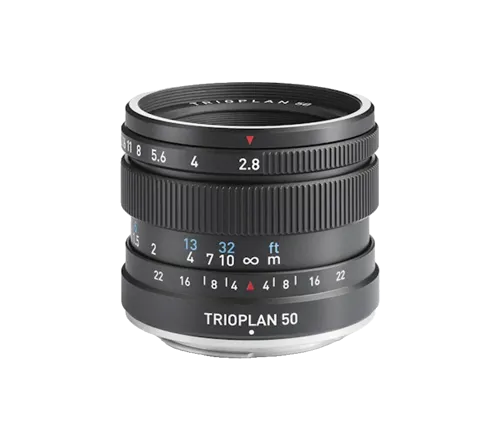
The Meyer-Optik Gorlitz Trioplan 50mm f/2.8 II is a modern triplet prime in Leica M mount, prized by collectors for its soap-bubble bokeh.
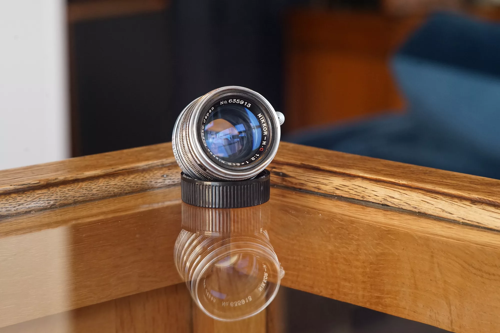
Nippon-Kogaku Nikkor-HC 5cm f/2 Rigid: a Sonnar-derived 50mm f/2 LTM rangefinder lens, prized by Leica thread-mount collectors for its build and rendering.
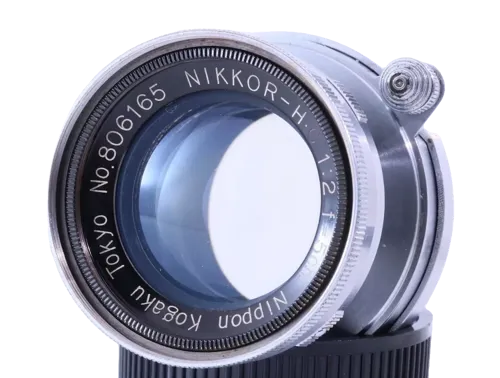
The Nippon-Kogaku Nikkor-HC 5cm f/2 Collapsible is a rare LTM Sonnar-derived 50mm rangefinder lens prized by Nikon and Leica-mount collectors.
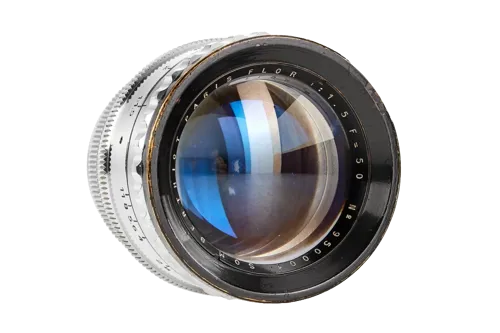
A 1940s French 50mm f/1.5 standard lens in an original polished heavy-brass, rangefinder-coupled Leica M39 barrel with early coated optics.
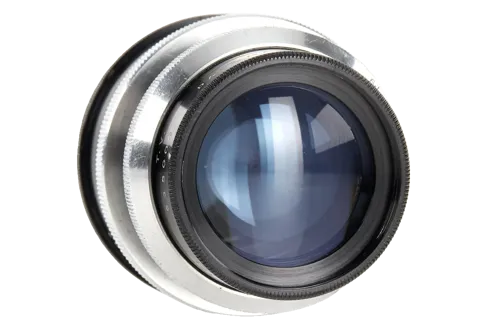
A late-1940s coated Dallmeyer 2-inch f/1.9 standard lens in an original rigid, rangefinder-coupled Leica M39 mount, equal to approximately 50.8mm.