Nippon Kogaku Nikkor-H.C 5cm f/2 LTM is a classic Nikon Leica screw-mount Sonnar-type lens for Japanese rangefinder collectors.
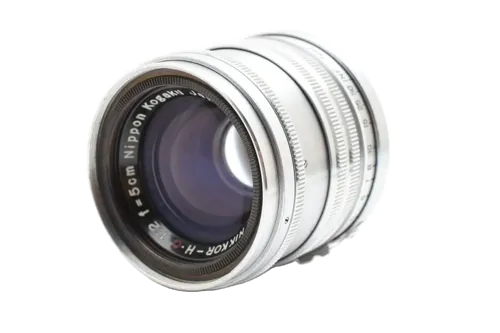
Nippon-Kogaku Nikkor-H.C 5cm f/2
LTM mount
No listings tracked for this lens right now.
The Nippon-Kogaku Nikkor-H.C 5cm f/2 is a LTM-mount lens for Leica rangefinder cameras. Leica price index →
How it compares
Measured against the 108 other 50mm LTM-mount lenses in the catalogue.
Specification
About this lens
Nippon Kogaku Nikkor-H.C 5cm f/2 LTM
The Nippon Kogaku Nikkor-H.C 5cm f/2 LTM is a Japanese Leica screw-mount standard lens made for L39 / M39 rangefinder cameras. It is part of Nikon’s early postwar Nikkor rangefinder lens family and uses a Sonnar-type optical formula with 6 elements in 3 groups [1]. The H in the name refers to six elements, while C indicates coated optics, an important selling point for early postwar Nikkor lenses [2].
The LTM version is rangefinder coupled from approximately 1 m to infinity, but the focusing helicoid allows closer uncoupled focusing to about 0.45 m. This makes it unusual among vintage Leica screw-mount 50mm lenses, although close focusing below the coupled range requires scale focusing, measuring distance, or using a dedicated close-focus accessory [3]. Phillip Reeve records the LTM version with a 47 mm diameter, 34 mm length, 225 g weight, 40.5 mm filter thread, 10 aperture blades, and 6 elements in 3 groups.
For collectors, the Nikkor-H.C 5cm f/2 LTM is important because it links Nippon Kogaku’s early rangefinder production with the Zeiss Sonnar tradition and the postwar Leica-copy market. It was used on Leica screw-mount bodies and many Japanese Leica-compatible cameras, including Nicca, Tower, Leotax, and related L39 systems [4]. The lens should be kept separate from Nikon S-mount versions, collapsible LTM versions, later black-belt rigid versions, Nikkor-S.C 5cm f/1.4, Nikkor-S.C 5cm f/1.5, and later Nikon F-mount 50mm lenses.
History
Development and Launch
Nikon’s own historical account states that Nippon Kogaku began producing photographic lenses after the Second World War and developed early Leica-mount lenses including the 5cm f/3.5 in 1945, 5cm f/2 in 1946, 13.5cm f/4 in 1947, 8.5cm f/2 in 1948, 3.5cm f/3.5 in 1948, and 5cm f/1.5 in 1949. The 5cm f/2 design had prewar roots and was associated with Saburo Murakami’s optical design work at Nippon Kogaku.
Production Evolution
Pacific Rim Camera describes several rangefinder-era versions of the 50mm f/2 Nikkor, beginning with collapsible lenses and moving to a rigid mount around 1950 [5]. The rigid version appeared in chrome, later changed markings from Tokyo to Japan, and eventually evolved into black-barrel or black-belt versions. Richard Haw notes that the Nikkor-H.C 5cm f/2 family was sold from 1946 until 1962 in several minor versions and mounts [6].
Special Variants
Important related variants include early collapsible Leica screw-mount lenses, rigid chrome LTM lenses, black-belt LTM lenses, Nikon S-mount versions, and later non-C marked examples after coating became standard enough that the C marking was no longer emphasized. The black-belt LTM version is mechanically related but visually distinct, with a black aperture ring and later exterior styling [7]. These should be tracked as version details rather than separate optical formulas unless LeicaLensList needs mount or barrel-level variant pages.
Collector Notes
Collectors should verify the exact mount, because the lens exists in both Nikon S-mount and Leica screw-mount versions. The correct LTM version has a 39 mm screw mount and its own focusing helicoid, unlike Nikon S-mount lenses that rely on the camera’s internal focusing mount. Important checks include front-ring engraving, Nippon Kogaku Tokyo or Nippon Kogaku Japan marking, chrome or black-belt barrel type, close-focus function, rangefinder coupling to 1 m, 40.5 mm filter thread, haze, cleaning marks, balsam separation, oil on aperture blades, and helicoid smoothness. Early Sonnar-type lenses can be sensitive to internal haze and separation, so optical condition is especially important.
Sources
- Nikon Imaging. The Thousand and One Nights No.34, NIKKOR-H.C 5cm F2imaging.nikon.com →
- Ken Rockwell. Nikon 5cm, 50mm, f/2kenrockwell.com →
- Phillip Reeve. Review: Nikon Nikkor-H 50mm 2.0 RFphillipreeve.net →
- Casual Photophile. Nikon Nikkor H C 50mm F/2 LTM Lens Reviewcasualphotophile.com →
- Pacific Rim Camera. 50/2 Nikkor for Rangefinderpacificrimcamera.com →
- Richard Haw. Repair: Nikkor-H.C 5cm f/2, S-Mountrichardhaw.com →
- Richard Haw. Repair: Nikkor-H.C 5cm f/2, Blackbelt LTMrichardhaw.com →
Where to buy
Nippon-Kogaku Nikkor-H.C 5cm f/2: frequently asked
What filter size does the Nippon-Kogaku Nikkor-H.C 5cm f/2 take?
The Nippon-Kogaku Nikkor-H.C 5cm f/2 takes 40.5 mm screw-in filters (E40.5).
How close does the Nippon-Kogaku Nikkor-H.C 5cm f/2 focus?
The Nippon-Kogaku Nikkor-H.C 5cm f/2 focuses down to 0.45 m; below 0.7 m the rangefinder no longer couples, so use live view or an EVF for the close range.
How heavy is the Nippon-Kogaku Nikkor-H.C 5cm f/2?
The Nippon-Kogaku Nikkor-H.C 5cm f/2 weighs 225 g, lighter than 50% of the 58 other 50mm LTM-mount lenses in the catalogue.
Which cameras does the Nippon-Kogaku Nikkor-H.C 5cm f/2 fit?
The Nippon-Kogaku Nikkor-H.C 5cm f/2 is a Leica screw-mount (M39/LTM) lens. It fits Leica M bodies with a screw-to-M adapter, which keeps rangefinder coupling, and mirrorless cameras with an M39 adapter. It carries no 6-bit code, so select the lens profile by hand on a digital M.
When was the Nippon-Kogaku Nikkor-H.C 5cm f/2 made?
The Nippon-Kogaku Nikkor-H.C 5cm f/2 was produced from 1946 to 1962.
How does the Nippon-Kogaku Nikkor-H.C 5cm f/2 compare to the Nippon-Kogaku Nikkor-S.C 50mm f/1.5?
The Nippon-Kogaku Nikkor-S.C 50mm f/1.5 is 0.8 stops faster (f/1.5 against f/2).
Reviews
No reviews yet. Own this lens? Be the first.
Write a review of the Nippon-Kogaku Nikkor-H.C 5cm f/2Related lenses
Similar lenses you might be interested in

Nikkor-S.C 50mm f/1.5
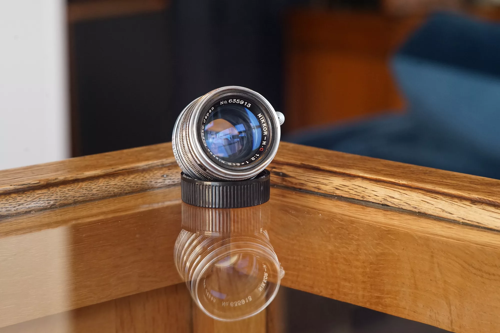
Nikkor-HC 5cm f/2 Rigid
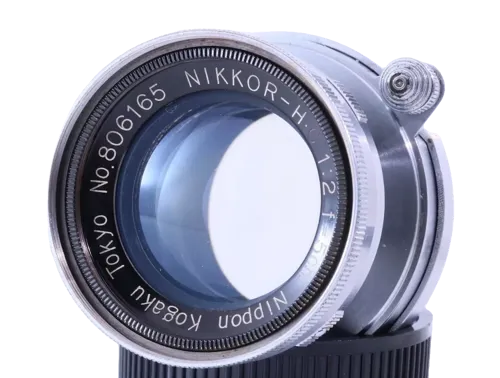
Nikkor-HC 5cm f/2 Collapsible
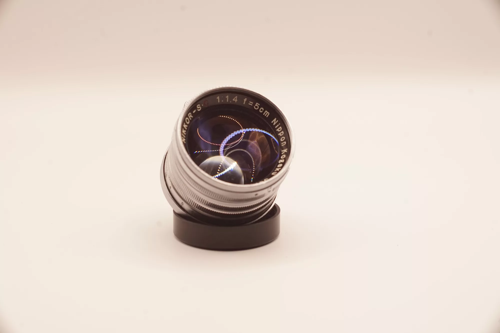
Nikkor-SC 50mm f1/1.4

Nikkor-Q.C 50mm f/3.5 (Collapsible)

Comments