135mm Lenses
35 lenses in the catalogue, 1931 to 2017
135mm is the longest focal length the M rangefinder couples to. It is the hardest lens in the system to use well: the frame lines are tiny, and the focusing has to be exact or the picture is soft.
It is also the cheapest way into a long lens. Vintage 135mm glass is frequently sharp and frequently overlooked, and prices reflect that more than the optics do.
What to expect
- The longest reach available with rangefinder focusing.
- Needs a well calibrated rangefinder, or an EVF or Live View instead.
- Usually the least expensive lenses in the catalogue for the optics you get.
What is on this list
Every 135mm M and LTM lens in the catalogue, from the older Leica Elmar to the APO-Telyt, plus Zeiss and Voigtländer. Filter by aperture, weight or production year, and sort by price to see how low it goes.
Not sure which 135mm fits you? It depends on how you shoot. Answer a few questions in the lens finder or compare any two lenses side by side.
The cheapest 135mm M / LTM-mount lens right now is Leica Hektor 135mm f/4.5 "Fat" at €46. Across 19 tracked 135mm lenses, prices run from €46 to €1,747 (median €191). See the live price index →
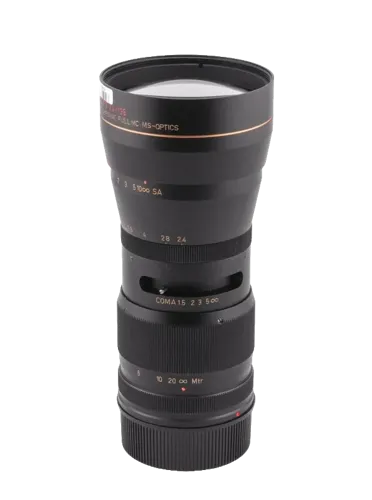
The MS-Optics Aporis 135mm f/2.4 is a compact fluorite super-apochromat for Leica M mount, a collector favorite from one-man maker Sadayasu Miyazaki.
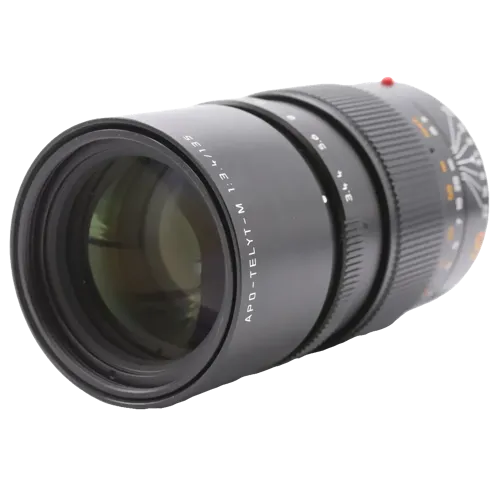
The Leica APO-Telyt-M 135mm f/3.4 is the longest M-mount rangefinder lens, an apochromatic telephoto prized by collectors for its compact size and resolution.
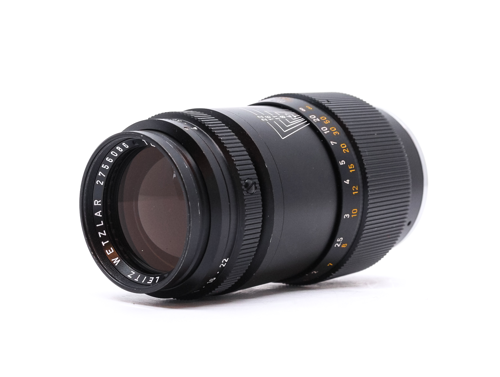
The Leica Tele-Elmar-M 135mm f/4 Type 2 (11861) is the built-in-hood, E46 M-mount version of Walter Mandler's long-lived 135mm telephoto, prized by collectors.
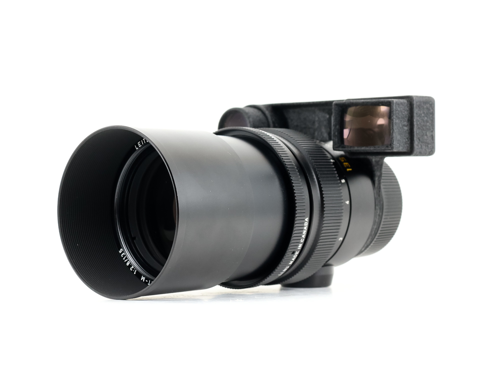
The Leica Elmarit-M 135mm f/2.8 II with OVU is an M-mount telephoto whose built-in magnifying goggles aid rangefinder focusing, a distinctive collector lens.
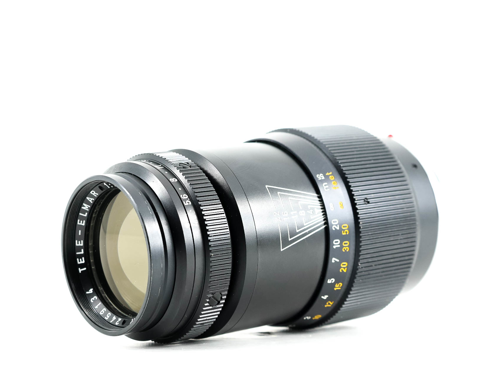
The Leica Tele-Elmar-M 135mm f/4 Type 1 is an M-mount telephoto valued by collectors as a sharp, affordable Walter Mandler design with a long production run.
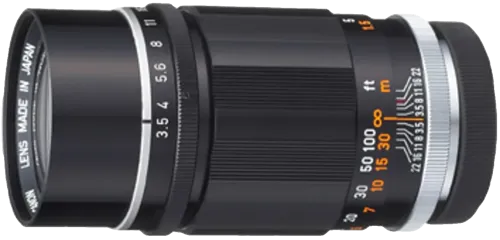
A 1961 Canon 135mm f/3.5 telephoto with four elements in three groups, coupled LTM focusing, 1.5m close focus and a light black barrel.
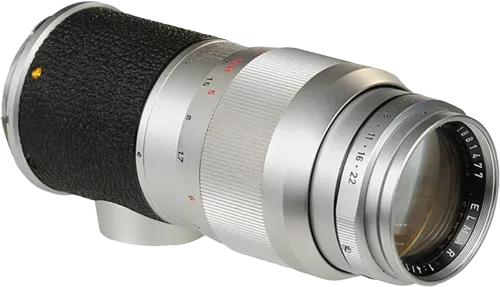
The Leica Elmar 135mm f/4 is an LTM rangefinder telephoto from the 1960s, a Mandler design valued by collectors for its modular Visoflex-compatible head.
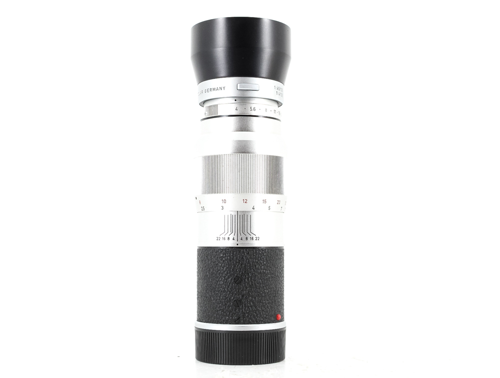
The Leica Elmar 135mm f/4 is a Walter Mandler four-element telephoto for the M mount, prized by collectors as an affordable, sharp rangefinder long lens.
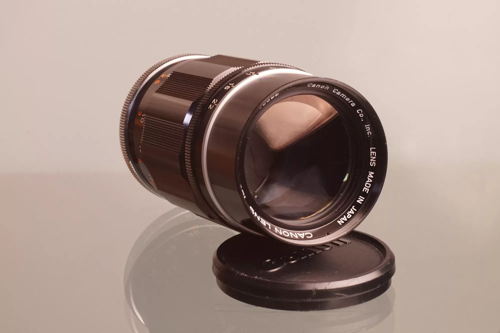
The Canon 135mm f/3.5 II is an all-black LTM screw-mount telephoto from 1958, a light, sharp and affordable rangefinder lens collectors still favor.
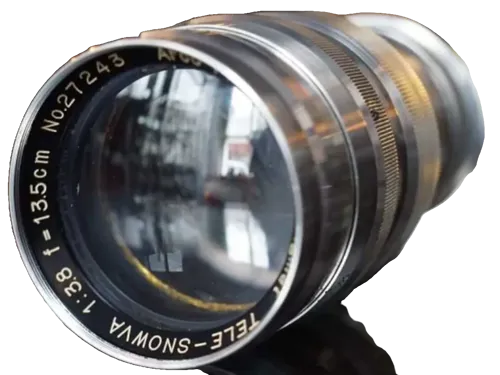
The Arco Tele-Snowva 135mm f/3.8 is a rare Japanese, rangefinder-coupled LTM telephoto with a chrome-brass barrel and twelve-blade diaphragm.
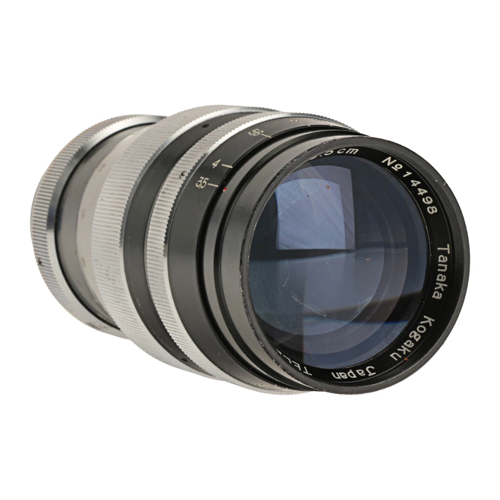
Tanaka Kogaku's Tele-Tanar 135mm f/3.5 C. is a four-element LTM telephoto built for Tanack rangefinders, now a scarce collector's lens from a short-lived maker.
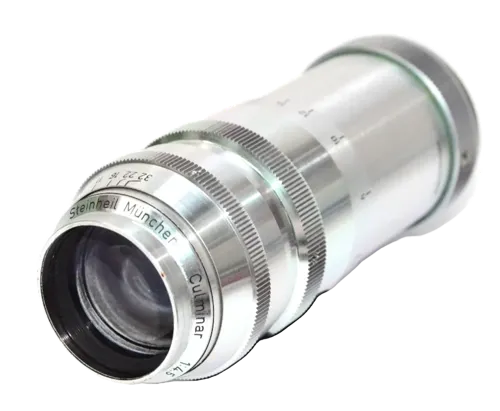
The Steinheil Culminar 135mm f/4.5 VL is a compact German, rangefinder-coupled LTM telephoto with four-element Tessar-type optics.
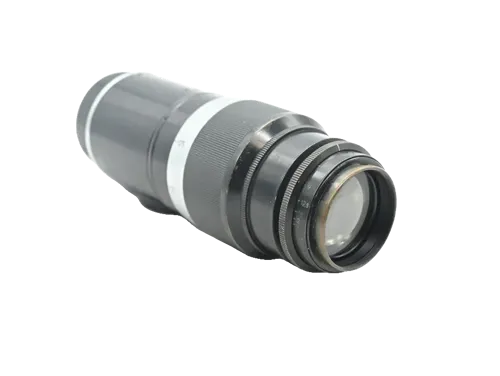
The Leica Hektor 135mm f/4.5 is a long, slow M-mount telephoto descended from a 1933 Leitz design, valued by collectors for its classic build and 15-blade iris.</parameter> <parameter name="long_description">## Leica Hektor 135mm f/4.5 Among the longest lenses in the classic Leica rangefinder catalogue, the Hektor 135mm f/4.5 is a modest-aperture telephoto whose lineage reaches back to a Leitz design first offered in 1933, after which the lens went through many revisions before reaching its later screw and bayonet forms [1]. The name Hektor was applied across several Leitz designs of the period, and on the 135mm it covers a comparatively simple optic that prioritized a long reach and a compact diameter over speed. Its slim barrel, 39mm filter thread, and fifteen-blade diaphragm are typical of the careful, conservative engineering that makes these lenses recognizable to collectors. Optically the Hektor 135mm uses four elements in three groups, a straightforward arrangement that suited the long focal length and the relatively dim f/4.5 maximum aperture. The lens is rangefinder coupled and focuses to a minimum distance of 1.5m, with a long focusing throw that aids precision at portrait and short-telephoto distances. The barrel is all metal in a two-tone finish, and at roughly 440g it is light for its 127mm length because the slow aperture keeps the front elements small. On the M mount it couples to the camera rangefinder directly, while the broader 135mm Hektor family was also produced in Leica thread mount and in short-mount form for the Visoflex reflex housing. Identification of a particular Hektor 135mm depends heavily on its production stage, since the design changed repeatedly over its long life. Examples were issued in screw mount and bayonet mount, in chrome and later black-trimmed finishes, and with front fittings that differ between the older A36 clamp-on size and the 39mm screw-in filter standard[2]. Some versions have removable lens heads, and on certain serial ranges these heads cannot be mounted on the Visoflex unless factory modified, so the head, focusing mount, and intended camera must be matched together rather than assumed compatible. Documented model and order codes for the line include HEFAR / 11035, HEFARCHROM, HEFARKUP, and OHEBO / 11040. --- ## Optical qualities **Rendering** Detailed published testing of the Hektor 135mm f/4.5 is limited, and it is best understood as a slow classic telephoto rather than a high-performance optic. Its four-element design and f/4.5 aperture place it among the gentler renderers in the Leica catalogue, and a contemporary review treated it as a usable vintage long lens rather than a modern performer [3]. Buyers should expect character consistent with an early-coated or uncoated design of its era, and individual results vary widely with the specific version and the condition of the glass. Because firm, repeatable data on sharpness, contrast, and flare is not well documented across sources, no detailed performance claims are made here. --- ## History **Development and Launch** The 135mm Hektor was introduced by Leitz in 1933 as a long telephoto for the 35mm rangefinder system, and it remained in the catalogue with numerous design changes into the 1960s. It served as the long end of the system alongside the faster and later 135mm Elmar, giving photographers reach for portraits, sports, and distant subjects within the constraints of rangefinder focusing. **Production Evolution** Over its long run the lens passed through many variations in optics, finish, and fittings, and a distinct silver-finished version was introduced in 1950. Front filter and accessory fittings shifted from the older A36 size to the 39mm screw-in thread, and barrels were produced in both screw and bayonet mounts with chrome and two-tone finishes. Lens-head removability also changed across serial ranges, with early lenses below serial 241000 and those from 245000 to 245800 carrying heads that cannot be used on the Visoflex without factory modification. **Special editions** No major factory special editions of the 135mm Hektor f/4.5 are widely documented beyond the standard mount, finish, and head variations noted above. **Collector Notes** Because so many versions exist, matching is the central concern when buying or assembling a Hektor 135mm: the lens head, focusing mount, and camera should be confirmed to focus correctly together, since heads from different serial ranges and mounts do not always interchange and some require factory work for Visoflex use. Owners on collector forums also note that screw-mount and short-mount heads can be confused with the similar 135mm Elmar, so the engraved focal-length marking near the infinity setting and the aperture markings are worth checking before assuming a head belongs to the lens. Haze inside the optical group is common on surviving examples and should be inspected, and originality of finish and fittings is worth verifying given the many factory variations. --- ## Sources * [1] Kamerastore. *Leica 135mm f4.5 Hektor (Silver, HEFAR)*. https://kamerastore.com/en-us/products/leica-135mm-f4-5-hektor-silver-hefar-ltm-m39-t134974 * [2] Leica Forum (l-camera-forum.com). *Hektor 135mm/f:4,5 LTM*. https://www.l-camera-forum.com/topic/54291-hektor-135mmf45-ltm/ * [3] Leica Rumors. *Leica's Ernst Leitz Hektor 135mm f/4.5 lens review*. https://leicarumors.com/2011/03/14/leicas-ernst-leitz-hektor-135mm-f4-5-lens-review.aspx/
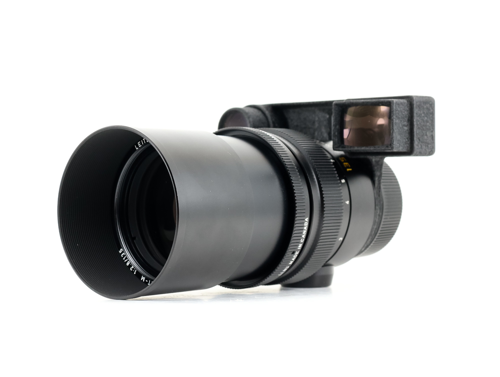
The Leica Elmarit-M 135mm f/2.8 (Type I) is an M-mount telephoto with permanent goggles, a Walter Mandler design prized by collectors for accurate rangefinder focusing.
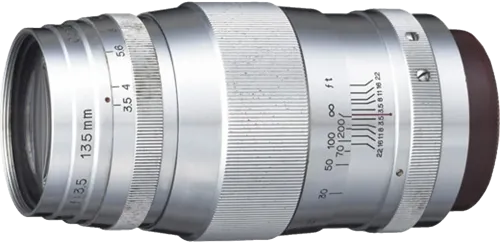
A 1952 chrome Canon Serenar 135mm f/3.5 telephoto with four elements in three groups, original coupled LTM focusing and a 1.5m near limit.
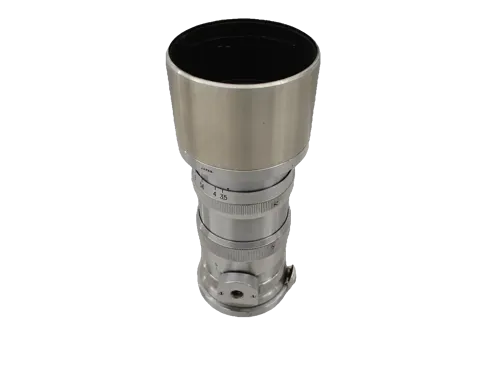
The Nippon-Kogaku Nikkor-Q.C 13.5cm f/3.5 is a four-element LTM rangefinder telephoto from Nikon's S-system era, prized by classic Nikon collectors.
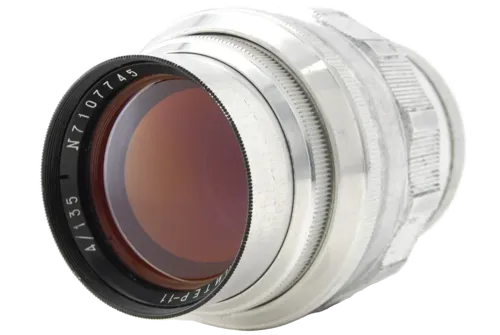
KMZ Jupiter-11 135mm f/4 LTM is a Soviet Sonnar-type Leica screw-mount telephoto lens for Zorki and LTM collectors.
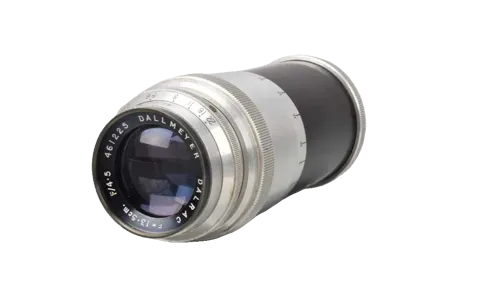
The Dallmeyer Dalrac 13.5cm f/4.5 is a scarce British, rangefinder-coupled LTM telephoto with coated four-element optics and removable head.
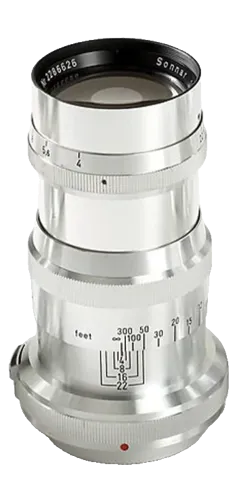
A postwar West German 135mm f/4 Sonnar for Contax RF, with four elements, an external bayonet, coupled helicoid and twelve-blade diaphragm.
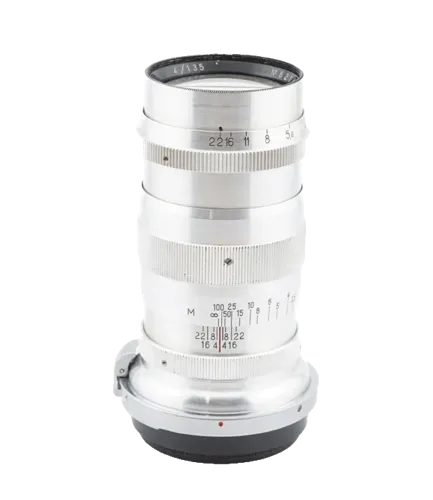
The Contax/Kiev Jupiter-11, a coupled 135mm f/4 four-element telephoto with an external bayonet, independent helicoid and twelve-blade diaphragm.
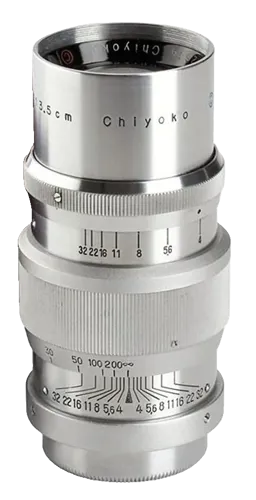
An early coupled 135mm f/4 LTM telephoto for the Minolta-35, with four elements, ten blades and three documented chrome focusing-barrel generations.
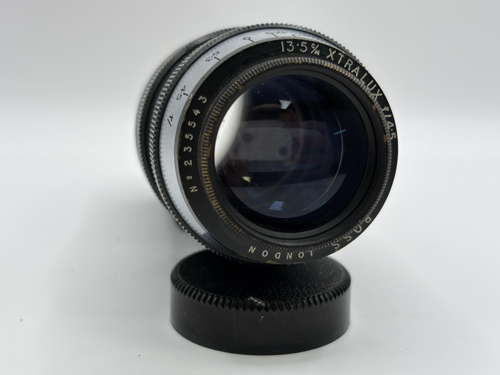
The Ross Xtralux 13.5cm f/4.5 is a scarce British-made 135mm uncoupled telephoto in Leica LTM screw mount, prized by collectors of Ross and Reid-era optics.
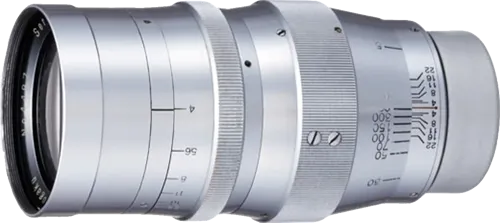
A March 1948 Canon Serenar 135mm f/4 scale-focus telephoto with four elements in three groups, uncoupled LTM mounting and 1.52m focus.
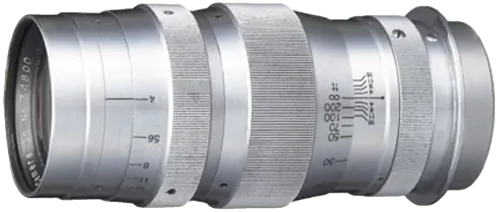
A June 1948 Canon Serenar 135mm f/4 telephoto with four elements in three groups, a 40mm filter fitting and original coupled LTM focusing.
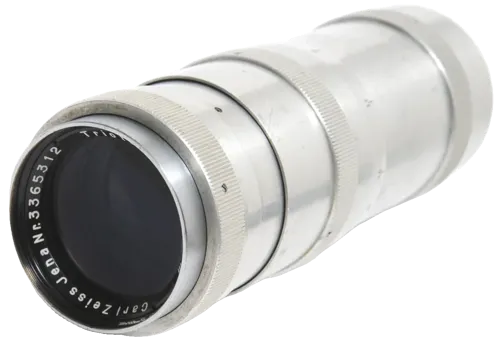
A postwar German 135mm f/4 triplet in a documented coupled LTM barrel, with three elements in three groups, 15 blades and 1.5m close focus.
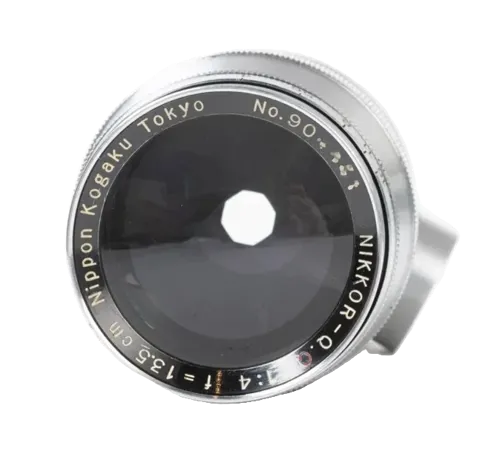
An early postwar Japanese 135mm f/4 telephoto with a four-element, three-group Tele-Sonnar design, coupled LTM focus and 1.5m close focus.
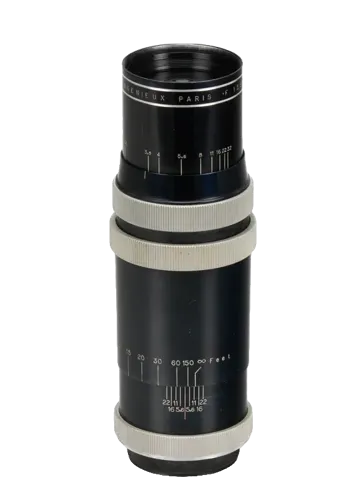
A coupled Leica-thread Angénieux 135mm f/3.5 Type Y2 with four elements in four groups, 1.5m close focus and a scarce black-and-chrome barrel.
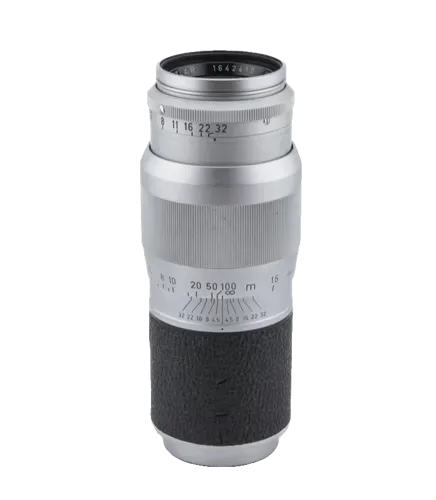
The Leica Hektor 135mm f/4.5, a four-element LTM rangefinder telephoto built from 1933 to 1960, is a long-running and affordable classic Leitz lens.
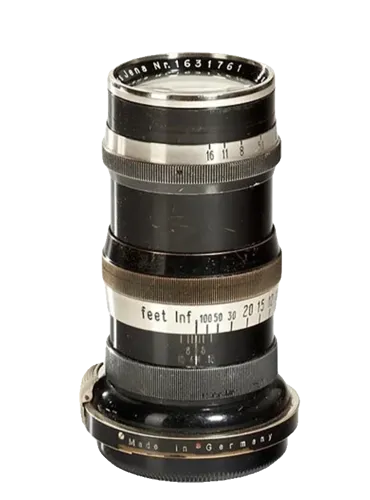
An East German 135mm f/4 Sonnar for Contax RF, with a four-element telephoto design, coupled external-bayonet focusing and a rounded diaphragm.
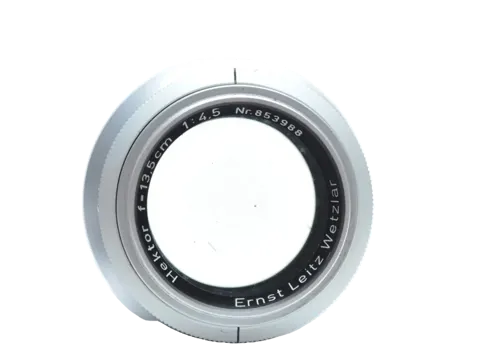
Leitz Elmar 13.5cm f/4.5 LTM is an early Leica screw-mount telephoto lens with strong EFERN collector relevance.
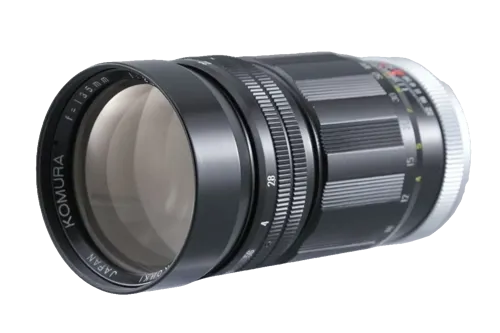
The Sankyo-Kohki Komura 135mm f/2.8 is a rangefinder-coupled LTM telephoto, a five-element Japanese screw-mount lens of modest collector interest.
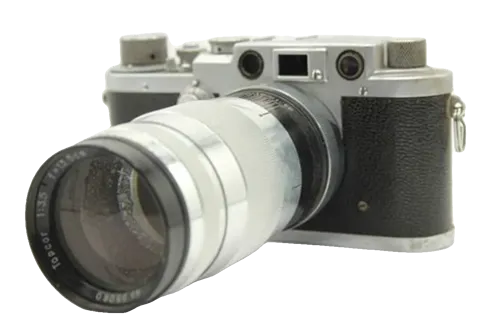
A scarce screw-mount telephoto from Tokyo Kogaku, the Topcor 135mm f/3.5 in LTM is a four-element Leotax-era lens valued by Japanese rangefinder collectors.
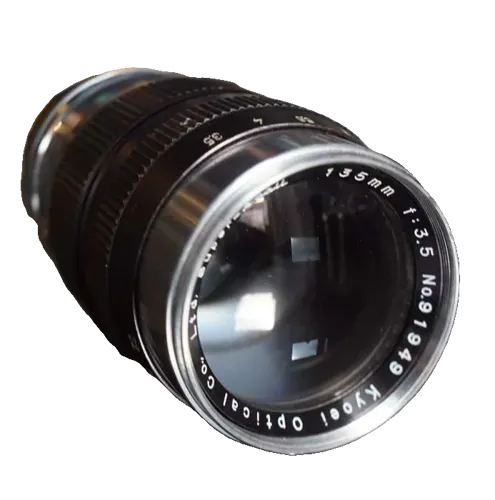
The Kyoei Super-Acall 135mm f/3.5 is a scarce Japanese rangefinder-coupled LTM telephoto lens with four-element optics and classic handling.
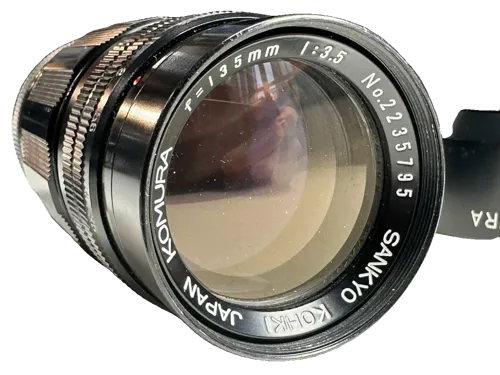
The Sankyo Kohki Komura 135mm f/3.5 is a Japanese rangefinder-coupled LTM telephoto lens, commonly paired with a hood and 135mm finder.
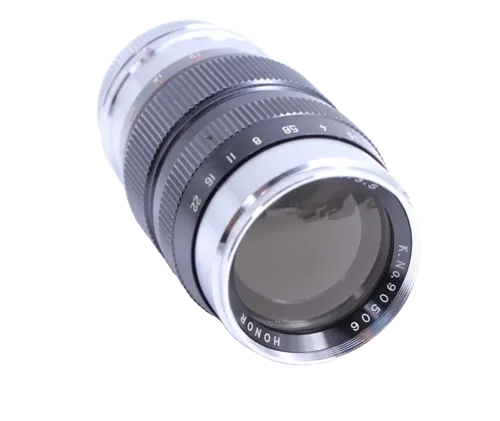
Zuiho Honor 135mm f/3.5
An Honor-branded 135mm f/3.5 telephoto documented in Leica thread mount for the Honor rangefinder system, with its formula and production dates unresolved.