75mm Lenses
22 lenses in the catalogue, 1933 to 2026
75mm is a late addition to the rangefinder lineup and it solves a specific problem. If 50mm is too short for a portrait and 90mm is too long, or too hard to focus reliably, this is the one in between.
It gives you a head-and-shoulders frame from a distance where you can still talk to the person you are photographing. It is also easier to focus accurately than a 90mm wide open, because the rangefinder has more margin for error at the shorter focal length.
What to expect
- Tight portraits from a comfortable working distance.
- More forgiving to focus than a 90mm at the same aperture.
- Usually smaller and lighter than the 90mm equivalent.
What is on this list
Every 75mm M and LTM lens in the catalogue, including the Leica APO-Summicron and Summarit and the fast Voigtländer Nokton f/1.5. Filter by aperture, filter thread or weight, and open any lens for its current price.
Not sure which 75mm fits you? It depends on how you shoot. Answer a few questions in the lens finder or compare any two lenses side by side.
The cheapest 75mm M / LTM-mount lens right now is 7artisans 75mm f/1.25 I at €304. Across 16 tracked 75mm lenses, prices run from €304 to €10,096 (median €923). See the live price index →
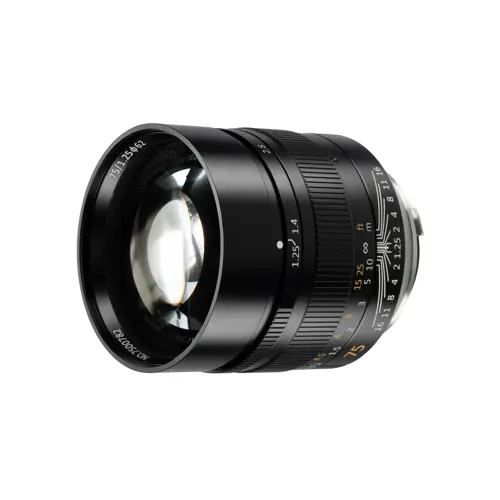
The 7artisans 75mm f/1.25 II is a fast manual-focus portrait lens for Leica M mount, a low-cost alternative to Leica's far pricier Noctilux 75mm.
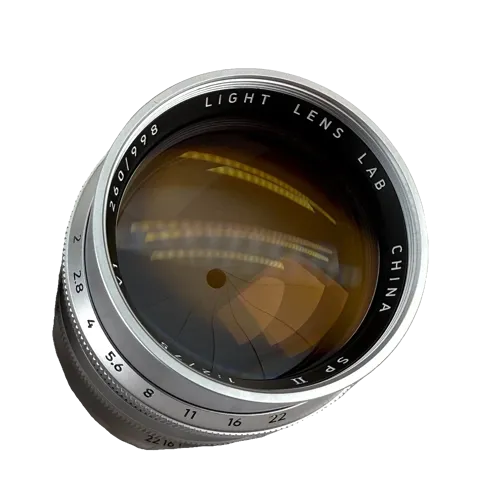
The Light Lens Lab 75mm f/2 "SPII" is a Leica M-mount mid-telephoto recreating Cooke Speed Panchro II rendering, drawing strong collector interest among modern M lenses.
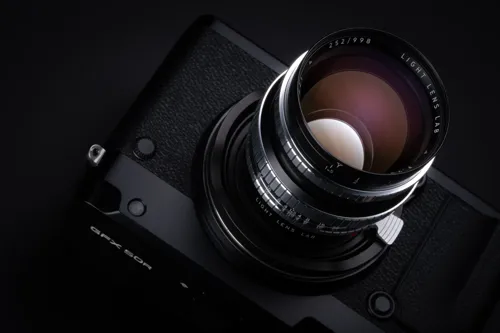
Light Lens Lab announces the 75mm f/1.5 Z21 for Leica M-mount, a fast portrait lens now $949.05 with code LEICALENSLIST
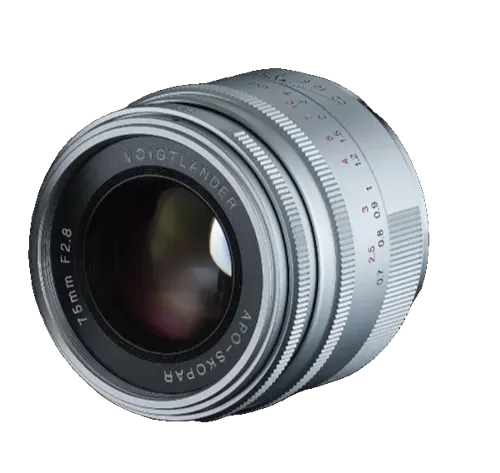
An APO-SKOPAR 75mm f/2.8 VM, a compact 191g M-mount lens with APO correction and 0.7m close focus.
The Thypoch Simera 75mm f/1.4 ASPH. is a compact 16-blade Leica M-mount portrait prime, the longest entry in Thypoch's fast Simera lineup.
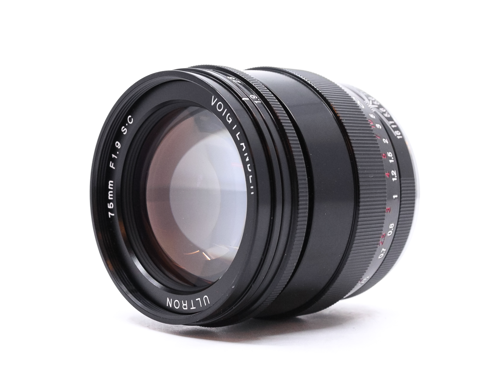
The Voigtländer Ultron 75mm f/1.9 SC/MC is a compact, close-focusing short-telephoto lens for Leica M-mount, offered in single- and multi-coated versions.
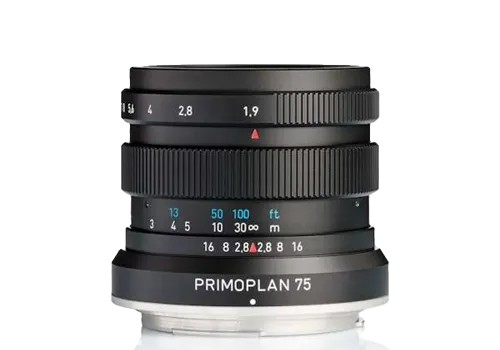
The Meyer-Optik Görlitz Primoplan 75mm f/1.9 II is a manual portrait lens offered in a Leica M fitting, a non-coupled revival of a 1930s character optic.
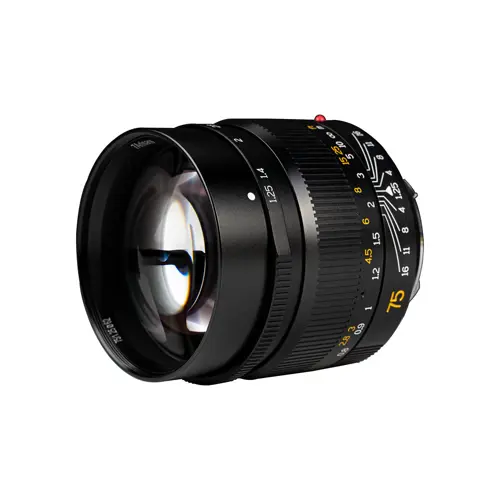
The 7artisans 75mm f/1.25 I is a fast, affordable Leica M-mount portrait lens whose smooth bokeh and 12-blade diaphragm draw budget-minded collectors.
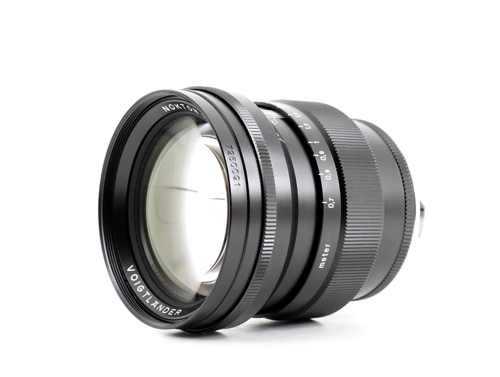
The Voigtländer Nokton 75mm f/1.5 Aspherical is a fast, compact M-mount short telephoto from Cosina's Vintage Line, prized by Leica rangefinder shooters.
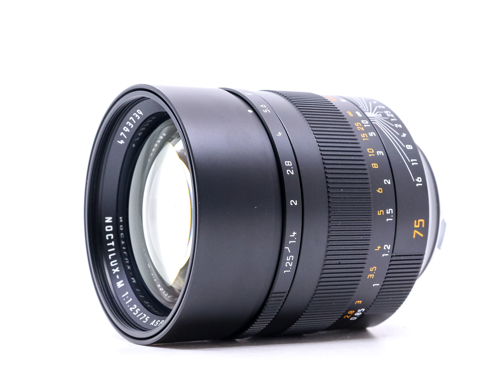
The Leica Noctilux-M 75mm f/1.25 ASPH is a large, manual-focus M-mount portrait lens, the second modern Noctilux and a flagship collector piece.
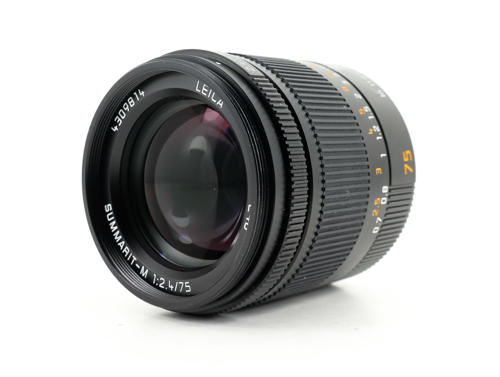
The Leica Summarit-M 75mm f/2.4 is a compact short-telephoto M-mount rangefinder lens, the value-priced alternative to Leica's pricier 75mm Summicron and APO designs.
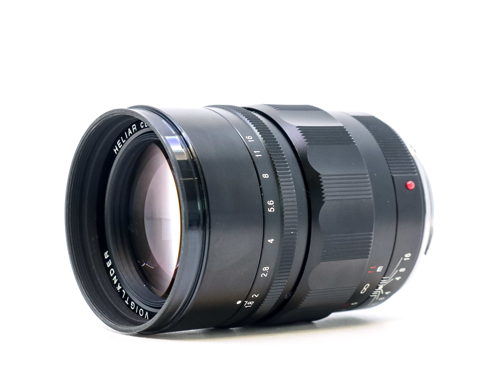
Voigtländer Heliar Classic 75mm f/1.8 is a compact, rangefinder-coupled Leica M-mount short telephoto with a deliberately classic, lower-contrast rendering.
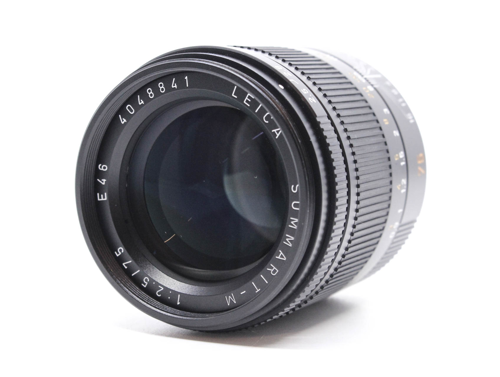
The Leica Summarit-M 75mm f/2.5 is a compact short-telephoto M-mount lens from Leica's value-oriented Summarit line, valued by collectors as an affordable classic.
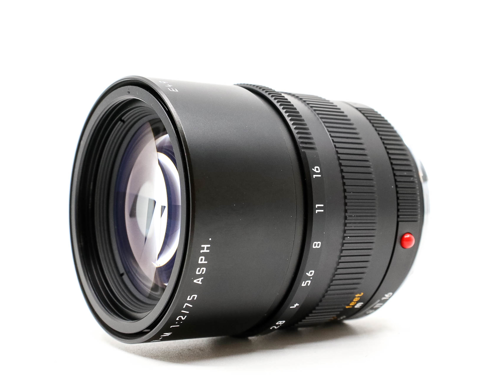
The Leica APO-Summicron-M 75mm f/2 ASPH. is a compact, apochromatic short-telephoto M-mount lens prized by collectors for near-flawless optical performance.</parameter> <parameter name="long_description">## Leica APO-Summicron-M 75mm f/2 ASPH. Introduced in May 2005, this short telephoto sits at the high-performance end of Leica's M lineup and was the first lens of its focal-length class to use a floating element, a design Leica borrowed from its recent Summilux-M 50mm ASPH. work [1][2]. The floating rear element shifts position relative to the rest of the optical system during focusing, allowing the lens to hold its image quality down to its 0.7 m close limit, which is closer than the contemporaneous Summilux-M 75mm could reach. Leica positioned the lens as a more natural-perspective alternative to a 90mm, useful for portraits, reportage, and available-light work, with a viewfinder image that the compact barrel leaves almost free of obstruction. The optical formula uses seven elements in five groups, built as a modified double-Gauss arrangement. Leica employed glasses with anomalous partial dispersion, one element described as a fluorite-type glass and another tracing its origins to the former Leitz glass laboratory, together with a pressed aspherical surface and high-refractive-index glass to suppress chromatic and monochromatic aberrations and earn the apochromatic designation. The barrel is built from anodized aluminum, brass, and optical glass, with a nine-bladed diaphragm, a 49 mm filter thread, and a built-in telescopic lens hood that locks in its extended position. As a coupled M-mount lens it works with the rangefinder mechanism, and on the APS-H sensor of the M8 and M8.2 it gives a field of view roughly equivalent to a 100mm lens. The lens has been produced in black anodized finish under order number 11637; the silver anodized version carries order number 11701. In February 2020 Leica released the silver anodized variant alongside Safari-finish editions of other M lenses, noting that its technical specifications match the standard black version. On the silver lens the feet markings and focal-length engraving are inlaid in red while the other engravings are black, an identification point separating it from the black-paint barrel. The barrel is inscribed APO-SUMMICRON-M 1:2/75 ASPH. E49. --- ## Optical qualities **Rendering** Leica's own technical material reports high contrast even at full aperture, with only marginal improvement from stopping down, distortion of about 1%, and vignetting up to roughly one stop in the corners wide open that becomes negligible by f/2.8 and effectively disappears by f/5.6. Reviewers consistently describe the lens as extremely sharp across the frame at f/2, with smooth out-of-focus backgrounds and strong subject separation [3][4]. Some users note that the apochromatic correction and high transparency give a clean, almost neutral rendering, a trait one reviewer felt left the images without much lens "signature" of their own. **Sharpness** Independent reviews place it among the sharpest M lenses, with little practical need to stop down from maximum aperture for critical sharpness. **Bokeh and transitions** Reviewers report smooth background blur at f/2, in at least one case judged smoother than the well-regarded Summilux 50mm ASPH., though the strongly corrected optics give a fairly literal, low-character look overall. **Distortion and vignetting** Both reviewer experience and Leica data describe very low distortion and modest wide-open vignetting that clears up quickly on stopping down. --- ## History **Development and Launch** Leica Camera AG, then based in Solms, announced the lens in May 2005 and made it available through dealers from June 2005, extending the M telephoto range with a fast but compact model. It was developed in the wake of the Summilux-M 50mm ASPH., sharing that lens's double-Gauss-derived layout and floating-element approach, and required a new high-precision adjusting mechanism to fit the floating element into the limited space of an M lens while preserving the smooth focus feel expected of the system. **Special editions** A silver anodized version (order number 11701) was presented in February 2020; Leica stated its specifications are identical to the standard black lens, differing only in finish and the red-inlaid distance and focal-length markings. No widely documented military, export, or converted factory variants of this lens are recorded beyond the black and silver finishes. **Collector Notes** The lens carries the E49 filter size and a built-in telescopic hood, both useful identification points, and standard accessories include the E49 filters and the 14001 front cap with 14269 or 14379 rear caps. Buyers should confirm the finish against the order number, since the black (11637) and silver (11701) versions are otherwise mechanically the same. As with any manual M lens, checking the diaphragm for oil on the blades and confirming smooth, accurate focusing are sensible before purchase [5]. --- ## Sources * [1] lens-db.com. *Leica APO-Summicron-M 75mm F/2 ASPH. [11637, 11701]*. https://lens-db.com/leica-apo-summicron-m-75mm-f2-asph-2005/ * [2] Kamerastore. *Leica 75mm f2 APO-Summicron-M ASPH. (Black, 11637) - Lens*. https://kamerastore.com/en-us/products/leica-75mm-f2-apo-summicron-m-asph * [3] Borge Indergaard. *Leica APO-Summicron 75mm f/2 ASPH Review*. https://indergaard.net/2017/07/07/leica-apo-summicron-75mm-f2-asph-review/ * [4] The Phoblographer. *Beautiful, Sharp, and Modern! Leica 75mm f2 APO ASPH Lens Review*. https://www.thephoblographer.com/2021/07/06/beautiful-sharp-modern-leica-apo-summicron-m-75mm-f2-lens-review/ * [5] Kamerastore. *Leica 75mm f2 APO-Summicron-M ASPH. (Black, 11637)*. https://kamerastore.com/en-us/products/leica-75mm-f2-apo-summicron-m-asph-black-11637-leica-m-t128262
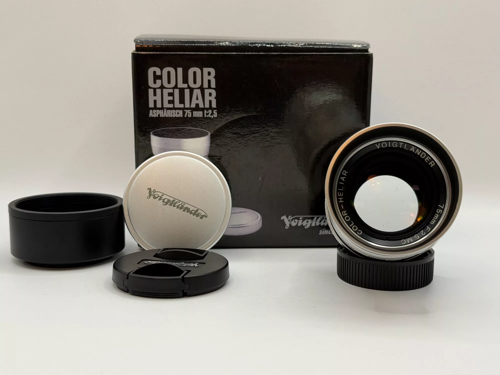
The Voigtländer Color-Heliar 75mm f/2.5 is a compact LTM short telephoto, one of Cosina's first Voigtländer lenses and a collector favourite for its size.
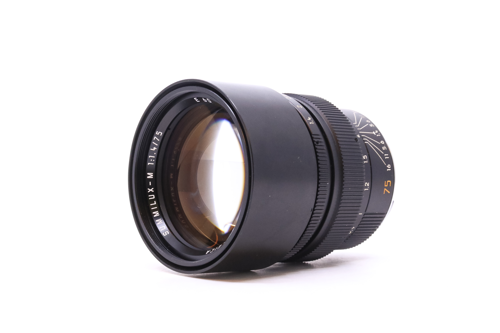
The Leica Summilux-M 75mm f/1.4 III is the German-built final version of Walter Mandler's fast 75mm portrait lens for M-mount, prized by collectors.
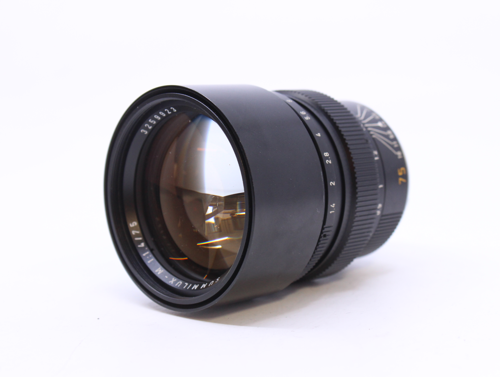
The Leica Summilux-M 75mm f/1.4 II is a fast Walter Mandler portrait lens in M mount, prized by collectors for glowing wide-open rendering and warm color.
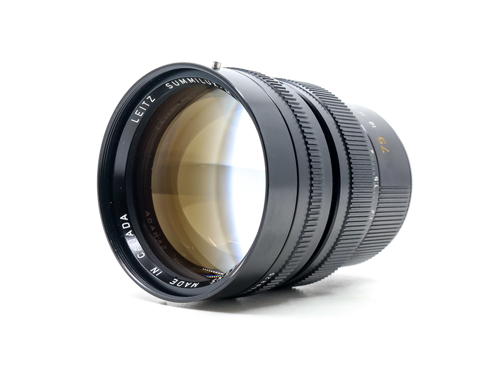
The Leica Summilux-M 75mm f/1.4 I is the original Canadian-made fast short telephoto for M-mount, a Walter Mandler design prized by portrait shooters and collectors.
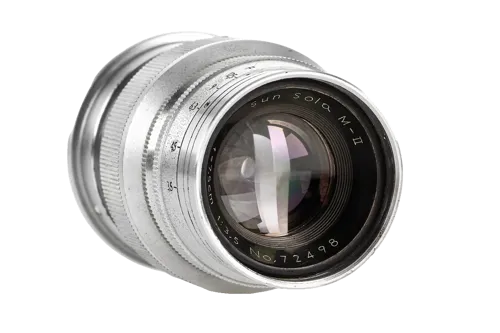
A scarce postwar Japanese 7.5cm f/3.5 short telephoto in coupled Leica Thread Mount, produced by Sun Koki in early black, chrome and mixed finishes.
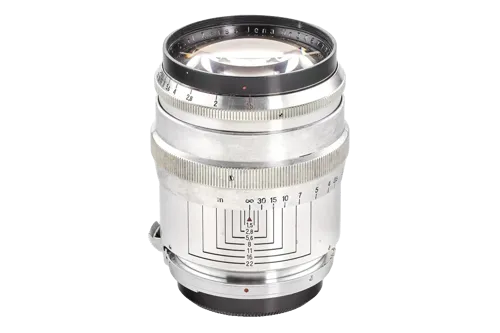
A 1949 German 75mm f/1.5 portrait lens with six elements in four groups, coupled LTM focusing, 18 blades and a 1m close-focus limit.
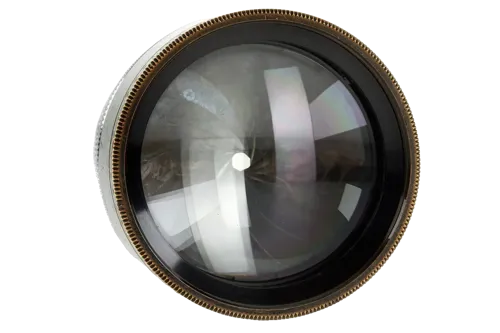
A 1933 German 75mm f/1.5 portrait lens with six elements in four groups, original coupled Leica M39 focusing and a 1m minimum distance.
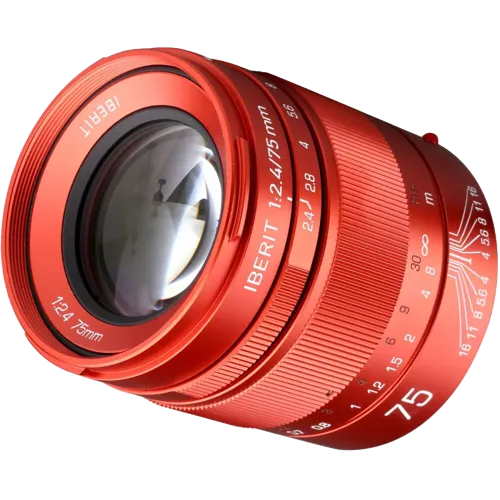
The KIPON Iberit (Elegant) 75mm f/2.4 is a compact short-telephoto Leica M-mount lens with rangefinder coupling, prized by users seeking a light manual portrait optic.