35mm Lenses
126 lenses in the catalogue, 1930 to 2026
35mm is the focal length most people end up on. It sees a little wider than your eye does, so a subject arrives with its surroundings attached, and it does that without visibly bending anything.
On an M it is also the easiest one to live with. The 35mm frame lines are the largest in the viewfinder on most bodies, so you can see the frame and a bit outside it at the same time and watch something walk into the picture.
What to expect
- Slightly wider than human vision, with little visible distortion.
- The clearest frame lines in the viewfinder on most M bodies.
- Compact at f/2 and f/2.5, considerably larger at f/1.4 and faster.
What is on this list
Every 35mm M and LTM lens in the catalogue: Leica Summilux, Summicron and Summarit, plus Voigtländer Nokton, Zeiss Biogon and the newer makers. Filter by aperture, weight or make, and sort by price to see the range from sixty euros to five figures.
Not sure which 35mm fits you? It depends on how you shoot. Answer a few questions in the lens finder or compare any two lenses side by side.
The cheapest 35mm M / LTM-mount lens right now is 7artisans 35mm f/5.6 WEN at €64. Across 77 tracked 35mm lenses, prices run from €64 to €17,468 (median €715). See the live price index →
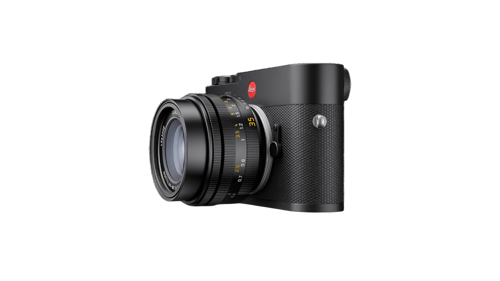
The Leica Noctilux-M 35mm f/1.2 ASPH. is the first 35mm member of the Noctilux family, an M-mount fast prime that collectors and users prize for its modern rendering.
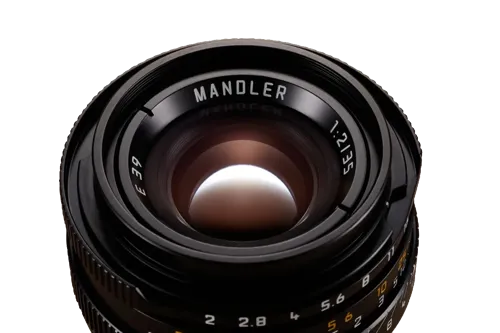
The Mandler 35mm f/2, a compact 7-element wide-angle for Leica M and LTM screw mount, is a recent rangefinder design offered in black and silver.
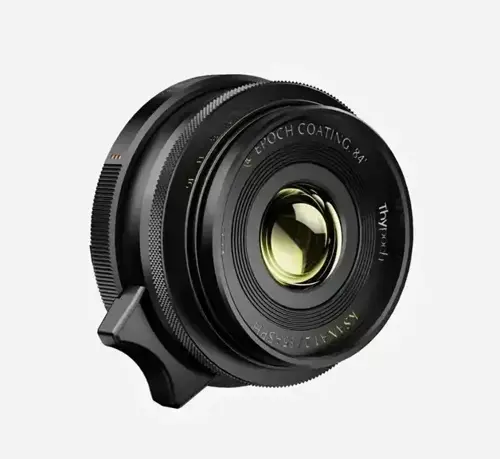
A solid lens for a really good price. Flat field curvature, good sharpness across the frame, golden coating. Brass build, 199 grams, easy recommendation!
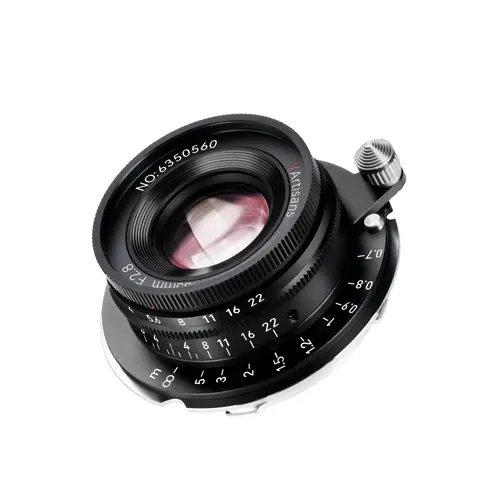
The 7Artisans M 35mm f/2.8 is a tiny double-Gauss pancake prime in M and LTM mounts, a low-cost vintage-styled 35mm aimed at rangefinder shooters.
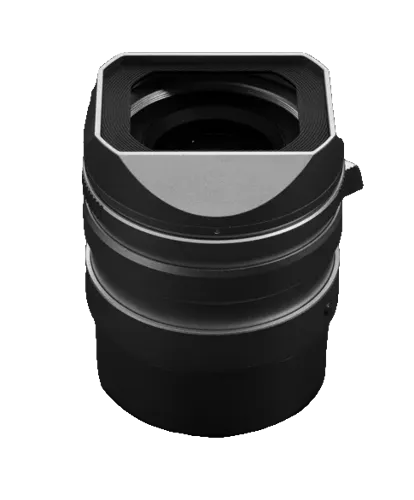
Light Lens Lab’s 35mm f/2 Apochromatic, a coupled Leica M lens with 11 elements, four aspherical surfaces, floating focus and a 0.3m close limit.
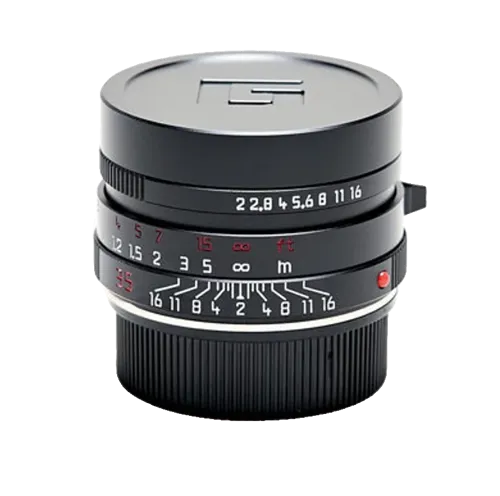
The Mr. Ding V2.1 conversion rehouses the seven-element Contax G Planar T* 35mm f/2 in a lightweight, rangefinder-coupled Leica M barrel.
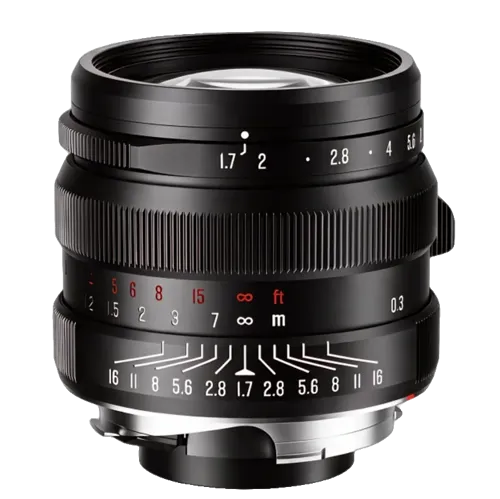
A compact 35mm f/1.7 Leica M lens with APO correction, six aspherical surfaces, close focusing to 0.3m and rangefinder coupling to 0.7m.
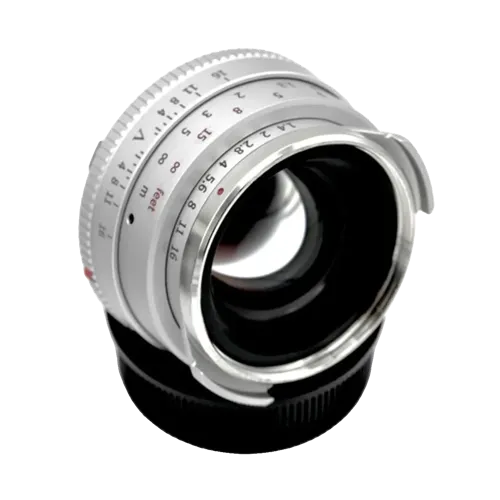
The Artralab Similar 35mm f/1.4 is a compact silver Leica M-mount lens, a fast 35mm wide-angle of recent manufacture aimed at mirrorless and adapter users.
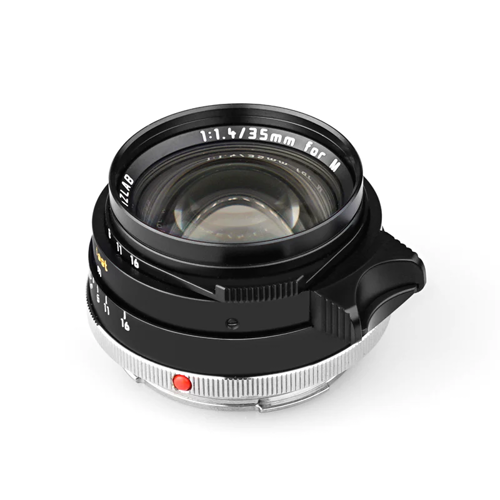
The Funleader Artizlab Classic 35mm f/1.4 is a Leica M-mount lens styled after the 1960s Summilux 35mm v2, drawing growing collector interest.
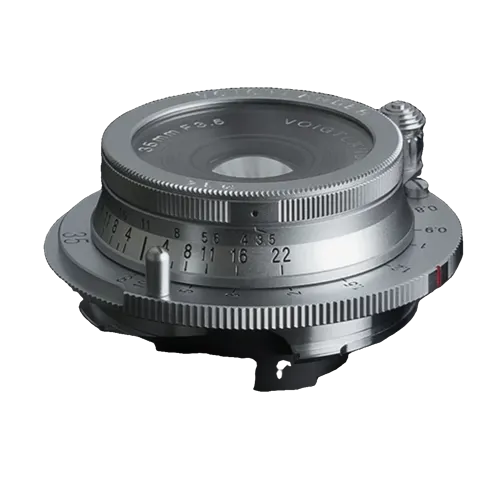
The Voigtländer Color-Skopar 35mm f/3.5 ASPH. is a compact six-element M-mount wide-angle, a 2025 Cosina lens of interest to Leica rangefinder collectors.
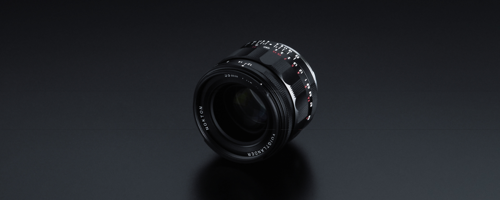
The Voigtländer Nokton 35mm f/1.2 ASPH. IV is a fast, compact manual 35mm M-mount prime, the fourth generation of Cosina's high-speed 35.
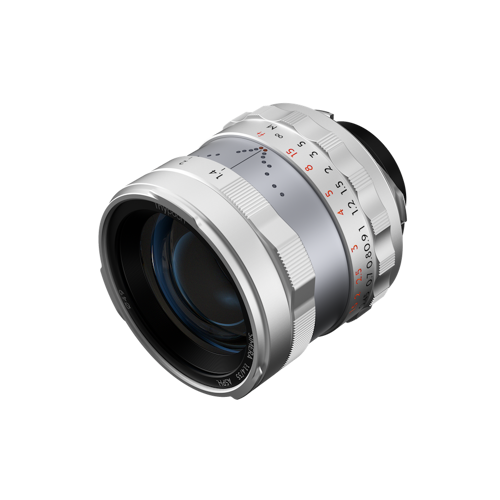
The Thypoch Simera 35mm f/1.4 II is a focus-tab M-mount lens that swaps the original infinity lock for a crescent tab, keeping the same 14-blade optics.
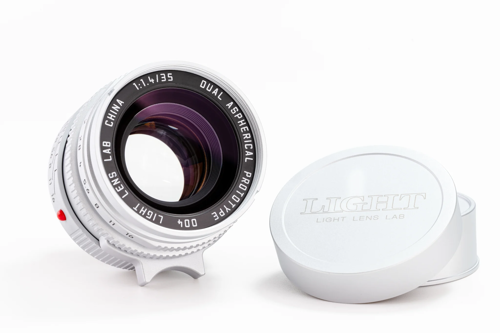
Light Lens Lab's 35mm f/1.4 "11873" Double Aspherical is an M-mount homage to Leica's rare AA Summilux, prized by collectors for its updated optical design.
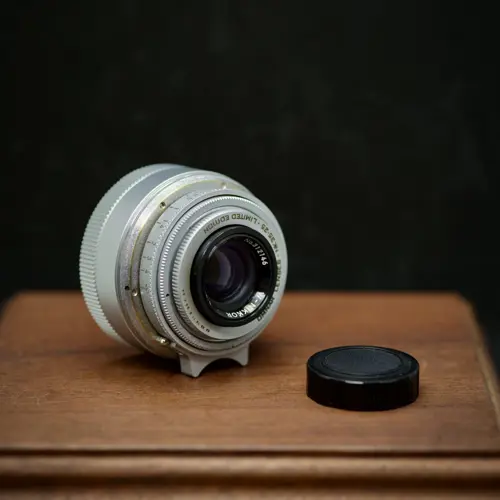
The Omnar NK35-25 Silver & Pearl is a UK-made 35mm f/2.5 M-mount conversion of the Nikonos W-Nikkor, prized by collectors for its compact form and amphibious optics.
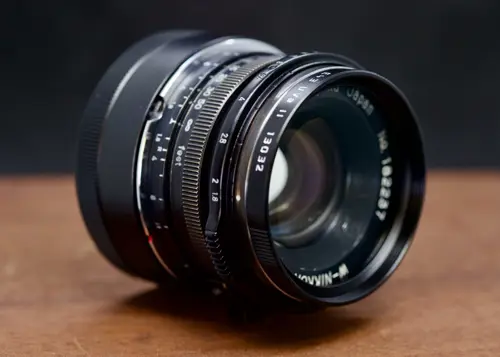
The Omnar W-Nikkor-C 3.5cm f/1.8 LTM is a 35mm f/1.8 screw-mount lens, a modern satin-black custom build reviving a classic Nikon rangefinder optic.
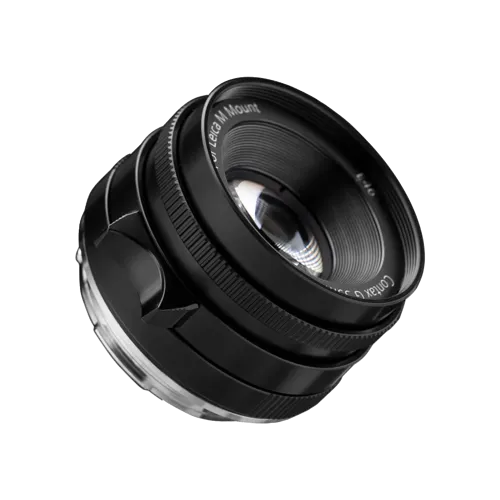
The Funleader Contax Planar 35mm f/2 Conversion V2.0 is the mechanically redesigned successor to Funleader's original Contax G35 Leica M conversion. It retains the original Carl Zeiss 7-element, 5-group Planar optics while introducing revised focusing mechanics, improved damping and a redesigned Leica M barrel.
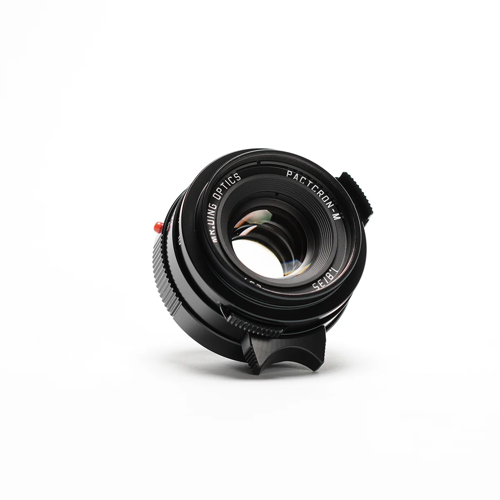
The Mr. Ding Optics 35mm f/1.8 Pactcron is a compact M-mount prime featuring a 7-element Double Gauss design, based on the Summicron 35mm version 4 (King of Bokeh). It prioritizes a "classic" rendering style, utilizing lanthanide glass and nano-coatings rather than aspherical elements. Constructed from brass with a black paint finish, the lens includes a focus tab and 39mm filter thread. Following early production feedback, the manufacturer refined its assembly and quality control processes to improve mechanical consistency and overall build standards.
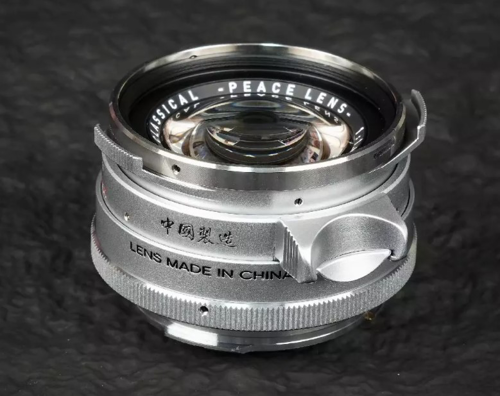
Peace Lens Optics 35mm f/1.4 E41 Classical is a rangefinder-coupled Leica M lens with 7/5 optics and a classic Steel Rim-inspired design.
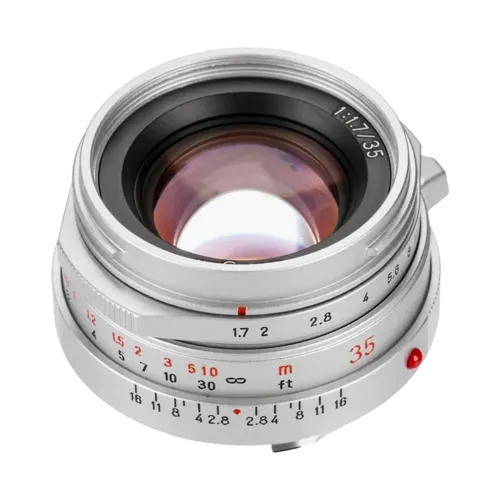
Seagull 35mm f/1.7 is a compact M-mount 35mm lens with a fast f/1.7 aperture and a 10-blade diaphragm, of interest to modern rangefinder users.
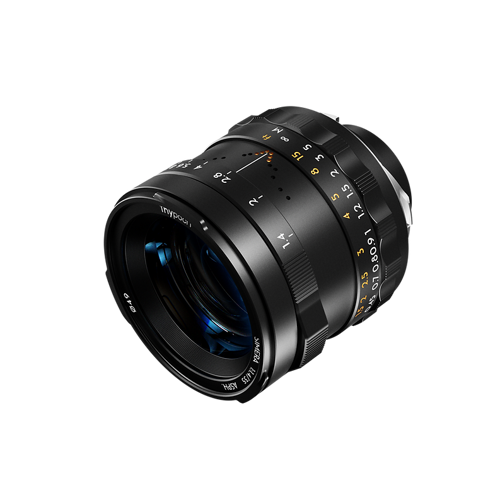
The Thypoch Simera 35mm f/1.4 is a manual-focus M-mount prime with a 14-blade aperture and red dot depth-of-field scale, a budget alternative to Leica's 35mm glass.
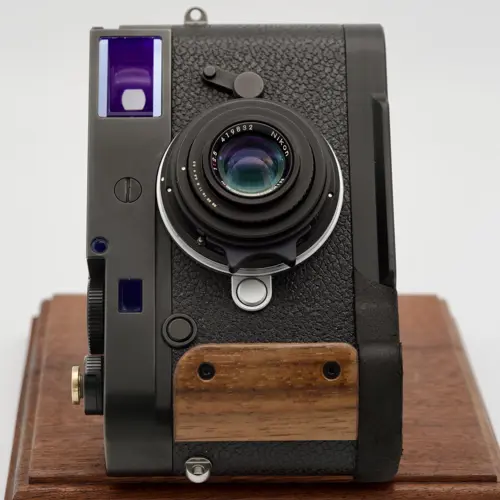
Omnar NK35-25 (2023)
The Omnar NK35-25 is a rangefinder-coupled M-mount 35mm f/2.5 built around rehoused Nikonos W-Nikkor optics, a compact UK-made conversion prized by collectors.
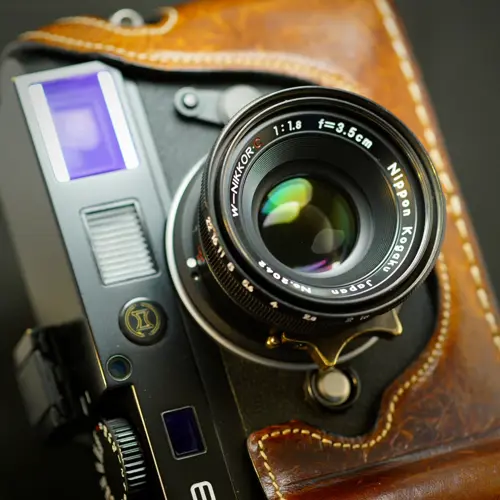
The Omnar NK35-18 is a UK-built M-mount conversion of Nikon's 35mm f/1.8 W-Nikkor, giving this 1950s super-speed rangefinder optic full coupling on Leica cameras.
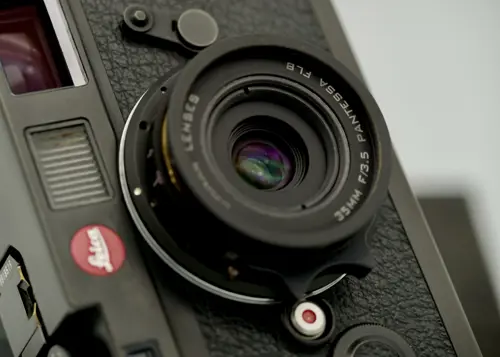
The Omnar 35mm f/3.5 Pantessa FLB is a UK-built, limited-run Leica M-mount rehousing of the Yashica T Tessar optic, prized for its tiny size.
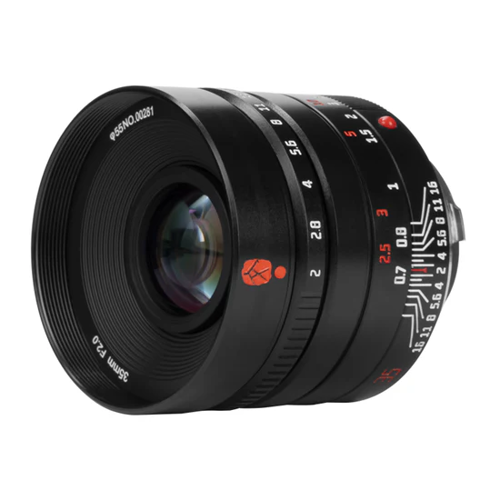
The 7artisans 35mm f/2 WEN (Mark II) is a compact 8-element manual prime in Leica M mount, part of the street-oriented WEN series for rangefinder shooters.
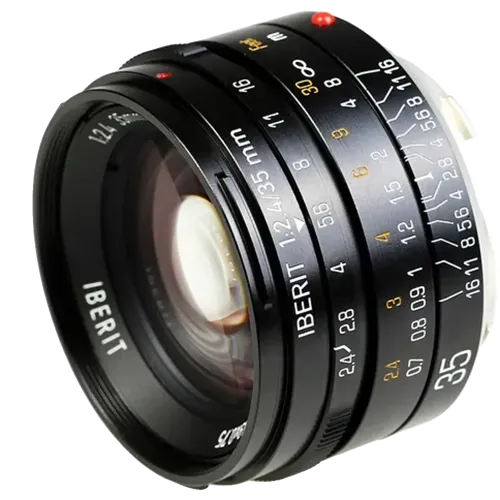
The KIPON Iberit (Elegant) 35mm f/2.4 is a compact manual-focus full-frame lens in Leica M mount, a 2022 update to Kipon's retro-styled rangefinder line.
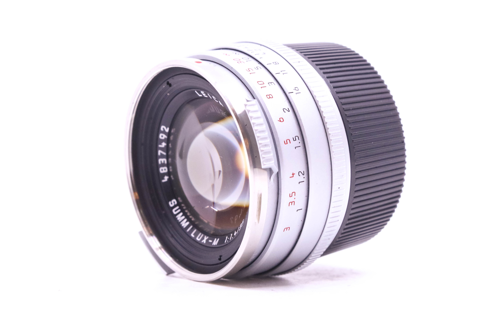
The Leica Summilux-M 35mm f/1.4 Steel Rim is a 2022 M-mount reissue of the 1961 Mandler design, prized by collectors for its vintage rendering.
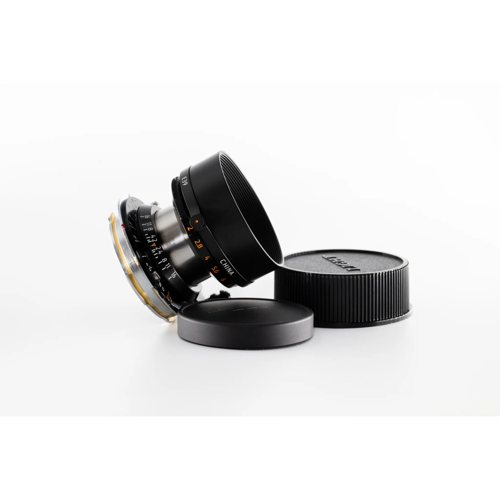
The Light Lens Lab 35mm f/2 Collapsible Eight Element is a brass M-mount replica of the original 35mm Summicron, prized by collectors for its rare collapsing barrel.
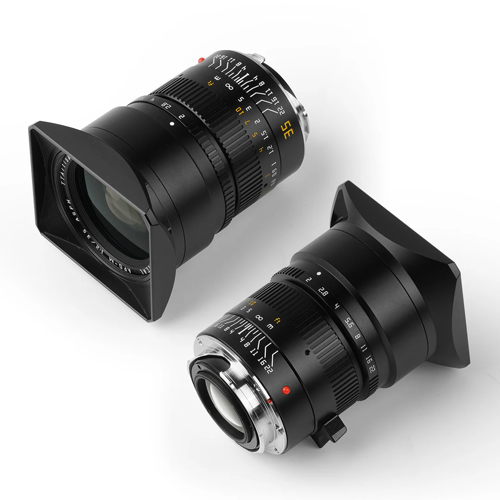
The TTArtisan APO-M 35mm f/2 ASPH is a manual-focus Leica M-mount lens that brings apochromatic, aspherical correction to rangefinders at a budget price.
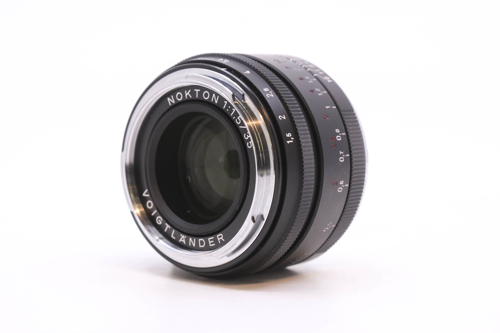
The Voigtländer Nokton 35mm f/1.5 Aspherical VM Type 1 is a compact aluminium-bodied Leica M-mount fast 35mm, prized as an affordable Summilux alternative.
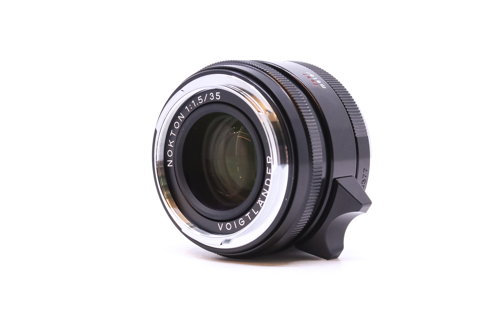
The Voigtländer Nokton 35mm f/1.5 Aspherical VM Type 2 is a compact brass-bodied M-mount lens prized for vintage rendering and Leica Summilux-rivaling value.
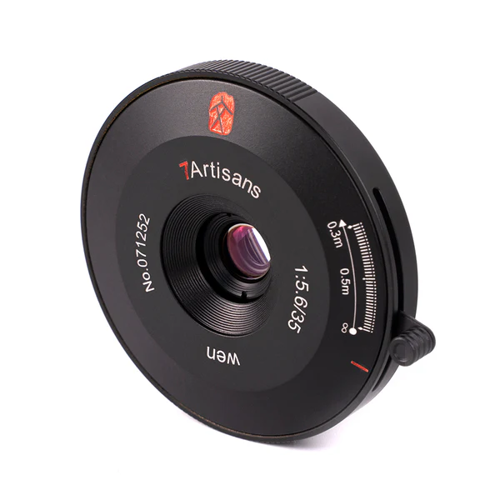
The 7artisans 35mm f/5.6 WEN is an ultra-thin manual M-mount pancake lens for Leica rangefinders, designed for zone-focus street work rather than coupling.
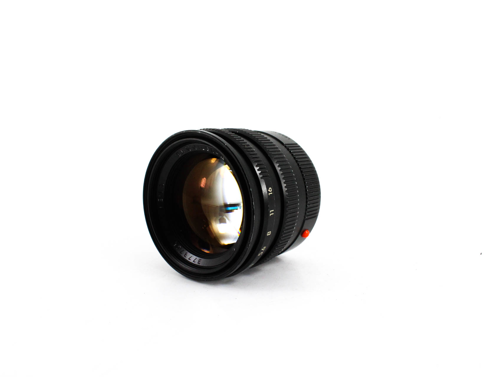
The Leica APO-Summicron-M 35mm f/2 ASPH. is a compact, reference-class M-mount prime, prized by collectors as the fourth apochromatic Summicron-M.
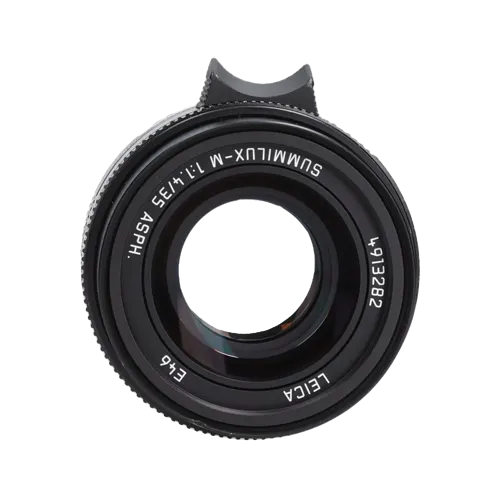
The Leica Summilux-M 35mm f/1.4 ASPH. (FLE II) is an M-mount fast wide that adds 0.4m close focus, prized by Leica shooters and collectors alike.
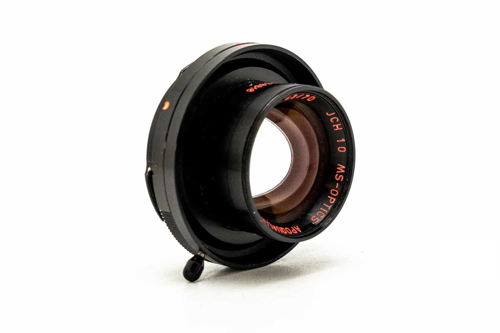
The MS-Optics Apoqualia 35mm f/1.3 II Slim is a hand-built Leica M-mount lens, a fast, soft-by-design collector's piece from Japan's Miyazaki Optical.
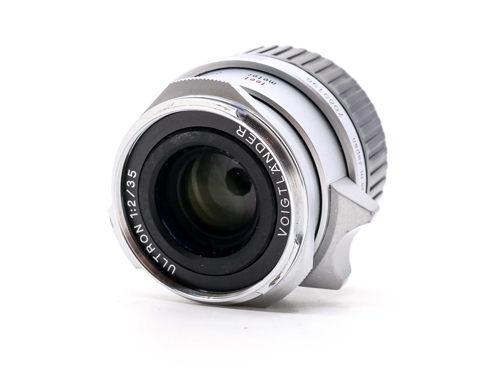
Voigtländer's Ultron 35mm f/2 II ASPH is a compact M-mount rangefinder lens whose Type II styling revives the look of a classic Leica steel-rim hood.
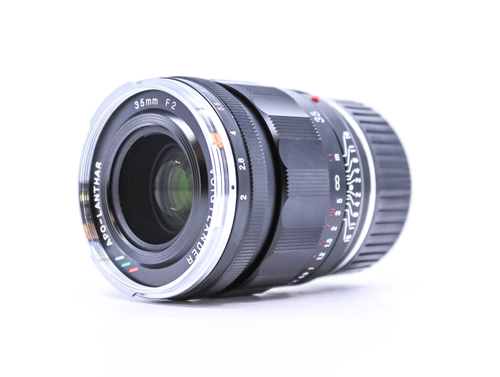
The Voigtländer APO-LANTHAR 35mm f/2 is an apochromatic Leica M-mount lens prized by collectors for very high resolution and contrast wide open.
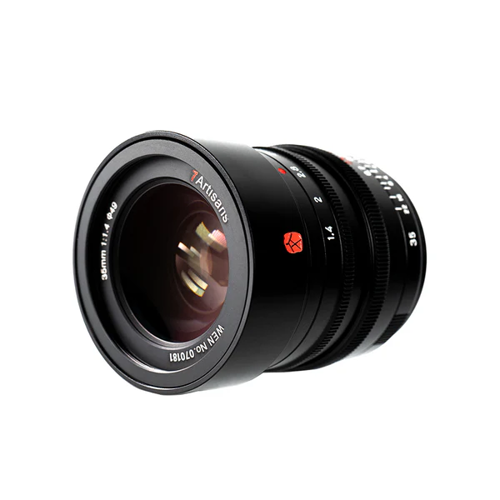
The 7artisans 35mm f/1.4 WEN is an internal-focus M-mount lens for Leica rangefinders, a low-cost Summilux-style 35mm that drew attention from collectors.
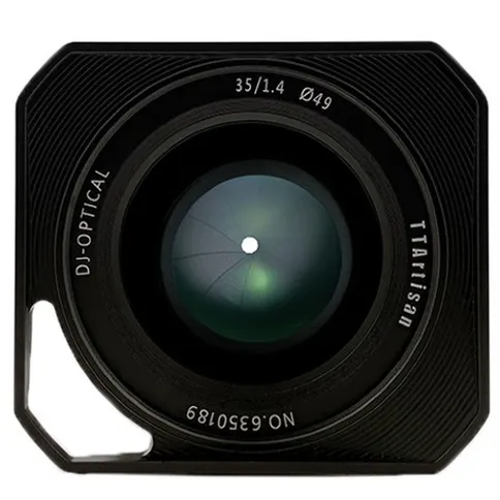
The TTArtisan M 35mm f/1.4 is a low-cost, all-metal Leica M-mount fast wide-angle prime, notable as one of the brand's first M lenses for digital and film bodies.
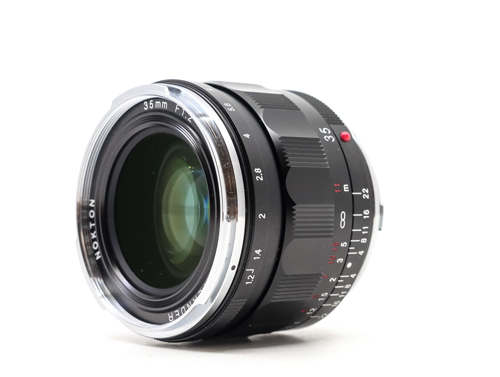
The Voigtländer Nokton 35mm f/1.2 III is a compact, all-metal M-mount manual lens, the smallest and lightest of Cosina's fast 35mm trio.</parameter> <parameter name="long_description">## Voigtländer Nokton 35mm f/1.2 III This is the third version of Cosina's fast 35mm Nokton for Leica M-mount, and it marks a clear break from the two designs that came before it. Where the original Nokton and its Mark II both used a ten-element optical layout, the III was rebuilt around a smaller nine-element, seven-group formula, allowing Cosina to shed bulk while keeping the f/1.2 maximum aperture that gives the line its reputation as one of the fastest 35mm rangefinder lenses available [1][2]. The result is a lens that is roughly 20 percent shorter and about 30 percent lighter than the Mark II, which makes it considerably easier to carry and to balance on a Leica M body than its predecessors. Build and handling follow the pattern collectors expect from modern Voigtländer M-mount glass. The barrel is almost entirely metal with engraved, paint-filled markings, the focus ring turns with firm resistance over roughly 130 degrees from the 0.5 m minimum focus distance to infinity, and the aperture ring uses half-stop click detents across its travel. The diaphragm has twelve straight blades, and the lens is rangefinder coupled, so it focuses through the optical finder on M cameras. It is not factory six-bit coded. Reviewers note that the III balances better on an M10 than the earlier versions, with only mild finder blockage, and that it shows essentially no focus shift, which is useful for rangefinder users who set focus wide open. The 52 mm filter thread is shared across this generation of Voigtländer fast primes, and as with most of Cosina's M-mount lenses a hood is not supplied in the box. The III should not be confused with the earlier Mark I and Mark II Noktons, which are heavier and use the older ten-element design, nor with the Nokton 35mm f/1.2 SE, a Sony E-mount lens that shares the III's optical formula but adds electronic coupling and focuses closer. Sources note that the M-mount III and the E-mount SE differ in how they are optimized for their respective sensor stacks, so corner rendering on a digital body can vary between them. --- ## Optical qualities **Rendering** The III is generally described as a lens built for atmosphere and shallow depth of field rather than clinical across-frame sharpness. The center is good wide open and improves quickly on stopping down, while the midframe and corners are soft at f/1.2 and need to be stopped down well, with f/8 recommended for best even sharpness at infinity. It appears to be a unit-focus design optimized for a middle distance, so at the close end wide open it is soft, again clearing up by around f/2. **Bokeh and transitions** Out-of-focus rendering is a strength. Close and mid-distance backgrounds are smooth, though cat's-eye shapes from optical vignetting become visible with point lights toward the edges, and at long distances the corner bokeh can suffer from the field-curvature effects common to fast rangefinder wide-angles on thick-sensor-stack cameras. **Flare resistance** Flare control is good, and reviewers found it hard to provoke strong ghosting even with the sun near the frame edge, which softens the absence of a bundled hood. **Distortion and vignetting** Distortion is described as pronounced and wavy, correctable with the E-mount version's profile in software, and light falloff wide open is strong at roughly 3.3 EV, easing as the lens is stopped down. **Aberrations** Coma correction is moderate, with astigmatism present until about f/4, and the lens shows spherical-aberration glow at f/1.2. Lateral chromatic aberration is moderate and easily corrected, while longitudinal CA and purple fringing wide open are notable, the latter being singled out as a weak point. --- ## History **Development and Launch** The Nokton 35mm f/1.2 III is the latest member of a line that Cosina has positioned as the fastest 35mm lens for the Leica M system. The design goal of this version was size reduction: by adopting newer optical glasses and a revised computation, Cosina cut both length and weight relative to the Mark II while retaining the established performance level of the previous model. It is sold as the Nokton 35mm F1.2 Aspherical III VM [3]. **Production Evolution** Across the three M-mount Noktons the most significant change is at the III, which moved from the ten-element, seven-group construction of versions I and II to a nine-element, seven-group layout, accompanied by the large drop in weight and length. The earlier Mark I also had a longer 0.7 m minimum focus distance, which was shortened to 0.5 m from the Mark II onward. **Special editions** No major factory special editions of the III are widely documented. Cosina did release an optically related Sony E-mount variant, the Nokton 35mm f/1.2 SE, but that is a separate E-mount product rather than a finish variant of the M-mount III. **Collector Notes** The chief point of confusion is version identification: the III is distinctly smaller and lighter than the heavier Mark I and Mark II, and buyers should confirm they are getting the nine-element III rather than an older ten-element copy. The lens is identified as the VM (M-mount) model and carries the manufacturer code BA355A in retail listings. Because no hood ships in the box, a hood is an accessory worth sourcing separately. --- ## Sources * [1] phillipreeve.net (Bastian Kratzke). *Review: Voigtlander VM 35mm 1.2 III*. https://phillipreeve.net/blog/review-voigtlander-vm-35mm-1-2-iii/ * [2] Adorama (manufacturer specifications and description). *Used Voigtlander Nokton 35mm f/1.2 Aspherical III VM Lens*. https://www.adorama.com/used-voigtlander-nokton-35mm-f-12-aspherical-iii-vm-lens/p/us2000502 * [3] findingrange.com. *Voigtlander Nokton 35mm f1.2 Aspherical III Lens Review*. http://findingrange.com/2020/08/19/voigtlander-nokton-35mm-f1-2-aspherical-iii-lens-review/
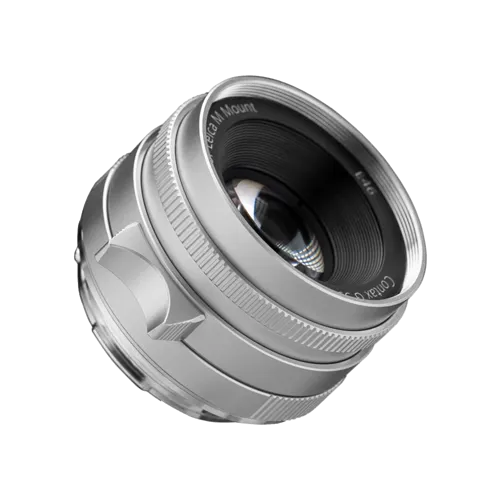
The Funleader Contax Planar 35mm f/2 Conversion V1 is the original non-destructive Leica M rehousing of the Carl Zeiss Contax G Planar T* 35mm f/2. Introduced in 2019 with Mr Ding Studio, it places the original Zeiss 7-element optical block in a manual-focus, rangefinder-coupled M-mount housing.
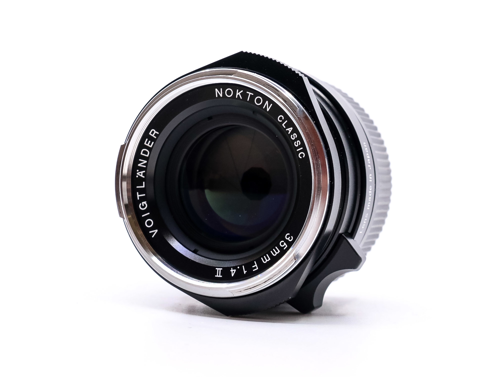
The Voigtländer Nokton Classic 35mm f/1.4 II, an M-mount rangefinder lens in SC and MC coatings, updates a cult fast 35mm for digital sensors.
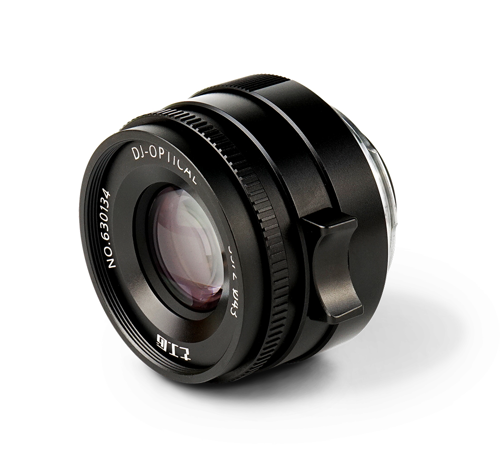
The 7artisans 35mm f/2 is an affordable Sonnar-derived M-mount rangefinder lens, nicknamed the "China-cron" for echoing Leica's 35mm Summicron.
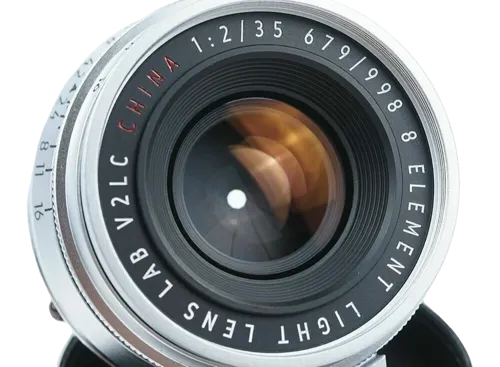
The Light Lens Lab 35mm f/2 Eight Element is a brass M-mount replica of Leica's 1958 Summicron, prized by collectors wanting that classic look affordably.
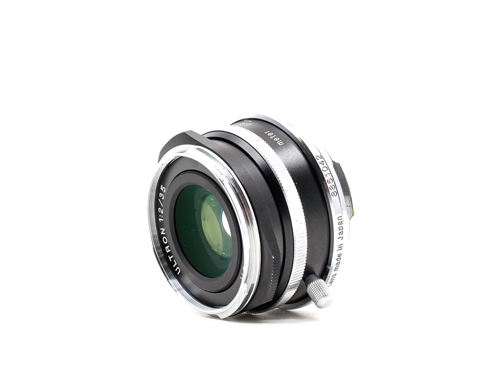
The Voigtländer Ultron 35mm f/2 I ASPH. is a compact M-mount rangefinder lens with a classic focusing lever, prized as an affordable modern 35mm Summicron alternative.
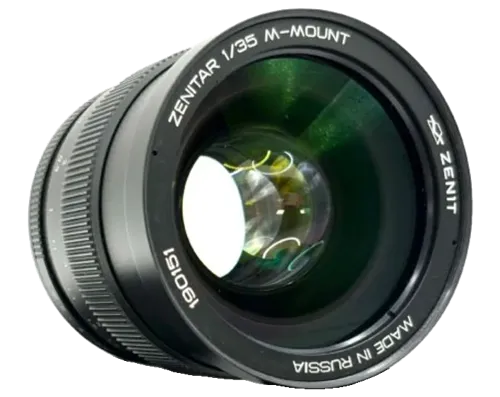
The Zenit Zenitar 35mm f/1.0 is a native Leica M ultra-fast wide-angle lens with nine elements, ten blades and a substantial 740g barrel.
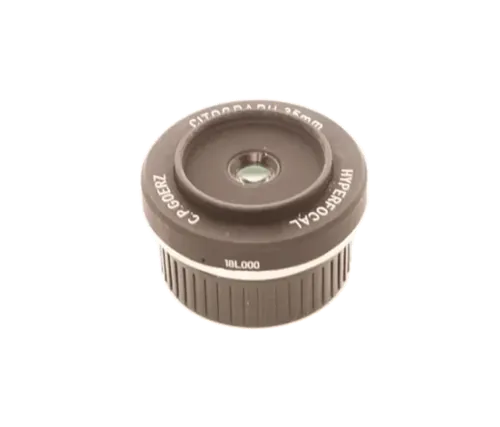
C.P. Goerz Citograph 35mm f/8 Leica M is a compact fixed-focus hyperfocal street lens for M-Mount collectors.
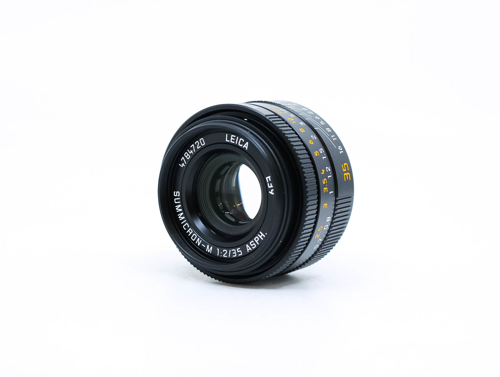
The Leica Summicron-M 35mm f/2 ASPH. II is a compact M-mount wide-angle prime, a 2016 refresh of the classic 35 Summicron with 11 aperture blades.
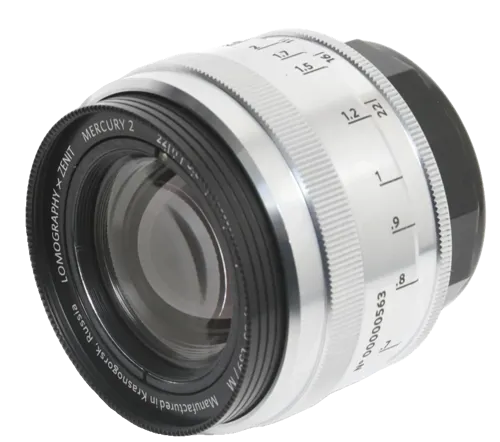
A scarce LTM rangefinder-coupled collaboration, the Lomography x Zenit Mercury 35mm f/2 is a Soviet-flavored standard wide that close-focuses to 0.45m.</parameter> <parameter name="long_description">## Lomography x Zenit Mercury 35mm f/2 Few modern rangefinder lenses are as poorly documented as the Lomography x Zenit Mercury 35mm f/2, a product of the partnership between Lomography and the Russian optics maker Zenit (KMZ). Collectors who have handled it report finding it through eBay rather than mainstream retail, with little published technical information and no widely circulated optical diagram, which has given it a reputation as an obscure, mysterious Russian lens [1]. The name ring is engraved "Mercury2," and at least one reviewer has linked the name to the Soviet-era Mercury half-frame cameras, speculating that the lens nods to that earlier line rather than copying its optics directly. Mechanically it is a compact LTM (M39 / Leica thread mount) lens with rangefinder coupling, so it can be used on Leica screw-mount bodies and, via an adapter, on M-mount cameras. The optical formula uses seven elements in four groups with a nine-blade aperture, and it focuses unusually close for a coupled rangefinder optic, down to 0.45m, which is well beyond the typical 0.7m to 1m minimum of vintage 35mm rangefinder lenses. The user who reviewed it noted achieving roughly 0.4m focus after servicing and described a close-focusing rangefinder lens of this type as remarkable, since coupled rangefinder optics that focus that near are uncommon. Reliable production details are limited. The lens is part of the broader run of Lomography x Zenit collaborations that also includes the New Petzval and the Lomogon, but the Mercury 35mm f/2 received far less promotion than those products. No factory variants, finish options, or special editions are widely documented; collectors should treat finish and engraving details as unverified until checked against the individual example in hand. --- ## Optical qualities **Rendering** Documentation is thin and rests largely on a single hands-on user account, so the following should be read as collector impression rather than tested performance. That reviewer described overall imaging as slightly low in contrast, comparing the look to the Jupiter 3+, with a saturated, distinctly Soviet color character on film. The center was reported as very sharp, even reaching strong edge-to-edge sharpness when stopped down to about f/5.6, while the extreme corners showed weak rendering with a hazy, soft quality and pronounced coma wide open. The same account found close-up performance notably better than distant subjects and suggested the high central resolution against degraded corners helps isolate a subject. The lens was also judged to weaken in high-contrast lighting. These are the observations of one user and have not been corroborated by formal testing. --- ## History **Development and Launch** The lens emerged from Lomography's collaborations with Zenit (Krasnogorski Zavod, KMZ), the Russian manufacturer behind the firms' jointly produced art lenses. It appears to date from around 2016 and was sold with minimal marketing, which is why so little reference material exists for it compared with the better-known New Petzval and Lomogon lenses. **Special editions** No major factory special variants, regional names, or alternative finishes are widely documented for this lens. **Collector Notes** Buyers should be cautious about mechanical condition. The one detailed account of the lens reports that the example arrived unable to reach infinity focus and required adjustment by a specialist repairer before it was usable, after which it focused down to roughly 0.4m. Given the scarcity of the lens and its limited paper trail, confirming infinity focus, rangefinder coupling accuracy, and the absence of internal haze is advisable before purchase. The "Mercury2" engraving on the name ring is a useful identification point. --- ## Sources * [1] Chan'Blog (chan.nds.hk). *Lomography Zenit 35mm f2 神秘俄鏡*. https://chan.nds.hk/blog/?p=9915
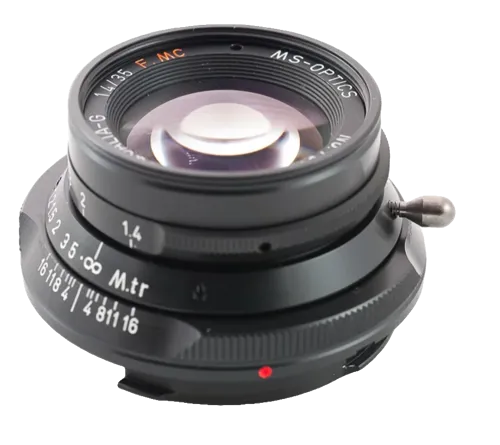
The MS-Optics Apoqualia 35mm f/1.4 is a tiny hand-built Leica M double Gauss by Miyazaki Sadayasu, a sought-after collector lens.
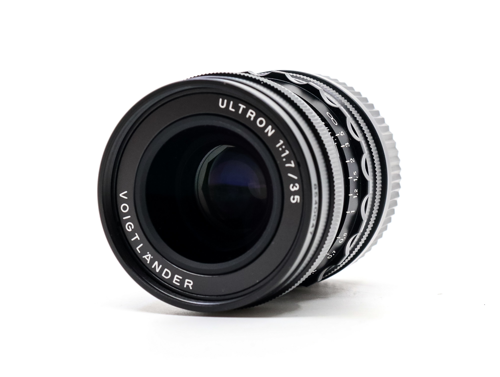
The Voigtländer Ultron 35mm f/1.7 II is a compact, fast Leica M-mount lens praised by collectors for sharpness, smooth bokeh, and rangefinder coupling.
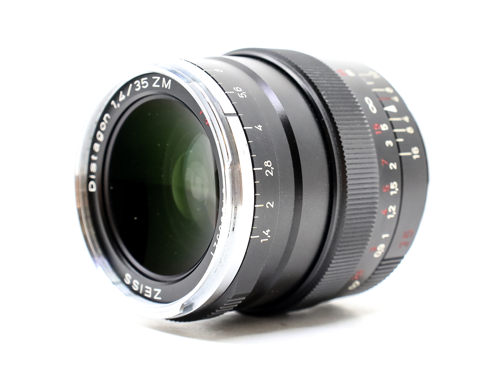
The Carl Zeiss Distagon T* 35mm f/1.4 ZM is a fast retrofocus M-mount wide-angle prized by Leica collectors as a Summilux alternative.
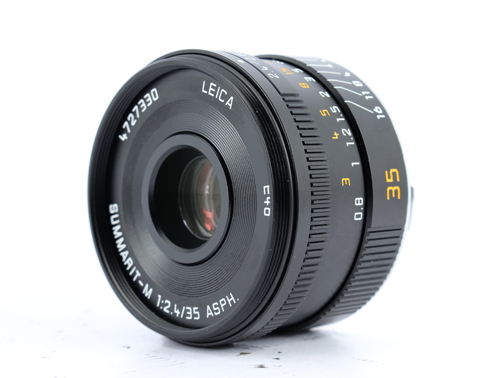
The Leica Summarit-M 35mm f/2.4 ASPH is a compact manual-focus M-mount wide-angle, the only Summarit-M with an aspherical element, prized for clean rendering.
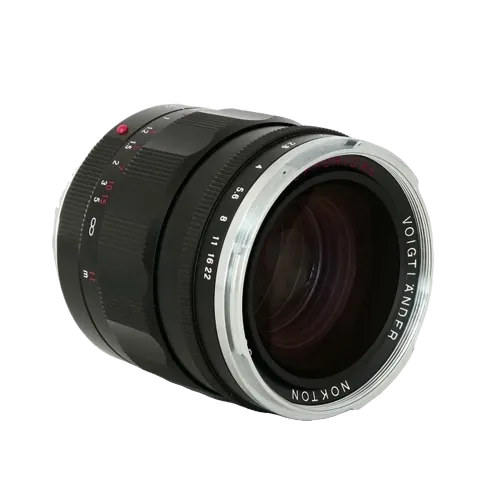
The Voigtländer Nokton 35mm f/1.2 II is a fast aspherical M-mount rangefinder lens, long valued as the quickest 35mm option for the Leica M system.
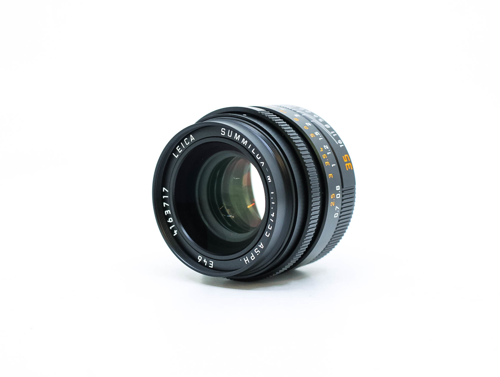
The Leica Summilux-M 35mm f/1.4 ASPH. (FLE) is an M-mount fast wide-angle whose floating element cured the focus shift that troubled its predecessor.
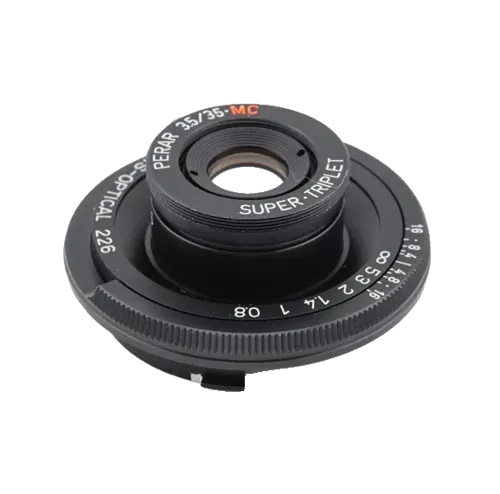
The MS-Optics Perar 35mm f/3.5 is a hand-built three-element triplet pancake for Leica M mount, the lens that made Miyazaki's MS-Optics a collector name.
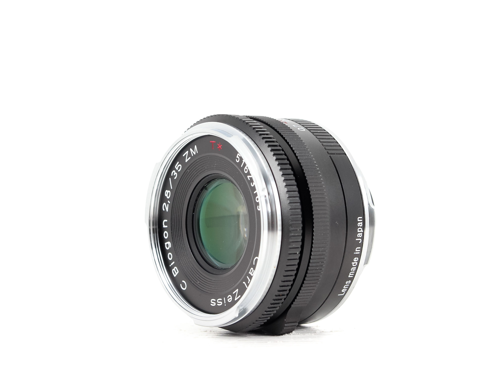
The Carl Zeiss C Biogon T* 35mm f/2.8 ZM is a compact, highly corrected M-mount wide-angle prized by collectors for sharpness and small size.
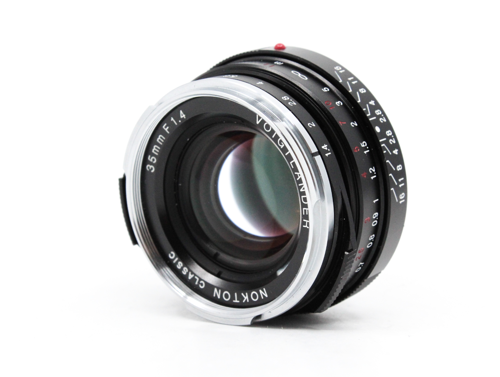
The Voigtländer Nokton Classic 35mm f/1.4 (Version I) is a compact, fast M-mount rangefinder lens offered in single-coated and multi-coated forms.
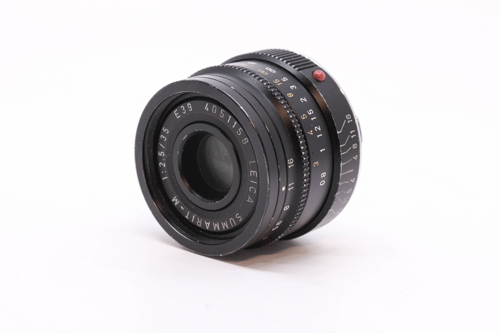
The Leica Summarit-M 35mm f/2.5 is a compact 6-bit-codeable M-mount wide-angle, the entry point of Leica's affordable Summarit line that collectors now prize.
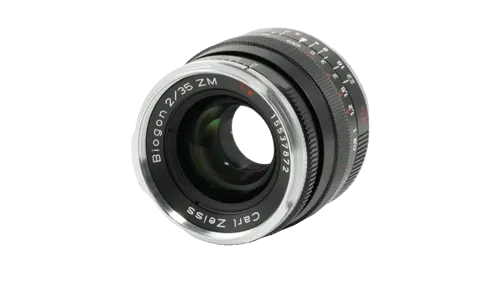
The Carl Zeiss Biogon T* 35mm f/2 ZM is an M-mount rangefinder lens prized for its near-symmetrical optics, low distortion, and neutral rendering.
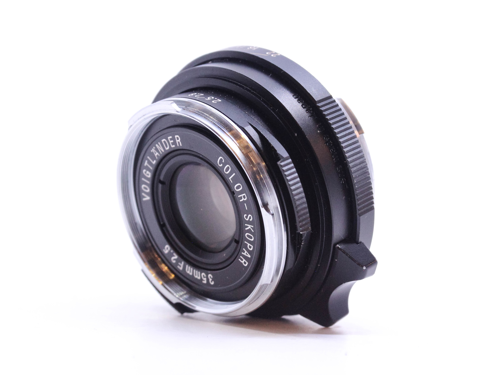
Voigtländer's Color-Skopar 35mm f/2.5 P II is a compact M-mount pancake-style 35mm, prized by rangefinder users as an affordable, sharp travel lens.
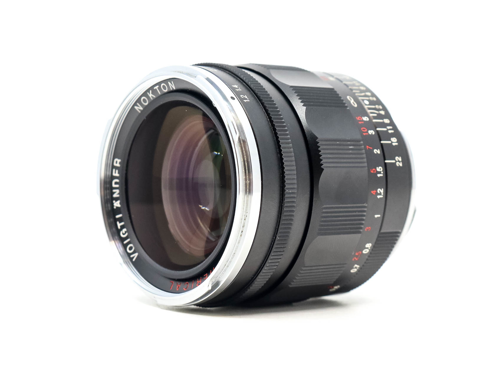
The Voigtländer Nokton 35mm f/1.2 I is the original f/1.2 aspherical M-mount 35, prized by collectors as the fastest production rangefinder 35mm of its day.
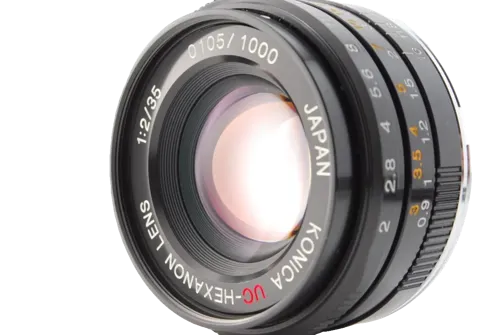
The Konica UC-Hexanon 35mm f/2 is a rare LTM rangefinder lens of modified Xenotar design, prized by collectors for its multi-coating and Summicron-like build.
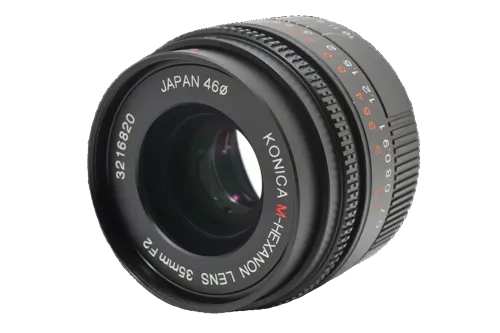
Konica M-Hexanon 35mm f/2 is a Leica M-mount wide-normal lens built for the Hexar RF, a sleeper among collectors of non-Leica M glass.
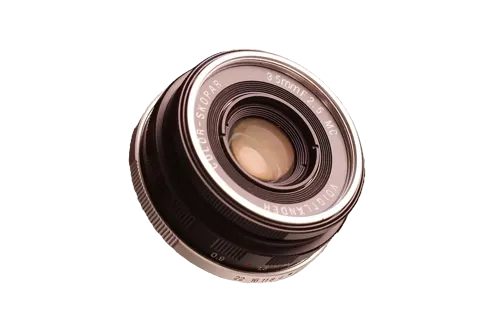
The Voigtländer Color-Skopar 35mm f/2.5 C is a compact LTM screw-mount pancake lens prized by Leica thread-mount and rangefinder collectors for its small size.
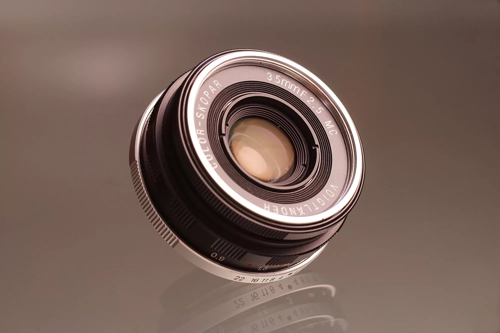
The Voigtländer Color-Skopar 35mm f/2.5 P I is a tiny LTM screw-mount pancake lens prized by Bessa and Leica rangefinder users for its size and value.
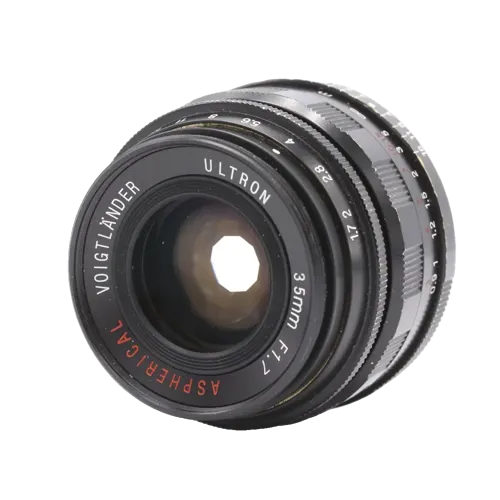
The Voigtländer Ultron 35mm f/1.7 I is an LTM rangefinder lens, among the fastest 35mm screw-mount optics, prized by Bessa and Leica thread shooters.
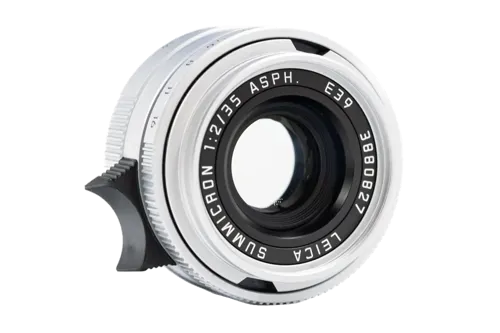
The Leica Summicron 35mm f/2 ASPH M39 11608 is a rare silver Japanese-market screw-mount edition of the modern 35mm Summicron ASPH.
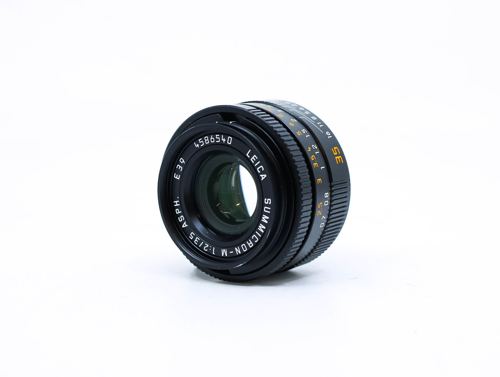
The Leica Summicron-M 35mm f/2 ASPH., a compact M-mount classic, was the first aspherical 35 Cron and remains a benchmark mid-speed wide-angle.
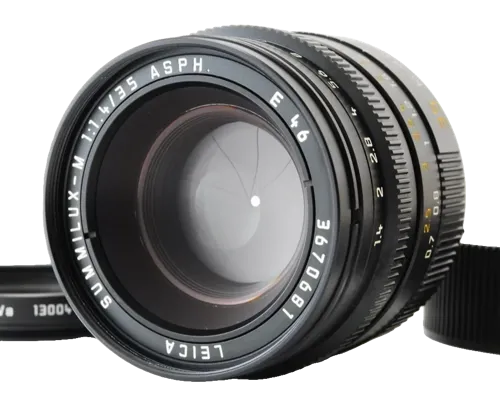
The Leica Summilux-M 35mm f/1.4 ASPH. II is the 1994 single-aspherical M-mount fast wide-angle, prized by collectors for its rendering despite focus shift.
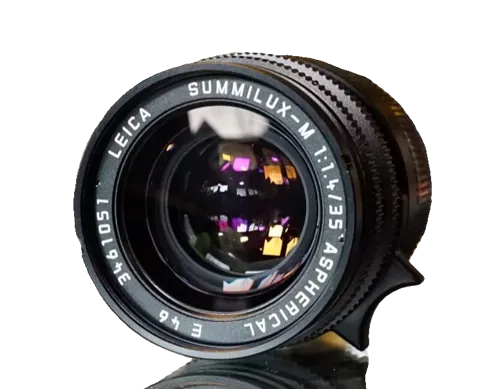
The Leica Summilux-M 35mm f/1.4 Aspherical (11873), an M-mount double-aspheric lens of cult status, sought by collectors for rarity and rendering.
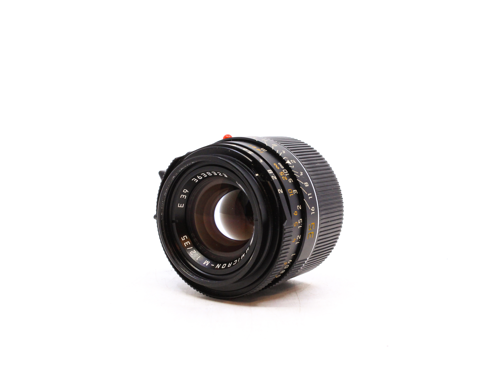
The Leica Summicron-M 35mm f/2 IV is a compact M-mount wide-angle prime nicknamed "King of Bokeh," prized by collectors for its smooth rendering.
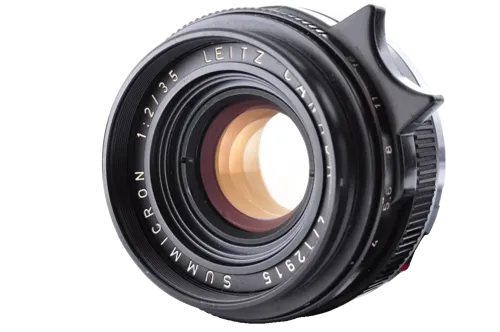
The Leica Summicron 35mm f/2 III (11309) is a compact six-element M-mount rangefinder lens made from 1971 to 1979, prized by collectors for its character.
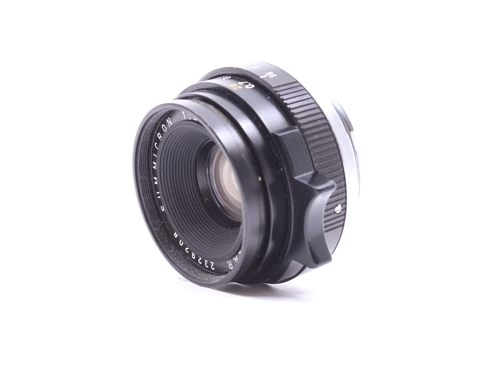
The Leica Summicron 35mm f/2 II is a six-element M-mount wide lens (1969 to 1971) that bridges the famed 8-element original and the later v3, prized by collectors.
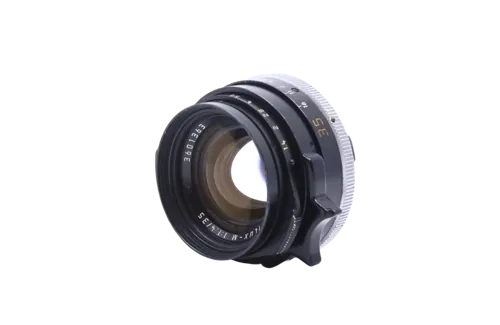
The Leica Summilux-M 35mm f/1.4 II is the pre-aspherical M-mount fast 35mm prime designed by Walter Mandler, prized by collectors for its distinctive wide-open glow.
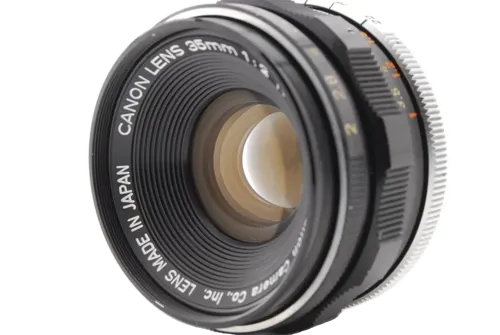
The Canon 35mm f/2 is a compact LTM rangefinder lens from 1962, nicknamed the "Japanese Summicron" and prized as the last of Canon's 35mm screw-mount line.
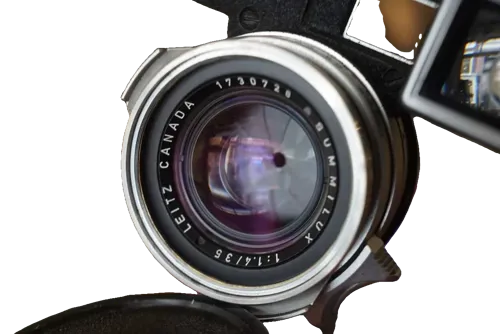
The Leica Summilux-M 35mm f/1.4 Steel Rim is the original 1961 M-mount fast 35, a Mandler design now among the most coveted classic Leica lenses.
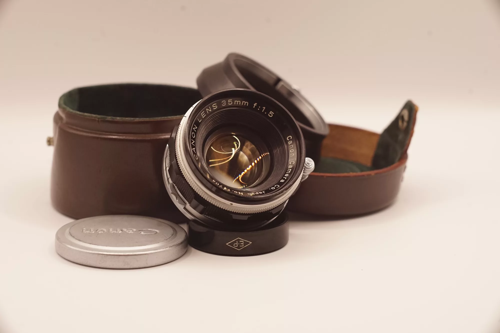
The Canon 35mm f/1.5 is a scarce LTM (M39) screw-mount rangefinder wide-angle, a fast 1958 Japanese lens prized by Leica thread-mount collectors.
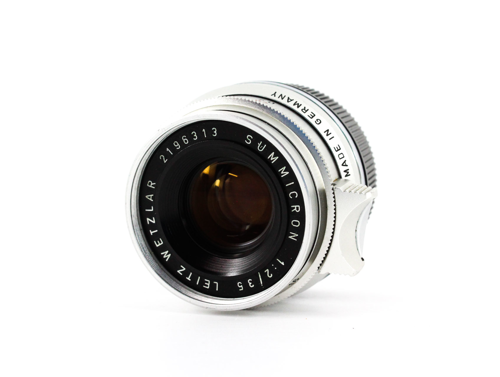
Leica Summicron-M 35mm f/2 I 8-element 11308 SAWOM, the classic non-goggled M-mount version with 16-blade aperture and collector appeal.
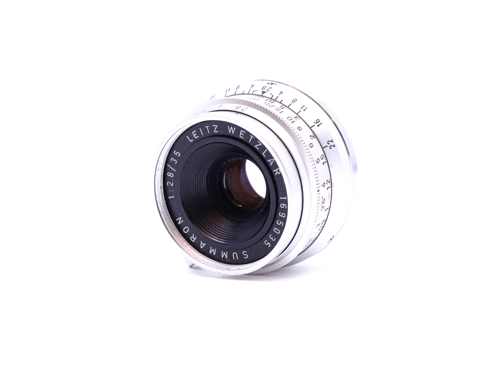
The Leica Summaron 35mm f/2.8 SIMOM is a compact M-mount rangefinder wide-angle, an affordable classic 35mm that collectors and users still favor today.
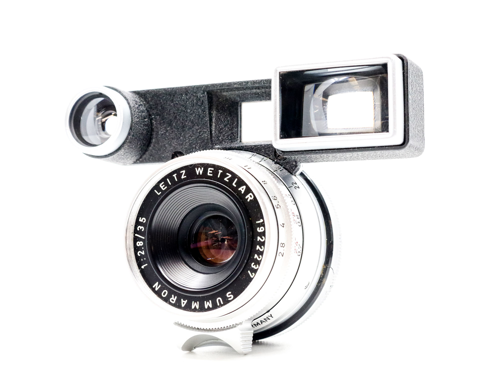
The Leica Summaron 35mm f/2.8 (11106) is the M3 goggled SIMWO version, a compact six-element wide-angle rangefinder lens collectors prize for classic rendering.
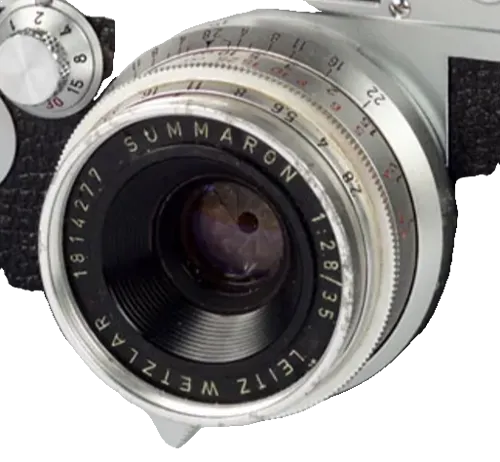
The Leica Summaron 35mm f/2.8 SIMOO is the screw-mount (LTM) version of Leica's classic six-element wide-angle, prized as an affordable vintage M39 lens.
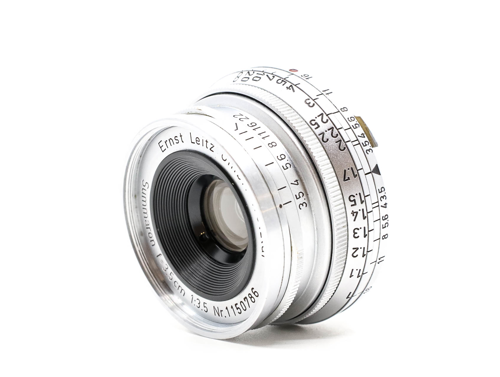
The Leica Summaron 35mm f/3.5 is a compact six-element wide-angle lens in M mount, prized by collectors for its vintage low-contrast rendering and tiny size.
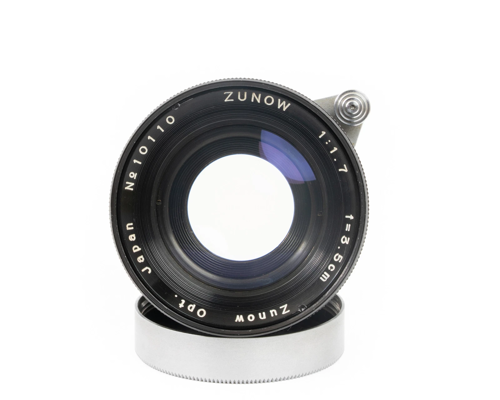
The Zunow 35mm f/1.7 is a rare LTM screw-mount wide-angle from Japan's Zunow Optical, a fast 1950s rangefinder lens prized by collectors.
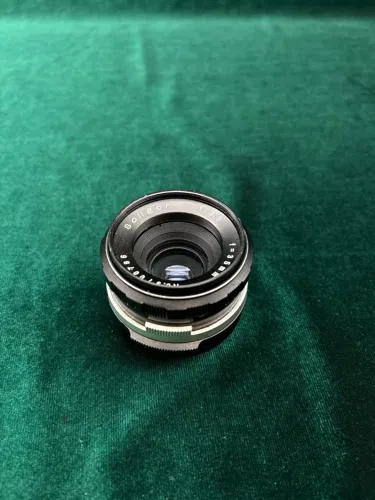
The Soligor 35mm f/3.5 is a compact LTM-mount, scale-focus wide-angle lens from Allied Impex, a lightweight screw-mount option for Leica thread cameras.
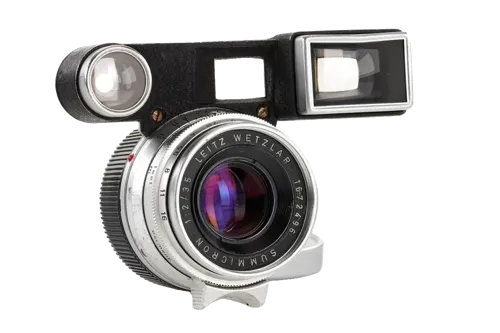
The goggled Leica 35mm f/2 eight-element Summicron for the M3, catalogue 11108, with coupled focusing, E39 filters and a 16-blade diaphragm.
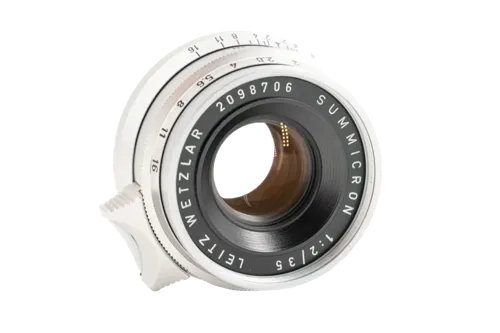
The rare Leica 35mm f/2 eight-element Summicron in coupled LTM, catalogue 11008, with an E39 filter thread, ten-blade iris and 1m close focus.
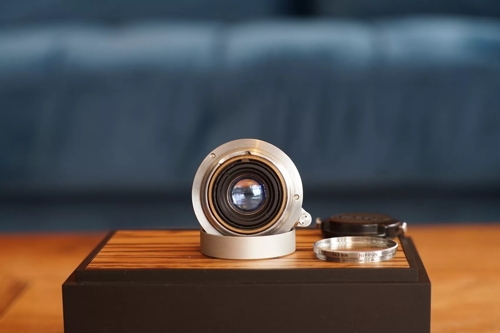
Nippon-Kogaku's W-Nikkor.C 3.5cm f/2.5 is a compact six-element LTM wide-angle, a brass-built rangefinder favorite prized for its handling and classic rendering.
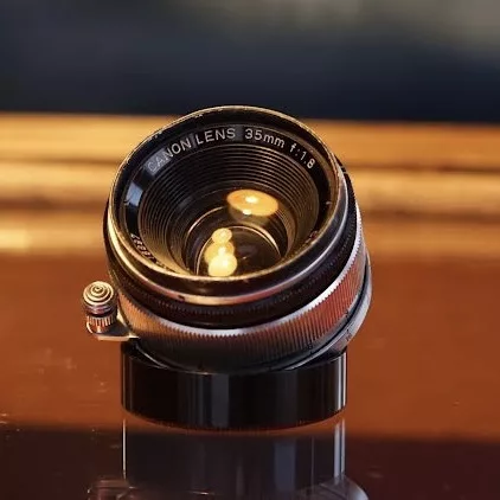
The Canon 35mm f/1.8 is a fast LTM screw-mount rangefinder wide-angle from the late 1950s, valued by collectors for its compact build and vintage rendering.
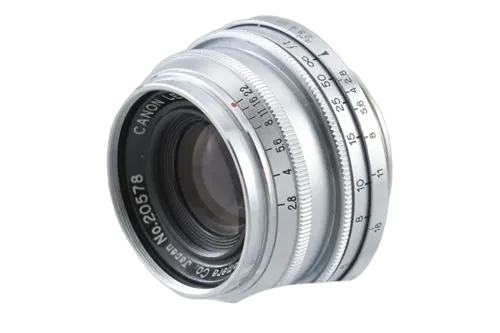
The Canon 35mm f/2.8 II is a compact 1957, rangefinder-coupled LTM wide-angle lens with six elements, a 40mm filter thread and 125g weight.
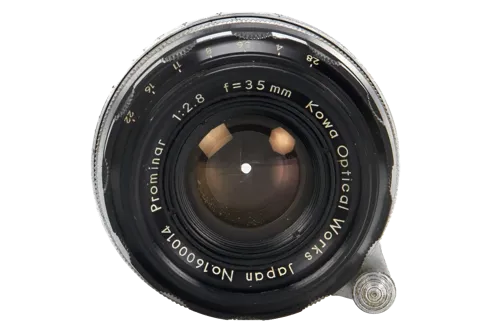
A 1957 Japanese Kowa 35mm f/2.8 wide-angle in coupled Leica M39 mount, with a six-element, four-group design, 3.5ft focus and E34 filters.
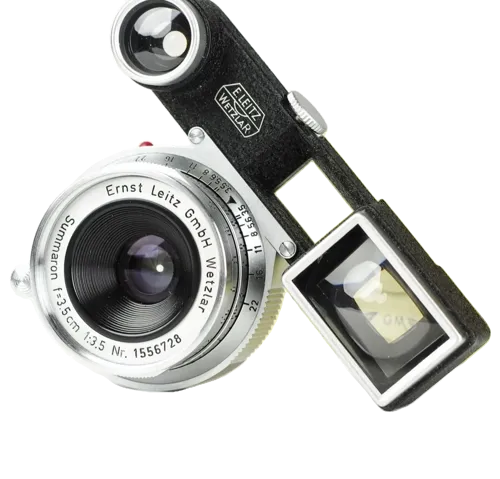
Leica Summaron 35mm f/3.5 SOONC-MW / SOMWO 11107 is the goggled M3 version of the classic chrome 35mm Summaron.
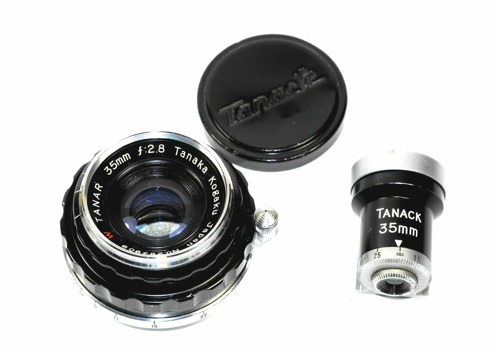
The Tanaka Kogaku W Tanar 35mm f/2.8 is a six-element LTM wide-angle lens for Tanack rangefinders, a scarce 1950s Japanese collectible in Leica screw mount.
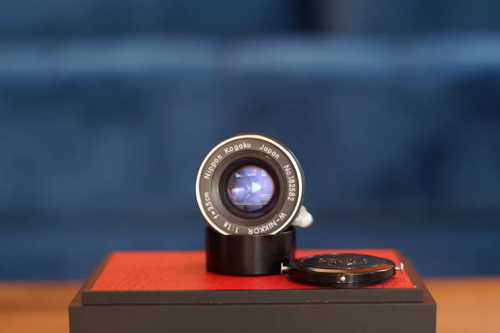
Nippon-Kogaku's W-Nikkor.C 35mm f/1.8, the world's first f/1.8 wide-angle, is a collectible LTM rangefinder lens prized for its symmetric design.
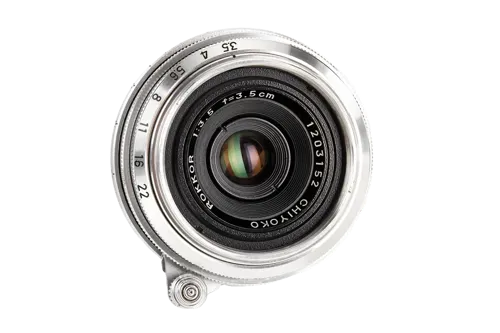
A compact 1956 Chiyoko 35mm f/3.5 wide-angle for Minolta-35 cameras in coupled M39, with a documented four-in-three design and Achromatic Coating.
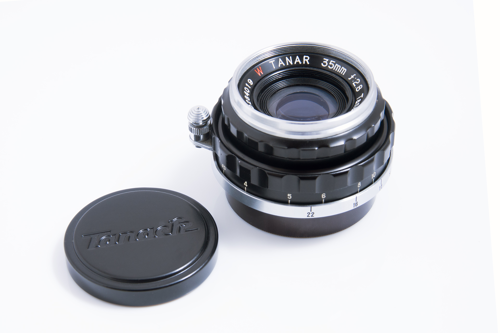
The Tanaka Kogaku W Tanar 35mm f/3.5 is a scarce all-chrome LTM wide-angle made for Tanack rangefinders, a sought collector item from late-1950s Japan.
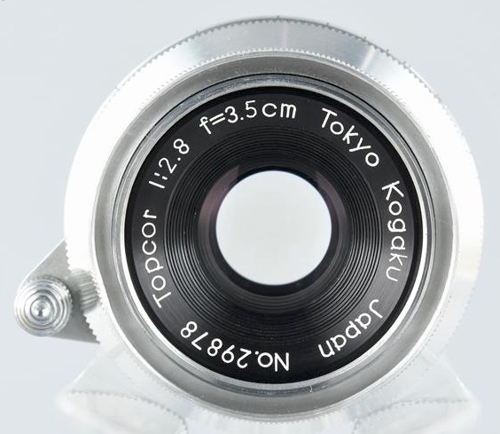
The Tokyo Kogaku Topcor 35mm f/2.8 is a rare chrome LTM wide-angle made for Leotax rangefinders, prized by Japanese screw-mount collectors.
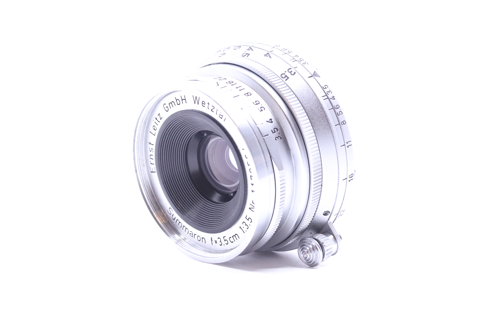
The Leica Summaron 35mm f/3.5 with OVU goggles (SOONC-M, 11105) is an M-mount classic prized by M3 users for its compact build and vintage character.</parameter> <parameter name="long_description">## Leica Summaron 35mm f/3.5 with OVU SOONC-M What sets this version of the Summaron 35mm f/3.5 apart is the OVU optical attachment, the pair of auxiliary "goggles" that sit in front of the rangefinder and viewfinder windows. The Leica M3, the camera the lens was designed to accompany, has no built-in 35mm frame line, so the goggles magnify the wider field down into the M3 finder and bring up the correct framing while keeping the rangefinder coupled. The result is a lens that lets M3 owners shoot 35mm without an accessory finder, and the assembly is why collectors single out this configuration, catalogued under model number 11105 [1][2]. Optically the lens uses a six-element, four-group design, and the same formula was carried across the screw-mount and bayonet versions of the lens [2]. The bayonet M version was produced toward the end of the Summaron 35mm f/3.5 run, which spanned roughly the mid-1940s to about 1960 in screw mount and the second half of the 1950s in M mount [2][3]. The barrel is short and light, in keeping with other compact Leica wide angles of the era, and build quality is regularly described as excellent, with many surviving copies still working smoothly and remaining largely free of internal dust [2][3]. The diaphragm uses ten blades, which keeps the aperture opening close to circular and contributes to the lens's gentle out-of-focus rendering [2]. The lens is rangefinder coupled, takes 39mm filters, and focuses to one meter. Because the optical cell is shared between mounts, the most important identification point is the mount and the presence of the goggles rather than the glass itself. A goggled f/3.5 Summaron in M bayonet, carrying the SOONC-M designation and model number 11105, is distinct from the plain screw-mount lens used with an adapter and from the later faster f/2.8 Summaron, which is a different optical design and is not covered here [2][3]. --- ## Optical qualities **Rendering** The Summaron 35mm f/3.5 is valued more for character than for clinical correctness. Reviewers describe a lens that is not flawless wide open but renders with a distinctive, atmospheric quality, combining mild softness, vignetting and a particular tonal feel that suits mood-led and black-and-white work [3]. It was designed in an era when monochrome was the dominant medium, and users note that it performs at its best in good light, where it can still produce smooth, pleasant out-of-focus areas helped by the ten-bladed diaphragm [1][3]. Those drawn to it generally want the classic vintage Leica look and a rendering that differs visibly from modern optics, rather than maximum sharpness across the frame [1]. --- ## History **Development and Launch** The Summaron 35mm f/3.5 was one of Leica's common wide-angle lenses of the period, first offered in screw mount and later adapted to the M bayonet [2][3]. With the introduction of the M3 in 1954, Leica needed a way to use a 35mm lens on a camera whose viewfinder lacked a 35mm frame line, and the goggled SOONC-M version answered that need by adding the OVU optical attachment to the bayonet lens [1][2]. **Production Evolution** The lens kept its six-element, four-group optical formula across both the screw-mount and M-mount versions, so the principal change over its life was the mount and the addition of the finder goggles for M3 use rather than a new optical design [2]. Production of the f/3.5 Summaron ran to about 1960, after which Leica's 35mm offerings moved on to faster designs [2][3]. **Special editions** No major factory special editions of this specific goggled f/3.5 version are widely documented in collector sources beyond the standard SOONC-M configuration recorded as model 11105 [1][2]. **Collector Notes** For an M3 user the goggled Summaron is often regarded as both a usable lens and a desirable collector item [1]. When evaluating a copy, confirm that the goggles are present, undamaged and clear, since they are integral to correct framing on the M3 and are awkward to replace. As with any lens of this age, check the front and rear glass and internal elements for haze, fungus and separation; many surviving examples remain clean, but condition varies. The 39mm filter thread and period caps and hoods are worth verifying as original. Note also that the plain screw-mount Summaron and the later f/2.8 Summaron are easily confused with this version in listings, so checking the mount, the goggles and the model number helps avoid mistaken purchases [2][3]. --- ## Sources * [1] Dankerin Photography. *Leica 35mm F3.5 Summaron*. https://dankerinphotography.com/leica-35mm-f35-summaron * [2] Vintage Camera Lenses. *Leica Summaron 35mm f3.5*. https://vintage-camera-lenses.com/leica-summaron-35mm-f3-5/ * [3] MrLeica (Matt Osborne). *Leica Summaron 35mm f3.5 Review & Photos*. https://mrleica.com/summaron-35mm-f3-5/
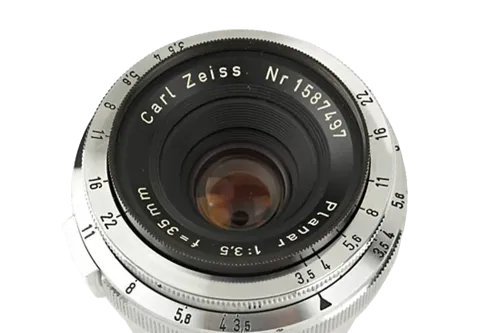
A rare postwar 35mm f/3.5 Planar for Contax RF, combining a compact six-element design with coupled focusing and restrained wide-angle handling.
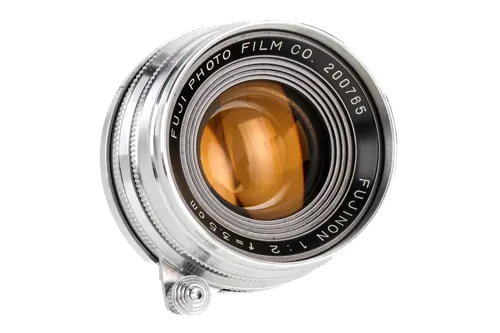
A 1954 Japanese 35mm f/2 wide-angle with seven elements in five groups, coupled Leica M39 focusing, 1.07m close focus and E40.5 filters.
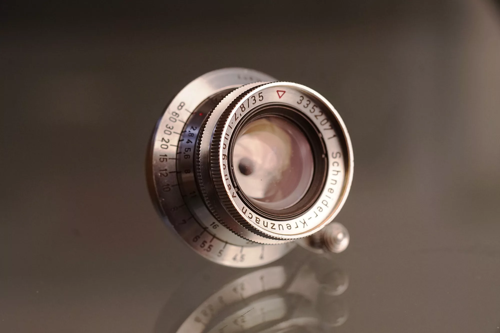
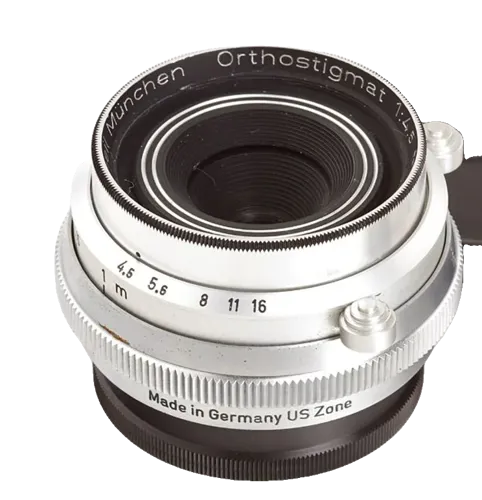
A late-1940s to early-1950s Steinheil 35mm f/4.5 wide-angle in coated, rangefinder-coupled Leica LTM form, with twin focusing tabs and chrome finish.
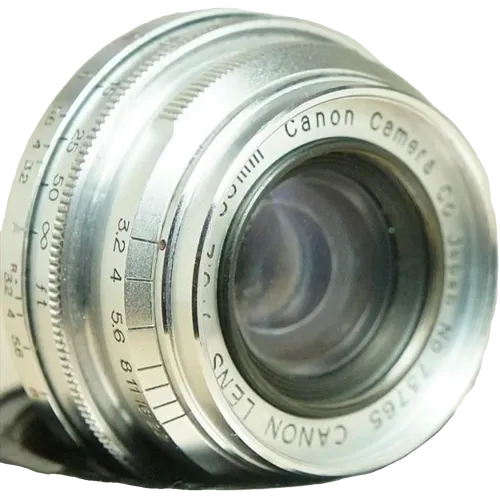
The Canon Serenar 35mm f/3.2 is a compact 1951 LTM wide-angle lens with six elements, rangefinder coupling, a 34mm filter thread and chrome finish.
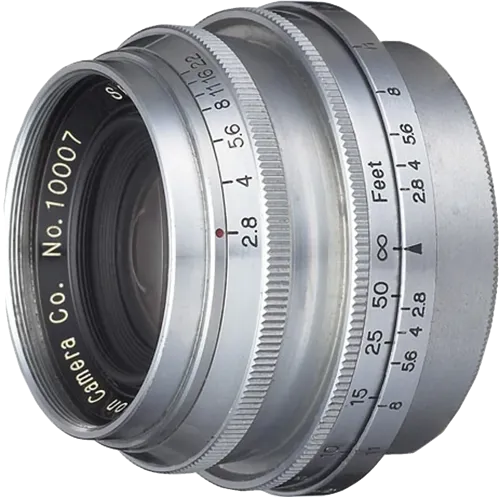
A 1951 Canon Serenar 35mm f/2.8 wide-angle with six elements in four groups, coupled LTM focusing, 1m close focus and a compact chrome barrel.
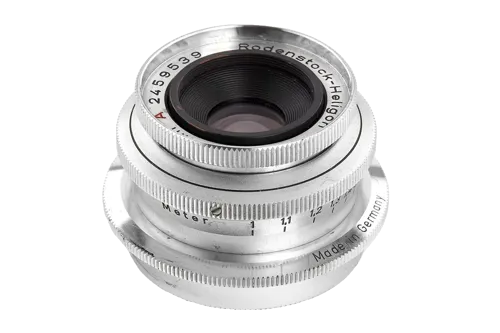
A 1951 German 35mm f/2.8 wide-angle with six elements in four groups, coupled Leica M39 focusing, 1m close focus and an A36 fitting.
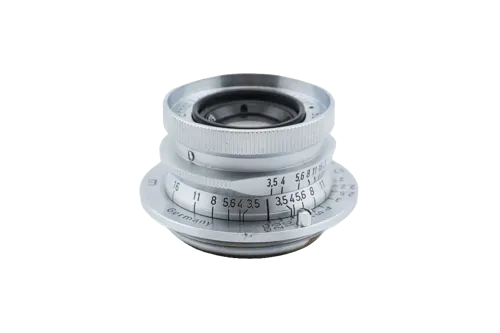
Leica Summaron 35mm f/3.5 SOONC 11005 is the early Leica L39/LTM A36 screw-mount version of the classic 3.5cm Summaron.
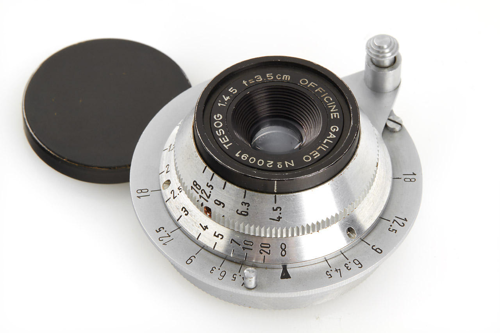
A very rare Italian Officine Galileo TESOG 35mm f/4.5 in Leica screw mount (LTM/M39), a coated wide-angle from the Florence optical maker prized by collectors.
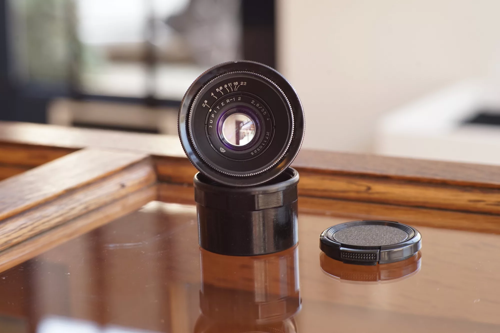
The KMZ Jupiter-12 35mm f/2.8 is a compact Soviet Biogon-derived rangefinder lens produced in both M39 and Contax/Kiev mounts, recognised by its deeply projecting rear element and classic low-contrast rendering
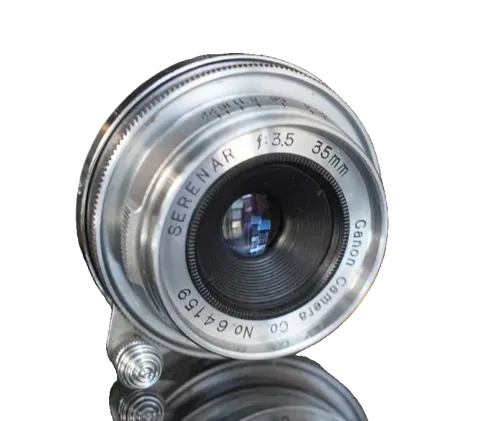
The Canon Serenar 35mm f/3.5 is an early chrome LTM wide-angle lens with four elements in three groups and a 1.07m minimum focusing distance.
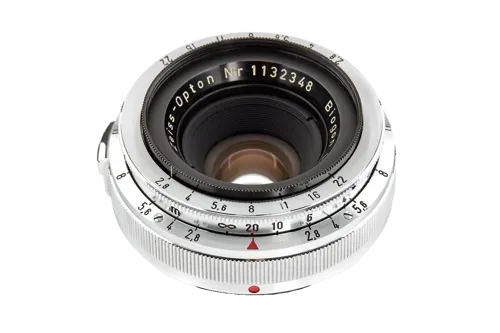
The postwar West German 35mm f/2.8 Biogon for Contax RF, a compact coupled wide-angle with a seven-element symmetrical optical construction.

A rare coupled rangefinder version of Angénieux's pioneering 35mm f/2.5 Retrofocus R1, factory documented in Leica M39 and Contax RF mounts.
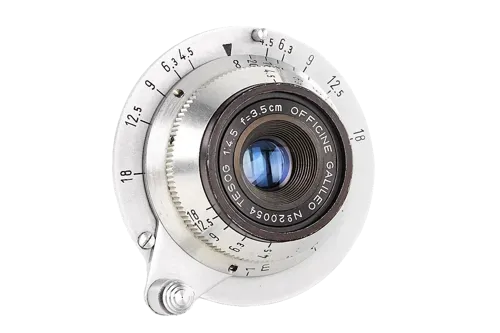
A circa-1950 Officine Galileo 35mm f/4.5 wide-angle for coupled M39 rangefinders, with four elements in three groups and coated chrome construction.
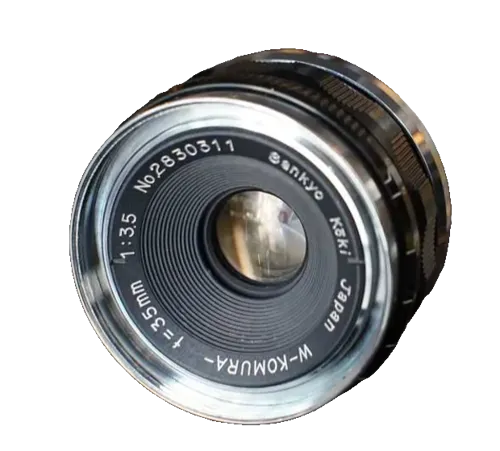
A circa-1960 Sankyo Kohki 35mm f/3.5 wide-angle in coupled Leica thread mount, documented in black and black-chrome finishes with a matching finder.
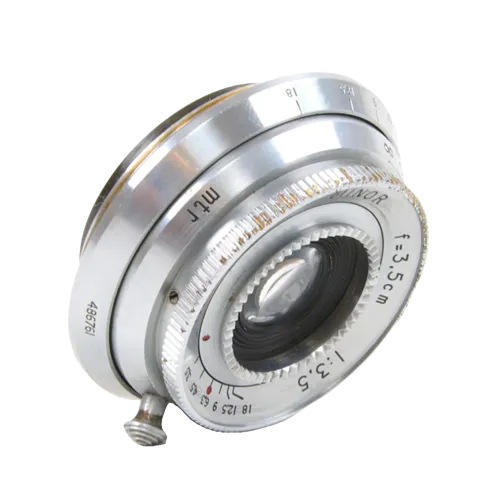
The Old Delft Minor 3.5cm f/3.5 is a rare Dutch rangefinder wide-angle produced in original LTM and Contax RF mounts, with compact brass construction and a four-element Tessar-type optical design.
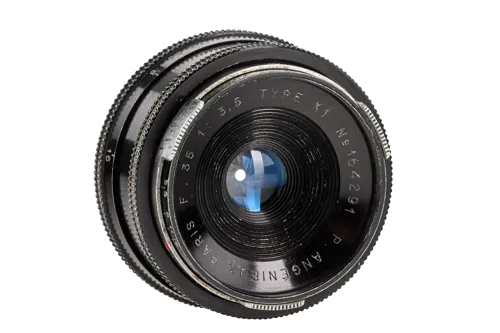
A compact French 35mm f/3.5 four-element Tessar-type wide-angle, documented in original coupled Leica M39 and Contax RF factory versions.
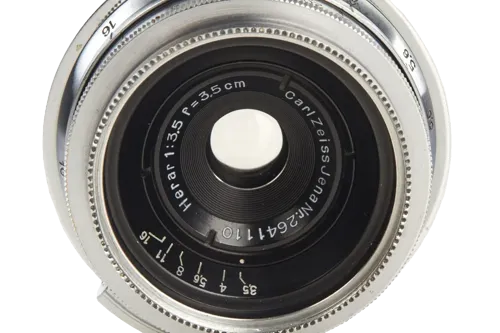
A rare 1938–1939 Carl Zeiss Jena 35mm f/3.5 Contax wide-angle with a five-element Herar design and coupled external-bayonet focusing.
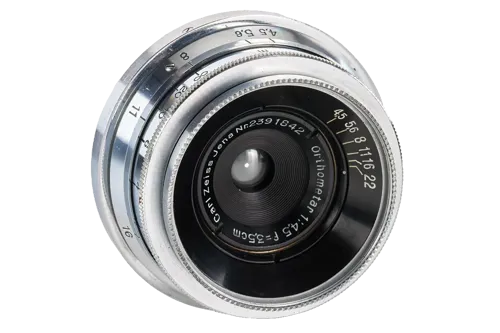
A 1937 Carl Zeiss Jena 35mm f/4.5 wide-angle with a six-element Orthometar design, coupled external-bayonet focusing and 0.9m close focus.
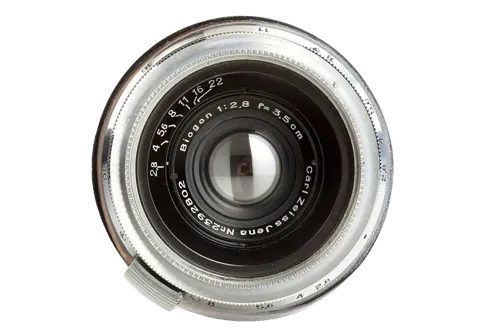
The original 1936 Carl Zeiss Jena 35mm f/2.8 Biogon, a coupled six-element Contax wide-angle with a deeply projecting rear optical assembly.
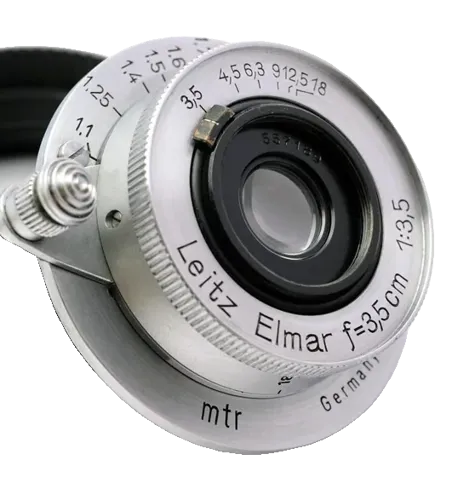
The Leica Elmar 35mm f/3.5 Chrome is a compact, rangefinder-coupled LTM wide-angle lens with four-element optics and an A36 accessory fitting.
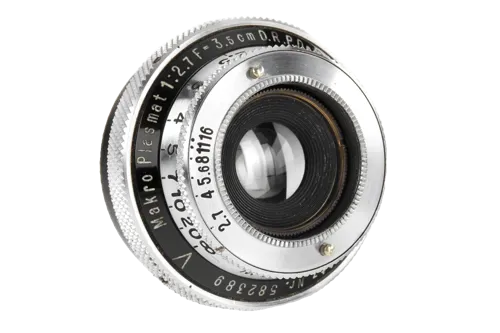
A 1933 Makro-Plasmat 35mm f/2.7 wide-angle in original coupled Leica M39 mount, distinguished by a long focus throw and approximately 0.7m close focus.
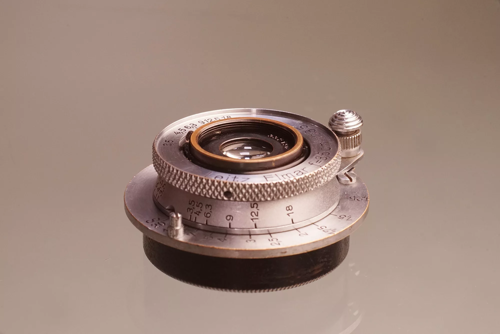
The Leica Elmar Nickel 35mm f/3.5 is an early LTM wide-angle in nickel finish, prized by collectors for its tiny size and 1930s production.
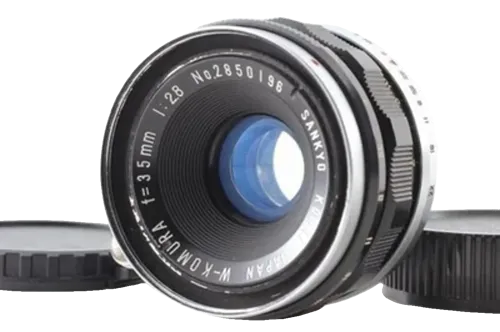
Sankyo-Kohki's W-Komura 35mm f/2.8 is a compact six-element wide-angle in Leica screw mount (LTM), a scarce Japanese third-party rangefinder lens collectors seek.
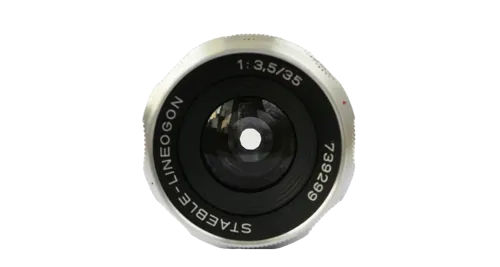
Staeble Lineogon-L 35mm f/3.5 LTM is a rare German Leica screw-mount wide-angle lens for L39 rangefinder collectors.
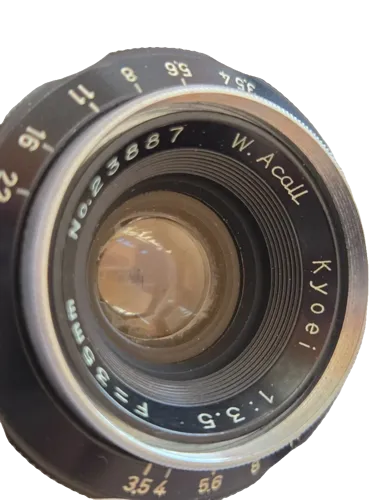
The Kyoei W.Acall 35mm f/3.5 is a rare, compact Japanese LTM wide-angle lens with rangefinder coupling and black-and-chrome construction.
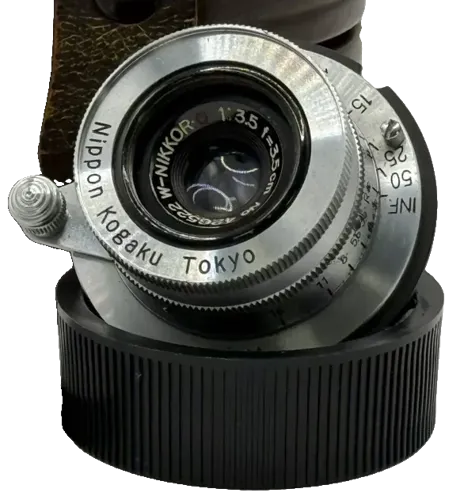
The Nippon Kogaku W-Nikkor.C 3.5cm f/3.5 is a scarce, compact LTM wide-angle lens, distinct from the later and faster 3.5cm f/2.5 version.
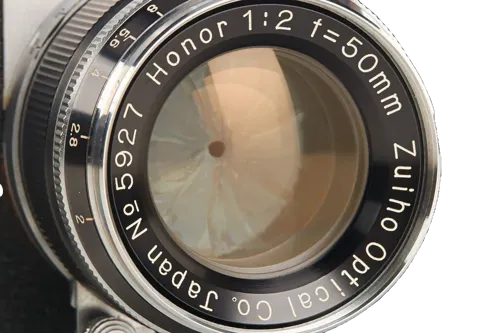
An Honor-branded 35mm f/3.5 wide-angle for the late-1950s Honor S1 system, documented in Leica thread mount with a matching external finder.