Best price
Lomography Zenit New Jupiter 3* 1,5/50 L39/M
Sold by SHphoto
€673 ≈ $727
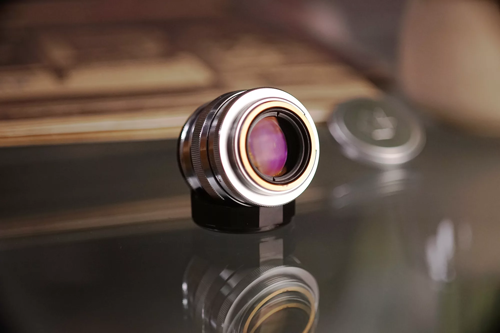
The Lomography New Jupiter 3+ 50mm f/1.5 Art is a modern LTM Sonnar revival, prized by rangefinder collectors for vintage rendering with current build quality.
LTM mount
The Lomography Jupiter 3+ 50mm f/1.5 Art is a LTM-mount lens for Leica rangefinder cameras. As of October 2026, it sells from €673 used across 1 listing, with a 30-day median of €673. Leica price index →
Measured against the 108 other 50mm LTM-mount lenses in the catalogue.
The Jupiter 3+ is one of the very few new lenses built to the classic Sonnar formula and sold in a Leica thread mount, which is what sets it apart from almost everything else released since the 2010s. Lomography produced it as a faithful reissue of the Soviet-era Jupiter-3, a lens that itself descended from the wartime Zeiss Sonnar 5cm f/1.5, and it carries that lineage forward with a 7-element, 3-group design at f/1.5 [1][2]. Lomography stated that the reissue was assembled at the same Zenit factory in Russia that made the original, placing it firmly within the Sonnar tradition rather than treating it as a generic "lomo" novelty optic.
Mechanically the lens is a clear improvement over its vintage ancestors. It is built in chrome over brass, and the rangefinder veteran Brian Sweeney, who has adjusted and converted hundreds of Jupiter and Sonnar lenses, found the focus accurate across the full distance range on a Leica M9 and the build comparable to vintage Nikkor lenses [3]. The barrel focuses down to 0.7 m, closer than typical 1 m vintage Jupiter-3 units, and the silver lens is compact and light at around 200 g. A distinctive handling trait is the stepless aperture, which moves smoothly through the f-stops without clicks; reviewers note this can suit video and exposure fine-tuning but takes adjustment for stills shooters used to detents [4]. The 13-bladed diaphragm keeps the aperture opening rounded. The lens uses a 41 mm filter thread and ships in Leica screw mount, often with an LTM-to-M adapter for use on M-mount bodies.
Because it is a recent production lens rather than a survivor of decades of use, the Jupiter 3+ avoids the stiff grease, haze and sample-to-sample variation that plague original Jupiter-3 lenses, and Lomography offers it with a warranty rather than the lottery of a used Soviet example. Lomography also released gold-toned and other finish treatments within its Art Lens line over time, though the standard catalogue version is the silver chrome lens described here.
Rendering The Jupiter 3+ reproduces the character of the Sonnar design, which by construction trades some correction for compactness and a particular signature. The Sonnar formula is known to carry residual spherical aberration, coma and field curvature, and in practice these produce the lens's recognizable look rather than reading as simple faults.
Sharpness Testing reported a sharp center at every aperture with softer edges, consistent with the design's heritage. Wide open it is at its most characterful, gaining definition as it is stopped down.
Bokeh and transitions The out-of-focus rendering is a major reason collectors seek the lens, described as ethereal and at times bubbly, with the soft falloff that vintage Sonnar and Jupiter shooters prize for portraits.
Flare resistance Shooting into bright light produces pronounced, nostalgic flare; multiple reviewers single this out as part of the lens's vintage personality rather than a flaw to be engineered away.
Distortion and vignetting Reviewers observed only slight vignetting in use, and Sweeney noted that the modern coatings reduce vignetting compared with single-coated vintage Jupiter-3 lenses.
Contrast and color Sweeney observed that the New Jupiter 3+ renders like a Sonnar but cooler than a warm single-coated 1950s KMZ example, and suggested a Skylight 1A filter for a warmer result; this reflects the lens's modern multicoating.
Digital use The lens has been used successfully on digital rangefinders and mirrorless bodies, with the focus on Sweeney's M9 reported as accurate across the range. The stepless aperture is noted as potentially useful for video on mirrorless cameras.
Development and Launch The original Jupiter-3 was a Soviet 50mm f/1.5 derived from the Zeiss Sonnar, produced for rangefinder cameras in the postwar decades, with the best examples associated with the KMZ plant at Krasnogorsk. Lomography revived the design for its Art Lens program, presenting the New Jupiter 3+ as a modern, precisely built version of that classic optic in Leica thread mount and stating it was made in the same Zenit factory as the original. The reissue answered a long-standing gap, since finding an original Sonnar or a well-adjusted Jupiter-3 in Leica mount had long been difficult and costly.
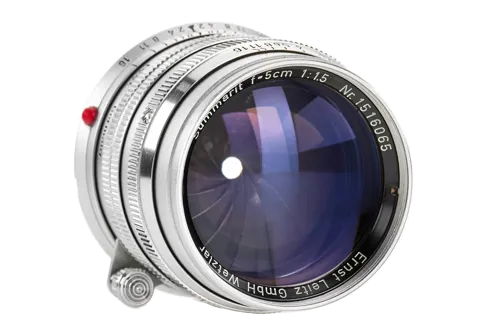
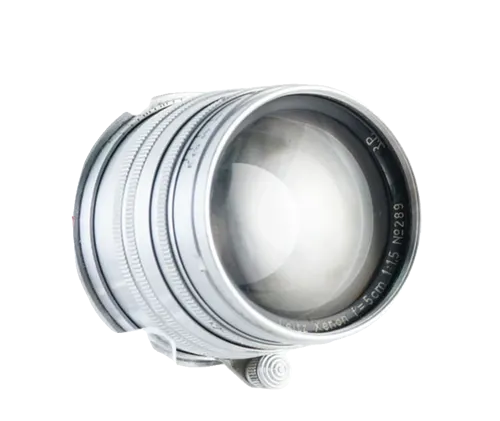
Production Evolution The lens retains the 1-3-3 type Sonnar layout of seven elements in three groups while adding modern multicoating and a focus mount that reaches 0.7 m, tighter manufacturing tolerances, and chrome-over-brass construction in place of the softer materials and looser tolerances of vintage units. The Sonnar lineage traces back through the Soviet Jupiter-3 to the Carl Zeiss Sonnar f/1.5; Lomography has also linked the broader heritage to the Leica Summarit 50mm f/1.5 and its Xenon ancestor in marketing the design.
Special editions Within Lomography's Art Lens range the Jupiter 3+ has appeared in alternate finishes alongside the standard silver chrome lens, but no major optically distinct factory variants of the reissue are widely documented; the principal version is the LTM lens described here.
Collector Notes Buyers should distinguish the modern Lomography New Jupiter 3+ from genuine vintage Soviet Jupiter-3 lenses, which on early examples can be dated by the first two digits of the serial number indicating the production year. The modern lens is valued partly because it sidesteps the haze, fungus, stiffened grease and wide performance variation common to old Jupiter-3 units, which often need a CLA. One point of confusion concerns rangefinder coupling: some reviews described the reissue as rangefinder coupled when used via the M adapter, whereas LeicaLensList records this lens as not rangefinder coupled, and the verified specification should be taken as authoritative. Worth verifying before purchase are the included LTM-to-M adapter, caps and any filters in the 41 mm thread, and that the stepless aperture and focus operate smoothly.
About the usual price. The lowest listing is around the 30-day average.
Over the last 13 weeks the median price for the Lomography Jupiter 3+ 50mm f/1.5 Art has risen, ranging from €489 to €700 (now €673).
Weekly price (EUR). Median (Good or better) and lowest (Good or better) across 13 weeks. The full figures follow in the table below.
| Week | Median | Lowest |
|---|---|---|
| Jun 1, 2026 | €489 | €397 |
| Jun 8, 2026 | €489 | €397 |
| Jun 15, 2026 | €489 | €397 |
| Jun 22, 2026 | €489 | €397 |
| Jun 29, 2026 | €489 | €397 |
| Jul 6, 2026 | €687 | Unknown |
| Aug 24, 2026 | €700 | Unknown |
| Aug 31, 2026 | €698 | Unknown |
| Sep 7, 2026 | €697 | Unknown |
| Sep 14, 2026 | €689 | Unknown |
| Sep 21, 2026 | €685 | Unknown |
| Sep 28, 2026 | €675 | Unknown |
| Oct 5, 2026 | €673 | Unknown |
Every shop grades differently. Leica Classic uses letters, Ffordes uses E++ and E+, German dealers write "Zustand B", Japanese dealers write A−. We map all of them onto the one ladder below. Where a shop states its own grade, we print it under ours.
As of October 2026, the Lomography Jupiter 3+ 50mm f/1.5 Art sells from €673 used, with a 30-day median of €673, across 1 active listing.
As of October 2026, the Lomography Jupiter 3+ 50mm f/1.5 Art is sold by 1 source (1 listing), from €673 used: all compared cheapest-first on this page.
Similar lenses you might be interested in
Comments