Best price Fair
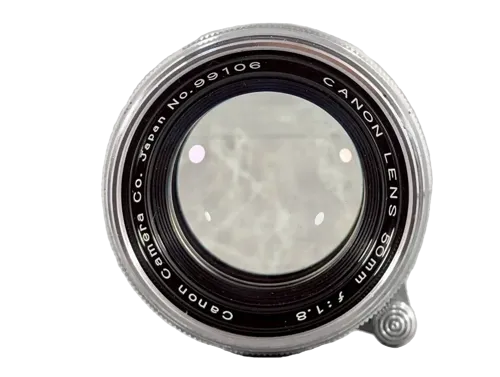
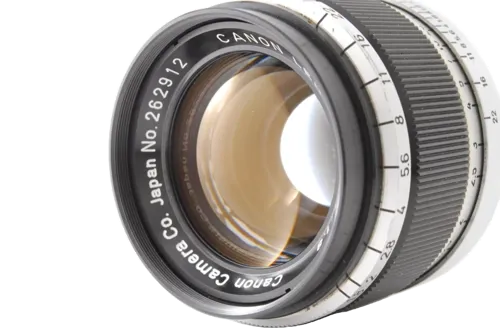
Canon 50mm f/1.4 L39 Leica Thread Mount Lens
Sold by Five Star Camera
€309 ≈ $334
The Canon 50mm f/1.4 II is a fast six-element LTM rangefinder lens prized by collectors as among the best Canon screw-mount fifties.
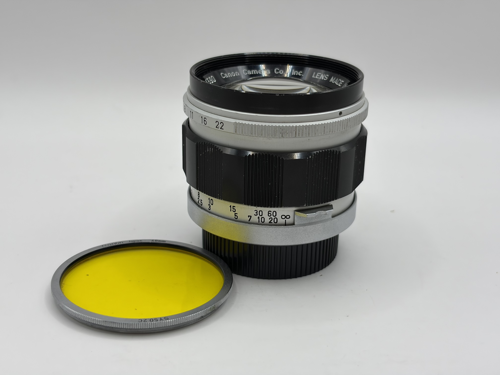
LTM mount
The Canon 50mm f/1.4 II is a LTM-mount lens for Leica rangefinder cameras. As of October 2026, it sells from €309 used across 1 listing, with a 30-day median of €309. Leica price index →
Measured against the 108 other 50mm LTM-mount lenses in the catalogue.
Among the standard lenses Canon built for its screw-mount rangefinders, the 50mm f/1.4 is widely regarded as the strongest of the line, often described as the best fifty Canon made for the Leica thread mount and a credible rival to the contemporary Leitz Summilux 50mm f/1.4 [1][2]. It is a relatively compact and fast normal lens that mounts directly on Leica thread-mount bodies and, with a simple adapter, on later Leica M cameras and mirrorless digital bodies [3].
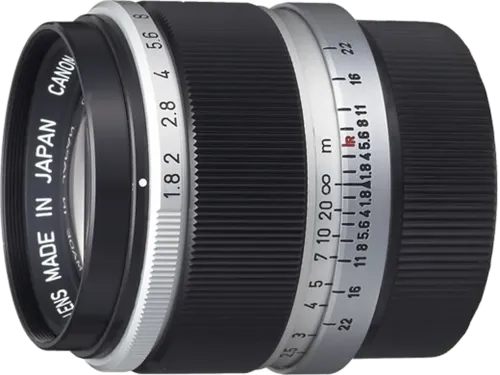
Optically the lens uses a six-element, four-group arrangement of the Planar or Biotar (double-Gauss) family, a design Canon developed from its earlier 50mm f/1.8 and aided by then-new high-refractive-index glass; most f/1.4 standard lenses of the era required seven elements to reach comparable performance, so the formula was considered notably economical for its speed. The barrel is built almost entirely of metal with painted black detailing, and the example commonly seen pairs a chrome and black two-tone finish. The aperture ring runs in distinct full-stop click stops, the front element does not rotate during focusing, and the lens focuses down to one meter with rangefinder coupling through its LTM mount. It uses a 48mm filter thread and a nine-blade diaphragm.
Two versions are documented that share the same optical design but differ in their distance scales: the first carried a smaller scale marked in either feet or meters, while the second version added both feet and meters together. Sources disagree on the exact introduction date. Some references cite a 1957 release, but the lens is rarely seen on the V and L bodies of that period, is absent from a 1958 sales brochure, and appears most often with the Canon 7 of 1961 and sometimes the Canon P of 1959, which has led one detailed collector study to place the true start of production around 1959.
Rendering The lens is valued for a pleasing, classic rendering rather than modern clinical correction, though opinions vary; some users instead find its results comparatively sharp and contrasty for a lens of its age. Wide open it shows the softness and glow typical of fast fifties of the period, an effect some photographers exploit for atmosphere in low light.
Sharpness Center sharpness is good at portrait distances, and the frame improves on stopping down, although the mid-frame zone is held back by field curvature until roughly f/4 to f/5.6; the corners improve steadily as the lens is closed down.
Bokeh and transitions Out-of-focus rendering is generally regarded as one of the lens's attractions at wider apertures, while the nine-blade diaphragm can produce harder, star-shaped highlights when stopped down.
Flare resistance, coma and distortion As a fast design from the late 1950s, flare resistance is limited and a variety of artefacts can appear with strong light sources in the frame, so a hood is advisable. Coma is strong wide open and largely clears only around f/5.6, while distortion is modest.
Digital use On high-resolution digital bodies the lens exhibits focus shift and noticeable vignetting wide open, behavior consistent with its vintage double-Gauss design.
Development and Launch The 50mm f/1.4 arrived among the last and most refined of Canon's screw-mount standard lenses, developed from the company's 50mm f/1.8 of 1951 and benefiting from newer high-index optical glass. While some sources give a 1957 release date, the lens's scarcity on mid-1950s Canon bodies and its frequent appearance with the Canon P (1959) and Canon 7 (1961) suggest production most likely began around 1959.
Production Evolution The principal documented change between versions is the distance scale, the earlier lens using a smaller scale in either feet or meters and the later one combining both, with the optical design unchanged. Canon collector references such as Peter Kitchingman's study of Canon M39 rangefinder lenses classify the variants and tie serial-number ranges to production periods.
Collector Notes A well-documented concern with these black-barrel Canon fifties is internal haze on the glass, widely attributed to outgassing from aged lubricant attacking the lens elements; the f/1.4 is affected less consistently than some siblings such as the black 50mm f/1.8, but buyers should still inspect the glass and favor copies that have been cleaned or serviced. Because the large front element concentrates sunlight, owners of focal-plane shutter bodies are advised to keep a cap on the lens when not shooting to avoid burning pinholes in the curtain. A vented 48mm hood is a sensible accessory. Note that the verified production data for this entry records a 1959 introduction, consistent with the later collector analysis rather than the 1957 date cited by some reviewers.
About the usual price. The lowest listing is around the 30-day average.
Over the last 10 weeks the median price for the Canon 50mm f/1.4 II has risen, ranging from €261 to €362 (now €309).
Weekly price (EUR). Median (Good or better) and lowest (Good or better) across 10 weeks. The full figures follow in the table below.
| Week | Median | Lowest |
|---|---|---|
| Jun 1, 2026 | €351 | €261 |
| Jun 8, 2026 | €351 | €261 |
| Jun 15, 2026 | €351 | €261 |
| Jun 22, 2026 | €351 | €261 |
| Jun 29, 2026 | €420 | €261 |
| Jul 6, 2026 | €475 | €261 |
| Jul 13, 2026 | €420 | €261 |
| Jul 20, 2026 | €420 | €261 |
| Jul 27, 2026 | €420 | €420 |
| Sep 28, 2026 | €309 | Unknown |
Every shop grades differently. Leica Classic uses letters, Ffordes uses E++ and E+, German dealers write "Zustand B", Japanese dealers write A−. We map all of them onto the one ladder below. Where a shop states its own grade, we print it under ours.
As of October 2026, the Canon 50mm f/1.4 II sells from €309 used, with a 30-day median of €309, across 1 active listing.
As of October 2026, the Canon 50mm f/1.4 II is sold by 1 source (1 listing), from €309 used: all compared cheapest-first on this page.
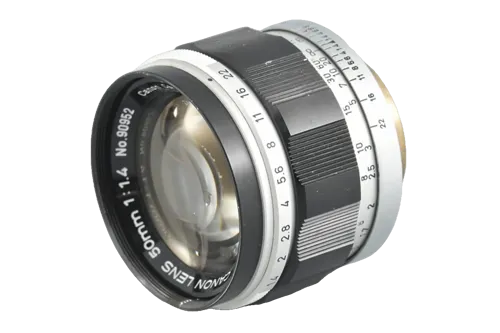
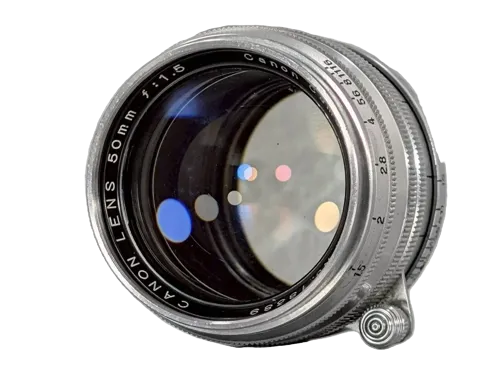
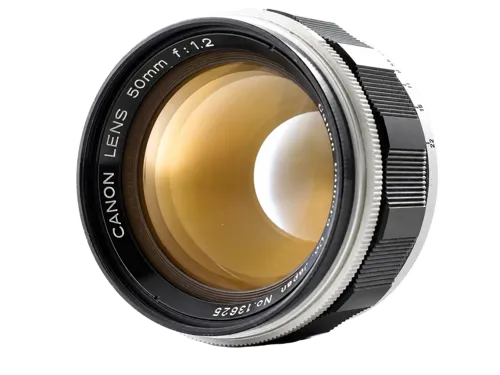
Similar lenses you might be interested in
Comments