Best price Mint
Leica Zeiss C-Sonnar 1,5/50 ZM en boîte
Sold by Photo Suffren
€831 ≈ $898
The Zeiss C Sonnar T* 50mm f/1.5 ZM is a fast standard prime lens manufactured by Cosina in Japan under license from Carl Zeiss AG. Part of the Zeiss ZM family for the Leica M-mount, it is distinguished by its adherence to a historic optical formula from the 1930s rather than modern computer-optimized designs. The "C" in its designation stands for both "Classic" and "Compact," referencing its vintage rendering characteristics and small physical form factor. It is noted for its high contrast, distinct bokeh, and a susceptibility to focus shift, a byproduct of its deliberate optical residue.
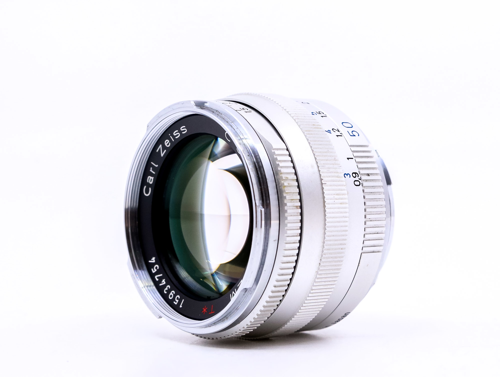
M mount
The Carl Zeiss C Sonnar T* 50mm f/1.5 ZM is a M-mount lens for Leica rangefinder cameras. As of October 2026, it sells from €831 used across 4 listings, with a 30-day median of €833. Leica price index →
Measured against the 76 other 50mm M-mount lenses in the catalogue.
The Zeiss C Sonnar T 50mm f/1.5 ZM* is a manual focus lens designed for 35mm rangefinder cameras. Introduced in 2004 as part of the Zeiss ZM lineup, it is a modern recreation of the historic Sonnar design. Unlike the Zeiss Planar 50mm f/2, which aims for technical perfection and flat field curvature, the C Sonnar is engineered to reproduce the specific aesthetic qualities of mid-20th-century optics while utilizing modern multi-coatings (T*) to suppress flare.
The original Sonnar optical formula was developed by Ludwig Bertele for Zeiss Ikon in 1929 and patented in 1931. The name "Sonnar" is derived from the German word Sonne (Sun), symbolizing the lens's large aperture and ability to capture light.
At the time of its invention, lens coatings did not exist. Complex lens designs with many air-to-glass surfaces suffered from severe light loss and internal reflections (flare), which reduced image contrast. Bertele’s genius was to group massive glass elements together, cementing them to reduce the number of air-to-glass surfaces to just six. This allowed the Sonnar to achieve an aperture of f/1.5 with significantly higher contrast and transmission than rival designs of the era, such as the Leitz Summarit.
For decades, the Sonnar was the premium standard for the Contax rangefinder system. The modern C Sonnar ZM is a direct descendant of the 1932 Contax Sonnar 50mm f/1.5, adapted for the Leica M bayonet.
The lens utilizes a six-element in four-group design. This asymmetrical construction results in specific optical traits that distinguish it from the ubiquitous Double-Gauss (Planar/Summicron) formula found in most 50mm lenses.
The C Sonnar occupies a specific niche for photographers seeking "character" over clinical perfection.
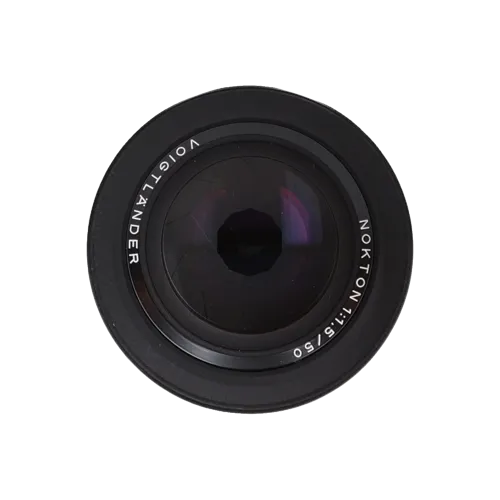
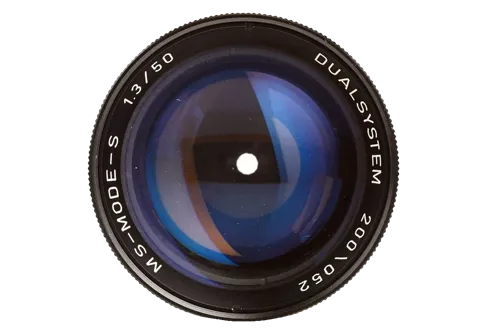
The Nokton Type II is visually styled to look like a vintage lens but contains modern optics.
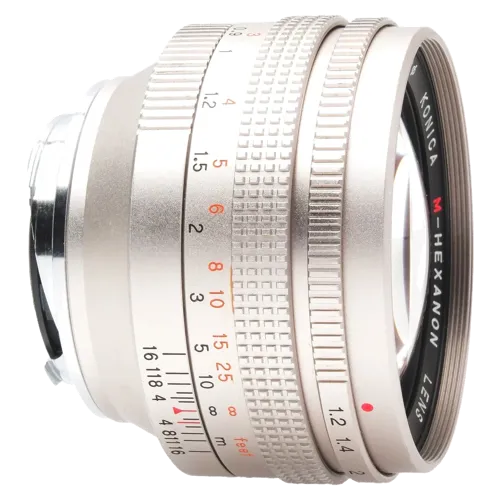
The Heliar is a deliberate "special effect" lens.
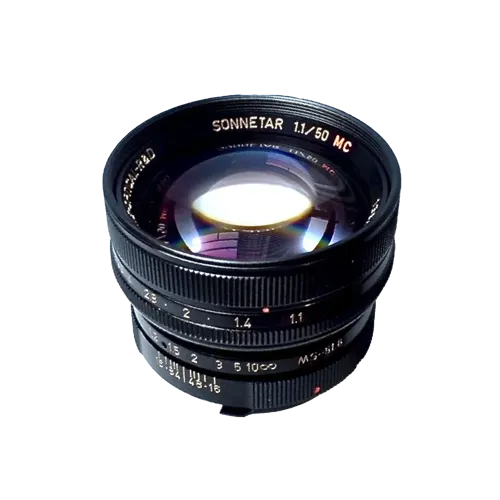
The historical competitor to the original Sonnar.
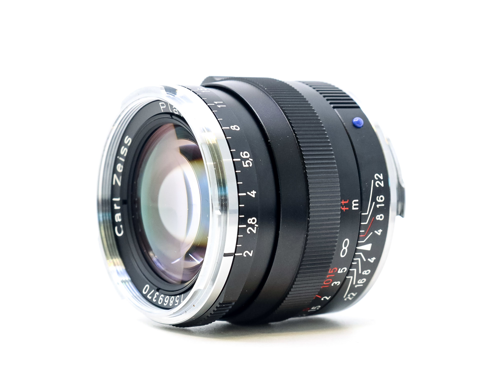
The technical benchmark.
About the usual price. The lowest listing is around the 30-day average.
Lowest price Click a mark to open that listing · arrow keys to step, Enter to open
Price against condition for 4 listings of Carl Zeiss C Sonnar T* 50mm f/1.5 ZM, €831 to €1,260, median €1,047. New: 2 at €1,260, €1,260. Mint: 2 at €831, €833. The full table follows.
| Condition | Lowest | Median |
|---|---|---|
| New | €1,260 | €1,260 |
| Mint | €831 | €832 |
Over the last 18 weeks the median price for the Carl Zeiss C Sonnar T* 50mm f/1.5 ZM has fallen, ranging from €785 to €1,260 (now €833).
Weekly price (EUR). Median (Good or better) and lowest (Good or better) across 18 weeks. The full figures follow in the table below.
| Week | Median | Lowest |
|---|---|---|
| Jun 1, 2026 | €853 | €641 |
| Jun 8, 2026 | €853 | €641 |
| Jun 15, 2026 | €833 | €641 |
| Jun 22, 2026 | €833 | €641 |
| Jun 29, 2026 | €812 | €641 |
| Jul 6, 2026 | €833 | €641 |
| Jul 13, 2026 | €812 | €641 |
| Jul 20, 2026 | €812 | €641 |
| Jul 27, 2026 | €812 | €641 |
| Aug 3, 2026 | €817 | €800 |
| Aug 10, 2026 | €1,067 | €833 |
| Aug 17, 2026 | €1,073 | €833 |
| Aug 24, 2026 | €1,260 | €833 |
| Aug 31, 2026 | €1,260 | €833 |
| Sep 7, 2026 | €1,260 | €833 |
| Sep 14, 2026 | €1,260 | €833 |
| Sep 21, 2026 | €1,260 | €602 |
| Sep 28, 2026 | €1,047 | €831 |
Every shop grades differently. Leica Classic uses letters, Ffordes uses E++ and E+, German dealers write "Zustand B", Japanese dealers write A−. We map all of them onto the one ladder below. Where a shop states its own grade, we print it under ours.
As of October 2026, the Carl Zeiss C Sonnar T* 50mm f/1.5 ZM sells from €831 used, with a 30-day median of €833, across 4 active listings.
As of October 2026, the Carl Zeiss C Sonnar T* 50mm f/1.5 ZM is sold by 2 sources (4 listings), from €831 used: all compared cheapest-first on this page.
Similar lenses you might be interested in
Comments