Best price Excellent
7artisans 50mm f/1.1 for Leica M Boxed
Sold by Fotohandel Delfshaven
€229 ≈ $247
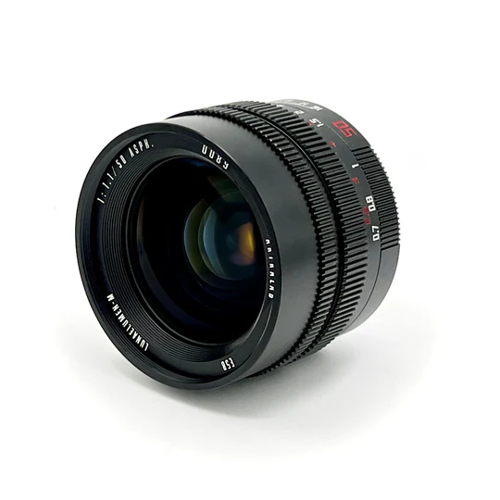
The 7artisans 50mm f/1.1 is a Sonnar-derived Leica M-mount lens whose ultra-fast aperture and budget price made it a popular entry into M-mount fast fifties.
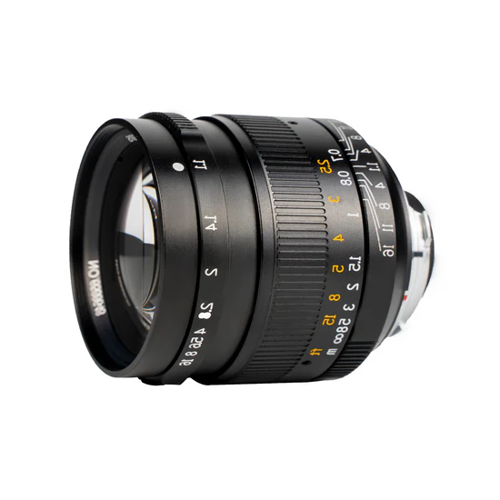
M mount
The 7artisans 50mm f/1.1 is a M-mount lens for Leica rangefinder cameras. As of October 2026, it sells from €229 used across 4 listings, with a 30-day median of €301. Leica price index →
Measured against the 76 other 50mm M-mount lenses in the catalogue.
When it reached the market in 2017, the 7artisans 50mm f/1.1 stood out mainly for offering an f/1.1 aperture in a native Leica M-mount lens at a fraction of the cost of established fast fifties, with early street prices around 370 US dollars [1][2]. Made by the Chinese maker also known as DJ-Optical, it became one of the first widely available budget super-fast normal lenses for the M system. Its optical layout drew immediate interest from collectors: rather than copying the Voigtländer 50mm f/1.1, observers and the manufacturer identified it as a Sonnar-based formula, with Sonnar specialist Brian Sweeney suggesting it is closest to the eight-element Zunow 5cm f/1.1 minus the filler glass of the front triplet. The lens uses seven elements in six groups.
The barrel is built entirely of metal and glass, with engraved and paint-filled markings, and the lens feels dense for its modest 398 g weight. It takes 55 mm filters and focuses to 0.7 m. The focus ring has pleasant resistance but a short throw of roughly 45 degrees, which makes precise focus at f/1.1 demanding, while the aperture ring is de-clicked and turns smoothly through its 13 rounded blades. The lens shipped with a metal cap but no hood, along with a self-adhesive focus tab and a small screwdriver and chart for calibrating rangefinder focus. Reviewers describe it as a genuinely rangefinder-coupled M lens; the verified specification here records rangefinder coupling as not present, and buyers should confirm coupling and calibration on their own body before purchase.
The lens has been sold in black finish, with a separately offered version modified for direct mounting on Leica L-mount bodies such as the SL, CL and TL; the standard M version requires an M-to-L adapter on those cameras. Early examples had a fit problem on some bodies, and the maker revised the lens so it would seat on cameras like the M3 and M4, though reports noted it did not always lock fully into place. A separate, optically different 7artisans 50mm f/1.05 was introduced later and should not be confused with this f/1.1 model.
Rendering The lens shows two distinct characters depending on aperture. Wide open at f/1.1 it produces low contrast, visible spherical-aberration glow and busy, swirly backgrounds, a look reviewers tie to its Sonnar lineage; stopping down to about f/1.4 cleans up much of the glow and yields noticeably smoother bokeh, especially at close distances. Several users single it out as particularly rewarding in black and white and on film, where the wide-open softness reads as character rather than flaw.
Sharpness Center resolution at portrait and close distances is usable from f/1.1 and improves quickly, becoming very good by f/2.8 and excellent in the center by around f/5.6; off-center and corner sharpness at longer distances is weak and only tightens up heavily stopped down, so the lens is best treated as a close-to-medium distance and portrait tool rather than a landscape lens.
Bokeh and transitions At f/1.1 the background blur is busy and, at longer distances, can turn nervous toward the edges, an effect linked to field curvature in at least one detailed test, though some users report seeing little of it on their copies. From f/1.4 the rendering becomes pleasant, and the 13-blade aperture keeps highlights rounded as the lens is stopped down.
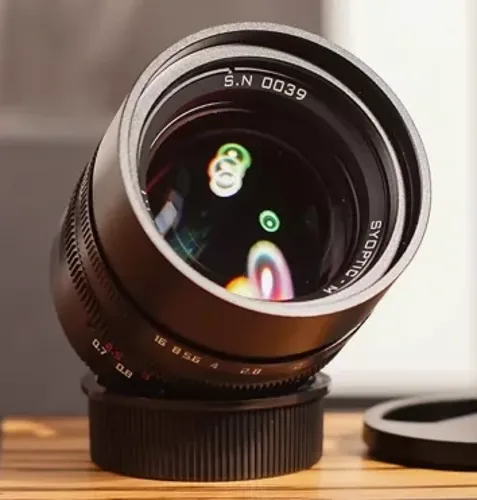
Flare resistance Flare control is a weak point wide open, where strong light can introduce rainbow artifacts and an orange flare along with reduced contrast; stopping to f/1.4 removes most of the rainbow artifacts and tames the colored flare, leaving overall behavior that reviewers rate as roughly average and still better than many vintage fast fifties.
Aberrations Longitudinal chromatic aberration is pronounced at f/1.1 and drops substantially by f/1.4, lateral CA is present but mild, and coma correction is poor even stopped well down, although coma rarely matters for the lens's typical uses.
Digital use On mirrorless bodies the lens is commonly adapted, including with autofocus adapters; on thick-filter-stack sensors some reviewers attribute part of the edge field curvature to the cover glass, and at least one user found color rendering less satisfying on digital than the results obtainable on film.
Development and Launch The lens was released in 2017 by 7artisans (DJ-Optical), a then-new Chinese manufacturer, aimed at photographers who wanted a very fast normal lens without the cost of a Leica Noctilux or a Voigtländer Nokton. Its design was confirmed by the maker to be Sonnar-based and was discussed in the collector community as closely related to the rare Zunow 5cm f/1.1.
Production Evolution Shortly after launch the lens was revised to address a mounting problem on certain Leica bodies; the updated version fit cameras such as the M3 and M4 but reportedly did not always lock fully into place. A version modified for native L-mount cameras was also offered alongside the standard M-mount lens.
Collector Notes Buyers should verify rangefinder coupling and focus calibration, since copies can vary and the supplied chart is of limited help; iterative calibration on the camera is sometimes needed. The very short focus throw makes accurate focus harder at f/1.1, and a loose focus ring has been reported, generally fixable by tightening internal screws. No lens hood is included and many threaded hoods increase the already strong wide-open vignetting, so users have favored wide-angle or stepped-up hoods that clear the field. Confirm whether a given example is the standard M-mount or the L-mount-modified variant before buying, and do not confuse this f/1.1 lens with the later 7artisans 50mm f/1.05.
Good time to buy. The lowest listing is 24% below the 30-day average.
Lowest price Click a mark to open that listing · arrow keys to step, Enter to open
Price against condition for 4 listings of 7artisans 50mm f/1.1, €229 to €367, median €313. Excellent: 4 at €229, €301, €325, €367. The full table follows.
Over the last 18 weeks the median price for the 7artisans 50mm f/1.1 has fallen, ranging from €251 to €352 (now €301).
Weekly price (EUR). Median (Good or better) and lowest (Good or better) across 18 weeks. The full figures follow in the table below.
| Week | Median | Lowest |
|---|---|---|
| Jun 1, 2026 | €318 | €293 |
| Jun 8, 2026 | €318 | €293 |
| Jun 15, 2026 | €342 | €342 |
| Jun 22, 2026 | €349 | Unknown |
| Jun 29, 2026 | €349 | Unknown |
| Jul 6, 2026 | €351 | Unknown |
| Jul 13, 2026 | €351 | Unknown |
| Jul 20, 2026 | €333 | Unknown |
| Jul 27, 2026 | €333 | Unknown |
| Aug 3, 2026 | €352 | Unknown |
| Aug 10, 2026 | €251 | Unknown |
| Aug 17, 2026 | €336 | €301 |
| Aug 24, 2026 | €317 | €301 |
| Aug 31, 2026 | €332 | €301 |
| Sep 7, 2026 | €329 | €301 |
| Sep 14, 2026 | €325 | €301 |
| Sep 21, 2026 | €324 | €301 |
| Sep 28, 2026 | €313 | €229 |
Every shop grades differently. Leica Classic uses letters, Ffordes uses E++ and E+, German dealers write "Zustand B", Japanese dealers write A−. We map all of them onto the one ladder below. Where a shop states its own grade, we print it under ours.
As of October 2026, the 7artisans 50mm f/1.1 sells from €229 used, with a 30-day median of €301, across 4 active listings.
As of October 2026, the 7artisans 50mm f/1.1 is sold by 3 sources (4 listings), from €229 used: all compared cheapest-first on this page.
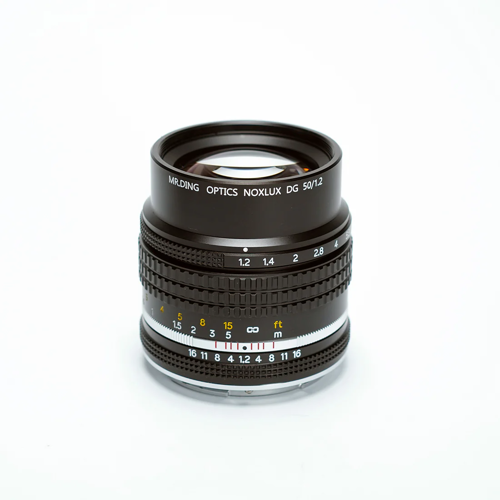
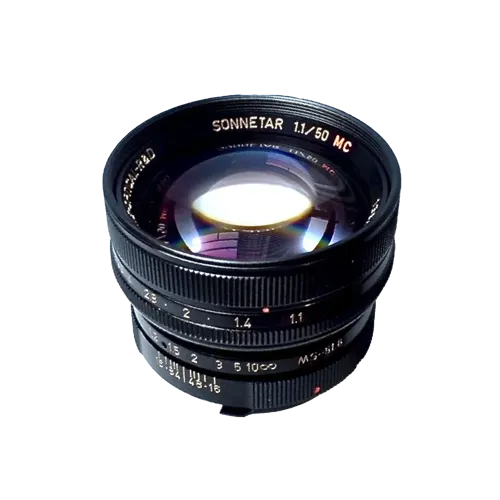
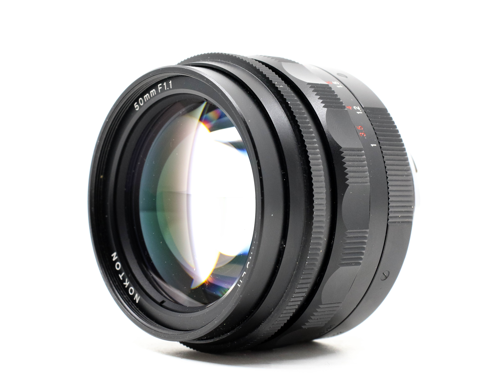
Similar lenses you might be interested in
Comments