The Light Lens Lab 50mm f/1.2 ASPH. "1966" is an M-mount recreation of Leica's rare double-aspherical Noctilux, prized by collectors for faithful vintage rendering.
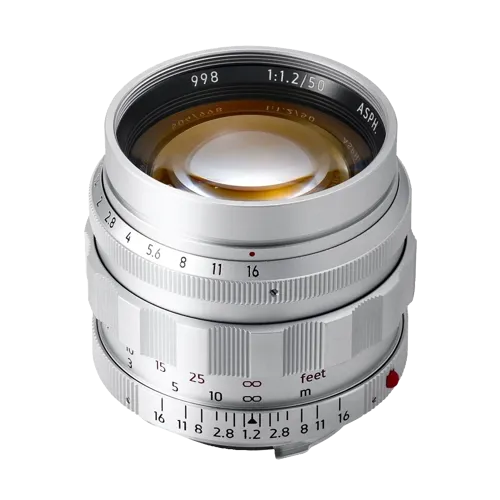
Light Lens Lab 50mm f/1.2 ASPH. "1966"
M mount
No listings tracked for this lens right now.
The Light Lens Lab 50mm f/1.2 ASPH. "1966" is a M-mount lens for Leica rangefinder cameras. Leica price index →
How it compares
Measured against the 76 other 50mm M-mount lenses in the catalogue.
Specification
About this lens
Light Lens Lab 50mm f/1.2 ASPH. "1966"
Few modern lenses set out to copy a Leica classic as literally as this one. The Light Lens Lab 50mm f/1.2 ASPH. "1966" is a deliberate recreation of the original Leitz Noctilux 50mm f/1.2 with two aspherical surfaces, a lens introduced in 1966 that has become one of the most sought-after and expensive optics in the Leica system [1][2]. Original examples trade for tens of thousands of dollars, and Light Lens Lab built its reputation on reviving exactly this kind of unobtainable glass for a fraction of the cost. The company states it analyzed the original 1966 Leitz design and the chemical composition of its glass, recreating the optic with manual high-temperature grinding and polishing of the two aspherical surfaces, and even codes its lanthanide-infused glass "900403" after the vintage formula[3].
The optical layout follows the original double-Gauss arrangement of six elements in four groups, with the two hand-finished aspherical surfaces that defined the 1966 lens. Light Lens Lab introduced several deliberate departures from the antique design: a half-stop click aperture for more precise exposure control, claimed improvements in sharpness, and a modern E49 filter thread in place of the original's drop-in filter system. The lens focuses to one meter, uses an M mount, and ships with a clip-on hood styled after the Leica 12503. It is a compact lens for its speed, weighing under half a kilogram in its lighter forms, and reviewers describe the build and on-camera handling as comparable to genuine Leica glass[4].
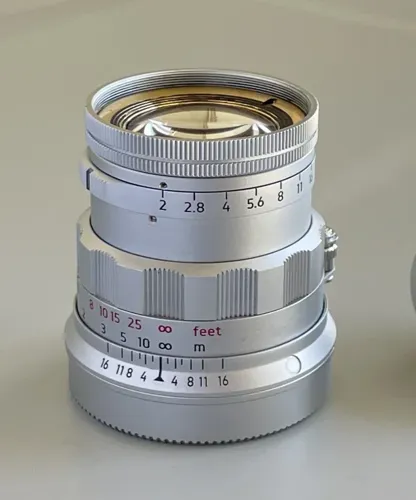
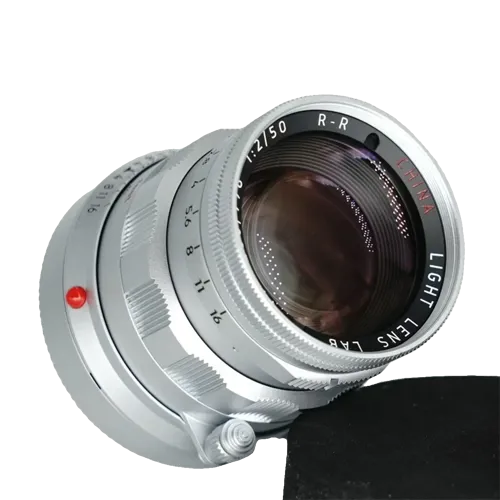
The "1966" has been offered in several body materials and finishes rather than as a single version, which is the main point of differentiation between examples. At launch the lineup included an aluminium body in black paint, a brass body in chrome, a brass body in black paint, and a titanium body in grey, each at a different price and weight, with the brass and titanium versions heavier than the aluminium one. Light Lens Lab also offered custom front-ring engravings and matching accessories such as a leather pouch, caps, hood, and filters. The chrome brass finish in particular is noted by users for closely matching Leica's M chrome look [5]. Because the lens has sold in limited batches, buyers often encounter sold-out status and turn to the secondhand market [6].
Optical qualities
Rendering This lens is built to reproduce a vintage look, not to deliver modern correction. Reviewers consistently report a soft, low-contrast image at f/1.2 with a characteristic glow, gradually gaining sharpness and contrast as it is stopped down, and performing well by around f/5.6. The original 1966 design traded outright correction for its rendering, showing vignetting and moderate barrel distortion wide open, and the recreation carries similar traits.
Sharpness At maximum aperture the lens is deliberately not crisp, prioritizing character over resolution; it becomes capable of excellent detail when stopped down past f/5.6.
Bokeh and transitions The out-of-focus rendering is described as smooth and dreamy, with a gentle fall-off from subject to background and, in the right conditions, a soft swirl reminiscent of the original Noctilux 50mm f/1.2.
Flare resistance Wide open the lens shows low to moderate contrast and limited flare control under strong light, with at least one reviewer noting an orange cast across the frame in difficult lighting [7].
History
Development and Launch The lens reissues a piece of Leica lore. In 1966 Leitz introduced a Noctilux 50mm f/1.2 with two aspherical surfaces, the first series-production lens to use aspherics, intended for available-light shooting on the high-speed films of the day. The aspherical surfaces were extremely difficult to produce, so few people could make them and yields were low, which held output to a very limited run through 1975 and made surviving examples rare and costly. Light Lens Lab announced its recreation in 2023, with the first prototypes and review samples circulating that year ahead of batch deliveries. Leica itself had returned to the design in 2021 with a modern Noctilux-M 50mm f/1.2 ASPH., underscoring renewed interest in the formula that the Light Lens Lab version targets at a much lower price.
Production Evolution The lens has shipped in batches across multiple body materials and finishes, including aluminium, brass, and titanium, with corresponding differences in weight and price. Compared with the antique original, the recreation incorporates a half-stop click aperture, a revised rendering tuned for slightly more sharpness, and an E49 screw-in filter thread.
Collector Notes Buyers should confirm which body material and finish they are getting, since aluminium, brass chrome, brass black, and titanium grey variants differ in weight, appearance, and cost. Because demand has outpaced supply and batches sell out, secondhand units appear through resellers, so verifying that the matching hood, caps, pouch, and any custom front-ring engraving are present is worthwhile. Note that the verified weight figures recorded for this lens differ slightly from some published material weights, which is consistent with measurements taken with and without the hood and across different body materials; defer to the confirmed specifications when in doubt.
Sources
- PetaPixel. Light Lens Lab 50mm f/1.2 "1966" Review: A Clone With Genuine Soulpetapixel.com →
- PetaPixel. Light Lens Lab 1966 50mm f/1.2 and SPII 50mm f/2 Review: Rare Lenses Recreatedpetapixel.com →
- Light Lens Lab. Light Lens Lab 50mm f/1.2 ASPH "1966"lightlenslab.com →
- Macfilos. LLL 50mm f/1.2 review: The march of the Nocticlonesmacfilos.com →
- Keith Wee. First Impressions of the Light Lens Lab 50mm F1.2 ASPH (1966)keithwee.com →
- The Nowhere Photographer. Light Lens Lab 50mm f/1.2 ASPH "1966"thenowherephotographer.com →
- Tahusa. Light Lens Lab 50mm f/1.2 ASPH Review: Chasing the Noctilux Dream with the 1966 Noctilucenttahusa.co →
Where to buy
Related lenses
Similar lenses you might be interested in
Comments