The Funky Lens List: 10 Weird and Wonderful Lenses You Can Put on a Leica
Discover 10 weird and wonderful Leica lenses, from body-cap oddities and organ transplants to Cold War glass and a 740g f/1 monster.
I was playing around with the filters in the Leica Lens List database, as one does, and ended up in a very strange corner of the catalogue. Some of these lenses are tiny. Some are historically important. Some exist because one person looked at a perfectly good compact camera and decided to take it apart.
This is not a list of the ten best Leica lenses. It is a list of lenses that make you stop scrolling and ask: why does this exist, and where can I get one?
1. MS-Optics Hipolion 19mm f/8
The lens that makes a body cap look bloated
A lens or a body cap? At just 27 grams and roughly 2mm long, the Hipolion is thinner than some actual body caps. Somehow it still has a focusing mechanism and an aperture.
It is handmade in Japan by Sadayasu Miyazaki, better known as Miyazaki-san, who runs MS-Optics as a one-man workshop. He was born in 1940 and is still designing and assembling lenses in his mid-eighties. That alone makes every Hipolion feel a little special.
The optical design goes back much further. Miyazaki used the Hypergon formula developed around 1900 by Emil von Höegh, then chief optical designer at C. P. Goerz in Berlin. The original Hypergon used two strongly curved elements to cover an enormous angle with almost no geometric distortion. It was also spectacularly slow and spectacularly awkward. Some versions used a rotating star-shaped mask, powered by a little puff of air, to even out the exposure. Photography used to be much weirder.
Fun fact: there is an 890-metre mountain in Antarctica called Mount Hoegh, named after the same Emil von Höegh.
The Hipolion is a miniature modern interpretation with two elements in two groups. Its f/2.8 and f/4 settings are not normal wide apertures so much as built-in soft-focus modes. At f/8 it begins to behave, and at f/16 it is at its sharpest. Wide open, the image glows and smears in a way that can either look dreamy or completely broken. This is very much the point.
It vignettes, of course. Digital colour sensors can also show corner colour shifts. That is probably why the lens makes so much sense on a Monochrom body, where the fall-off becomes atmosphere rather than a correction job.
It is boutique, hand-built and not especially easy to find. It is also one of the most entertaining answers to the question, "What is the smallest lens I can put on a Leica?"

2. Carl Zeiss Hologon T* 16mm f/8
Permanently f/8, unless you make it darker
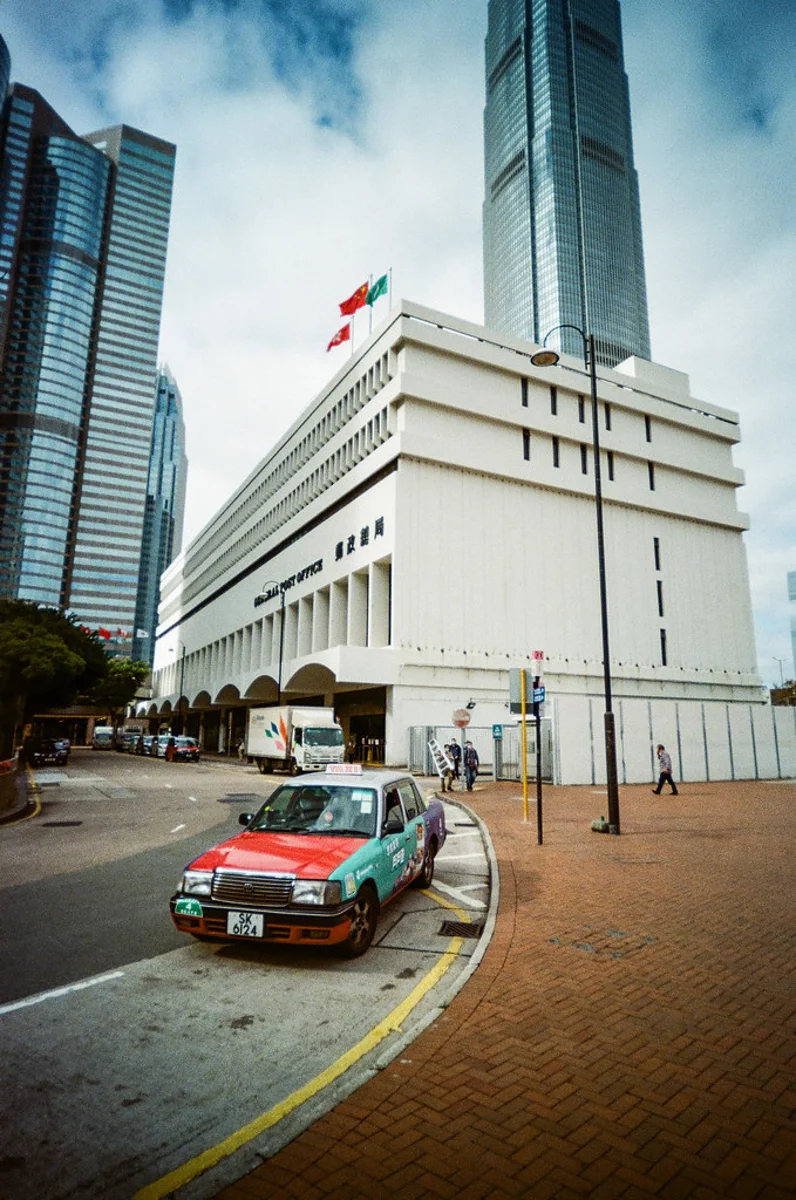
The Hologon has no aperture ring. It is fixed at f/8 forever. It is about 11mm long, weighs around 125 grams and contains five elements in three groups. It also vignettes so heavily that Zeiss supplied a dedicated 4x graduated centre filter.
That filter costs another two stops of light. Your depth of field is still f/8, but your meter experiences something closer to f/16. Not ideal for a dim jazz bar.
This is the 1994 Contax G version, which needs to be converted before it can go onto a Leica M. There is also an older official Hologon 15mm f/8 for Leica M, based on a beautifully simple three-element design from the late 1960s. The Contax lens is not just the same optic in a newer barrel. Zeiss recomputed it as a five-element design, gave it T* coating and improved the contrast.
The lens is almost free of straight-line distortion, which is the real magic trick. Modern software makes that sound less exciting than it was, but this was optical correction, inside a lens barely thicker than a biscuit.
The protruding rear element is also why you should not adapt one blindly. On many Leica M bodies a properly converted example has enough shutter clearance, although the focus lever may still need attention on some film bodies. On certain mirrorless cameras the rear assembly can collide with a mechanical shutter. Digital sensors add another problem: steep ray angles can create strong colour casts, smeared corners and extra vignetting.
In other words, the Hologon is wonderful, but it is a film-era diva. Check the exact conversion and camera combination before mounting it.

3. Omnar CX38-28
The organ transplant
Hamish Gill and Chris Andreyo in the UK take the Carl Zeiss Sonnar from a Contax T or T2 and rehouse it as a fully manual, rangefinder-coupled Leica M lens. It is less a conversion than an organ transplant.
The original aperture assembly and T* coated glass go into a new brass focusing platform, complete with manual aperture control. The result sticks out only 17mm from the camera and weighs 120 grams. Put it on a mechanical Leica M or a CL and you effectively get a manually focused Contax T2, minus the ageing electronics and tiny motor that may one day decide it has had enough.
Omnar has done similar surgery elsewhere. The CN26-6 uses optics from the humble Canon AF-10, while the 35mm f/3.5 Pantessa FLB takes the Zeiss Tessar from the Yashica T-series. That last one even has a floating lens block that moves with the aperture to correct focus shift and breathing. This is an unreasonable amount of engineering to lavish on a point-and-shoot lens, which is exactly why I like it.
The real surprise with the CX38-28 is its image circle. The rehoused 37.5mm Sonnar projects roughly 60mm, enough to cover the 44 x 33mm sensors in Hasselblad X and Fujifilm GFX cameras. Chris Andreyo explains the technical side in this excellent 35mmc article.
That does not automatically make it a medium-format lens, or prove that it is "too good" for 35mm. It does mean the Contax compact was carrying around far more image circle than it needed. On a 44 x 33mm body it behaves roughly like a 29mm f/2.2 in full-frame terms, which is quite ridiculous for something this small. I also believe this is why people really liked the Contax T2's rendering, with the great T* coating and the great quality of glass until the edges.
4. Lomography LC-A Minitar-1 32mm f/2.8
The Lomo button for your Leica
The Minitar-1 design comes from the LOMO LC-A, short for Lomo Kompakt Automat. The camera was developed in Leningrad in the early 1980s after Soviet officials encountered the Japanese Cosina CX-2 and decided they wanted their own version. Production ramped up around 1984. Later, the camera seemed not so popular, thus they halted production.
Then the story took an unexpected Austrian turn. A group of students found the LC-A in Prague in 1991, fell in love with the pictures and started bringing cameras home. The Lomographic Society followed in Vienna in 1992, and a Soviet compact became the centre of an international photography movement.
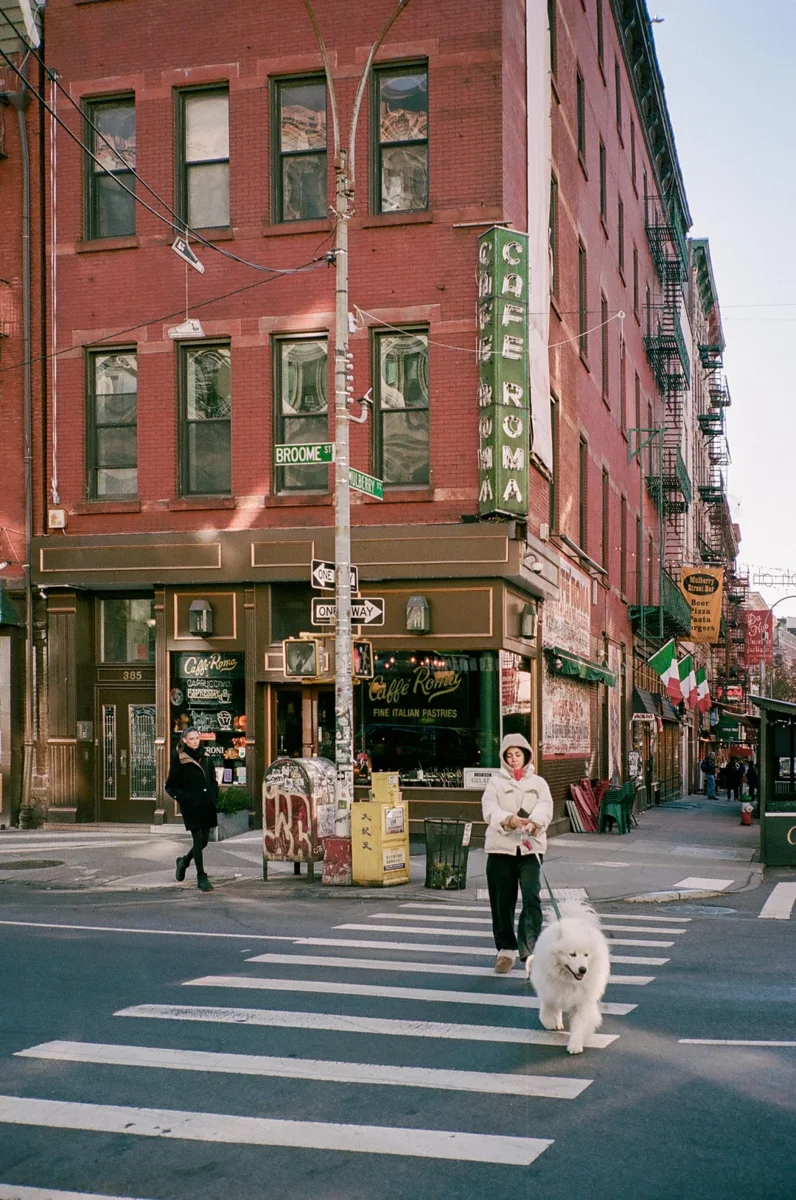
The camera was never famous for clinical perfection. It was famous for dark corners, punchy colour, flare, occasional colour shifts and a centre that behaved more predictably than the edges. People leaned into it. They used odd film, took it to parties and fired direct flash at their friends. Imperfection over perfection. Fun over serious.
The M-mount Minitar-1 Art Lens takes that same idea and gives you manual aperture control, zone focusing and rangefinder coupling in a tiny 55g pancake. The aperture control is squeezed into the front of the lens, so the outer front ring does double duty.
If you buy one, you may as well commit. Load Harman Phoenix, LomoChrome Turquoise or something else a little unhinged. Add a flash. Set it to f/8 and be there.

5. Zenit Zenitar 35mm f/1.0
The absolute unit
Most of this list leans small. The Zenitar does not.
At 740 grams it is a chunk of metal with some glass trapped inside. It is 88mm long, takes 72mm filters and opens to f/1.0. Put it on a Leica M and the lens becomes the camera's main structural component.
The story is more interesting than the numbers. Zenit introduced it at Photokina 2018 with the Zenit M, a digital rangefinder created through a cooperation between KMZ Zenit and Leica. The camera was technically based on the Leica M Type 240 platform, with changes to the hardware, software and external design. The lens, however, was designed and manufactured in Russia.
The whole project felt like two different strands of camera history meeting in a very expensive alternate timeline. A Leica-derived digital rangefinder wore Zenit and Zorki styling, then arrived with an enormous Russian 35mm f/1 as its standard lens.
Wide open, the Zenitar has glow, visible spherical aberration and plenty of character. Even the original launch material talked about its soft-focus effect and distinctive bokeh. Stop it down and it becomes much more orderly, but nobody buys a 740g f/1 lens to spend the day at f/8.
It is rare, impractical and surprisingly serious. It also keeps this list honest. Funky does not always mean tiny.
6. Leica 10.5cm f/6.3 Mountain Elmar
The mountaineer's telephoto
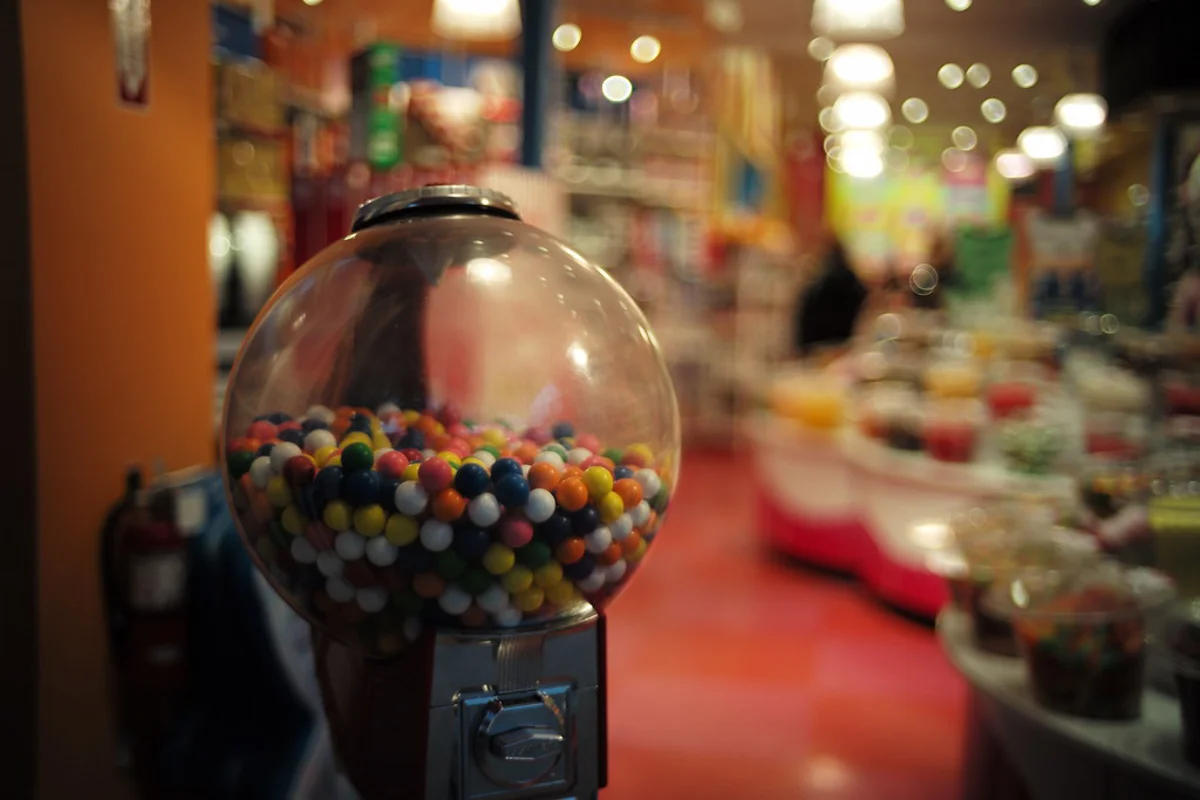
The Mountain Elmar, or Berg Elmar, looks like a slender telescope that somebody forgot to finish. Its long conical barrel is 89mm from end to end, so no, this one is not a pancake either. At 220 grams it is still remarkably light for an early 105mm lens.
Leitz introduced it in 1932 as a compact distance lens. A 1933 brochure specifically pitched it to mountaineers and argued that f/6.3 was enough for distant scenes, since atmospheric haze often made it sensible to stop down anyway. That is wonderfully confident marketing for a lens whose maximum aperture is already f/6.3.
There is also a story that Oskar Barnack wanted a lightweight telephoto to carry on his walks. It fits the romance of the lens, although the historical evidence is not conclusive. What is clear is that Leitz built the lens for portability and distant subjects. The narrow cone even keeps much of the barrel out of the viewfinder.
Production lasted only until 1937, with roughly 4,000 made. It was never a huge seller. The slow aperture, 2.6m minimum focus distance and very specific purpose probably did not help.
Today, that specificity is exactly the appeal. It is a lens made for looking across valleys, in an era when carrying less meant choosing f/6.3 and getting on with it.
7. Thypoch Eureka 50mm f/2
The disappearing act
The Eureka is the sensible lens on this list, but it still knows a magic trick.
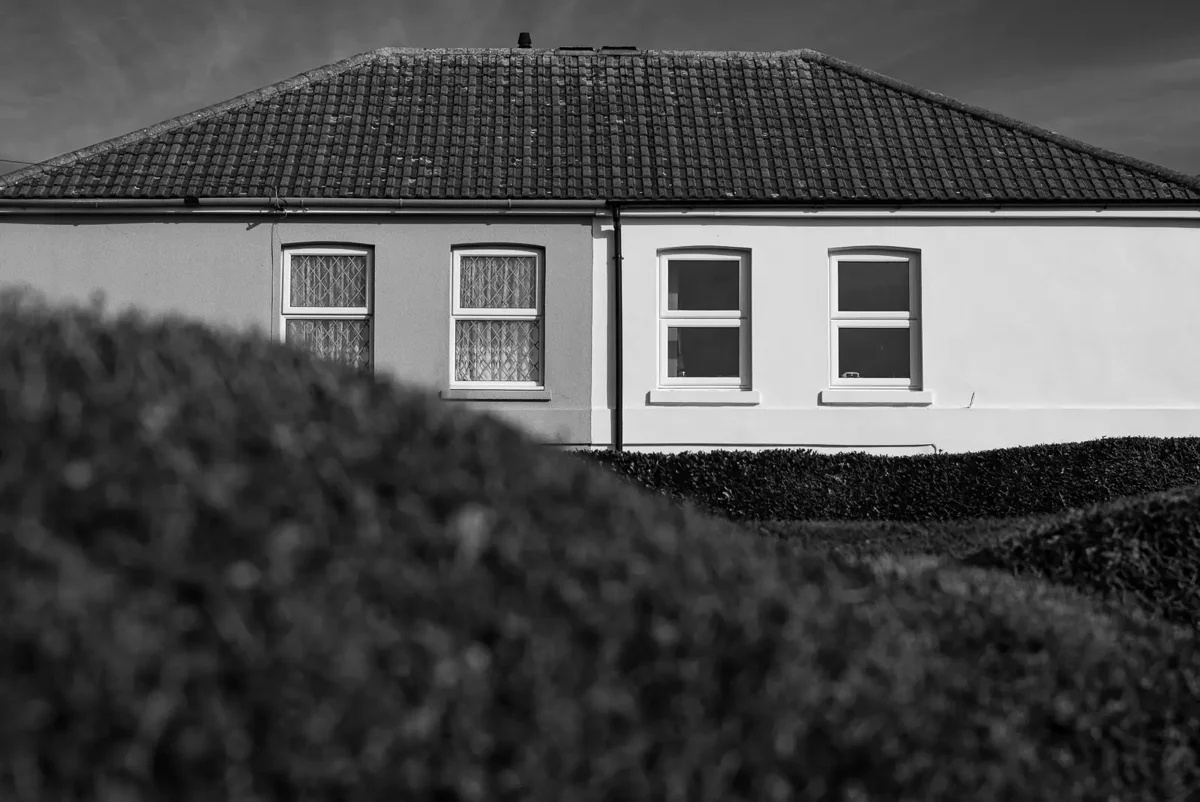
It is a modern 50mm f/2 that collapses into the camera in the old Leica fashion. The lightweight aluminium version weighs 120 grams and shrinks to 27mm when collapsed. By my speed-per-gram metric, it sits in the top 4 percent of more than 440 lenses in the database. It is roughly half the weight of a fifth-generation 50mm Summicron at a very similar headline specification.
That is what makes it interesting to me. Seventy years after the first collapsible Summicron, we can make a lens with modern glass and coatings, good digital performance and less weight, then still package it like a small mechanical trick.
I wish more manufacturers made collapsible lenses. I also understand why they do not. The moving barrel has to enter the camera body, clearances are important, and somebody will eventually forget to extend the lens before taking a picture. There is also the worry that moving the barrel may pull dust into the body, whether or not that is the real reason the format disappeared.
The Eureka is not the strangest optical design here. It is a reminder that unusual mechanics can be just as enjoyable as unusual rendering. It is also one of the few lenses in this article that I could happily use every day.
8. KMZ Russar MP-2 20mm f/5.6
Cold War geometry
The Russar is 95 grams of Soviet optical history.
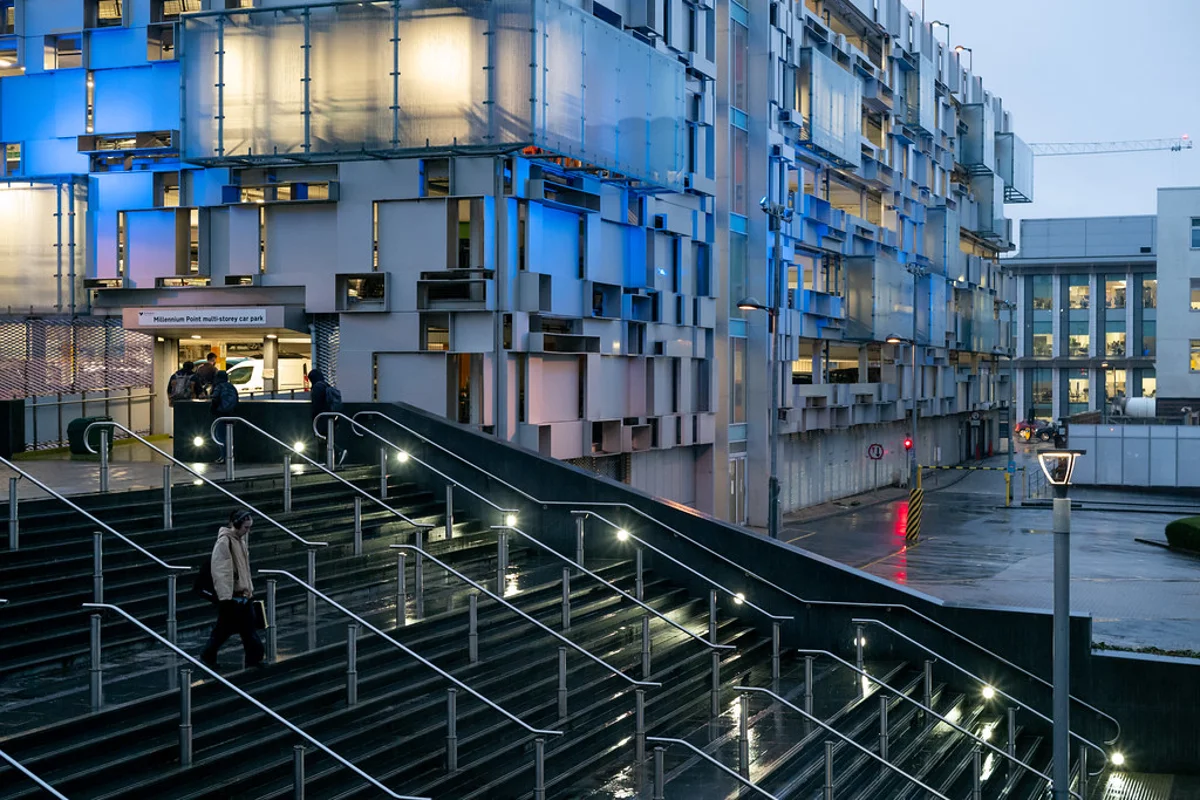
Mikhail Rusinov filed his wide-angle patent in 1946. The design grew out of work on lenses for aerial photography, mapping and surveying, where you want an enormous field of view without turning every straight line into a banana. His solution used a near-symmetrical arrangement and a clever form of aberrational vignetting to improve illumination toward the edges.
The tiny 20mm f/5.6 Russar MP-2 arrived for M39 rangefinder cameras in 1958. It is not rangefinder-coupled, but at 20mm and f/5.6, scale focusing is hardly a crisis. Set a sensible distance, use an external finder and most of the world will be sharp.
The original patent is interesting because it sits near the roots of several important postwar wide-angle ideas. Later Western designs did not simply copy it, but Rusinov's work was known, cited and respected. Ludwig Bertele, designer of the Zeiss Biogon, publicly acknowledged the originality of the approach.
If buying a sixty-something-year-old Soviet lens feels too adventurous, Lomography and Zenit released the New Russar+ in 2014. It keeps the 20mm f/5.6 idea, adds multicoating and puts it into a 98g brass body for L39 and M mount use.
The original remains the funkier object. It is an aerial-survey idea squeezed into something that looks like it came free with a spy camera.

9. Minolta G-Rokkor 28mm f/3.5
The compact-camera flex
Minolta built one of the poshest point-and-shoot cameras ever made, the TC-1, then did something very sensible with its best part. It took the 28mm f/3.5 optics and released them as a limited Leica Thread Mount lens.
This was not a repair-shop conversion. It was a factory lens, reportedly made in a run of around 2,000. It weighs 110 grams, sticks out 19mm and has the kind of beautifully finished mechanical controls that make you wonder why compact-camera lenses were ever trapped inside compact cameras.
The G-Rokkor keeps the TC-1's five-element, five-group optical formula, although it uses a conventional nine-blade iris instead of the original camera's unusual circular aperture system. The rendering is sharp and contrasty, with a fairly strong vignette that gives the lens much of its personality.
Film is its natural home. On digital M cameras, those steep ray angles can create colour shifts and soft corners, even when the centre looks excellent. That does not make it unusable. It just means this compact-camera flex still remembers the film camera it came from.
It is the polite Japanese cousin of the Omnar idea. Same idea, completely different route: this lens escaped the point-and-shoot at the factory.

10. Leica Summicron-C 40mm f/2
The anti-Leica Leica lens
The Summicron-C is not especially weird to look at. It is here because the story around it is too good.
Leica developed the compact CL with Minolta and introduced it in 1973 as a smaller, more affordable way into the M system. Minolta manufactured the bodies in Japan. The 40mm Summicron-C became its normal lens: 125 grams, 22mm long and real Leica glass at traditionally un-Leica prices.
Leica folklore says the CL sold so well that the company killed it before it could eat too deeply into full-size M sales. I would treat that as folklore, not a transcript from a board meeting. What we do know is that the CL sold well, the collaboration lasted only a few years, and the camera ended up with a following much larger than its short production run might suggest.
The 40mm focal length is part of the charm and the annoyance. The CL, Leitz Minolta CL and Minolta CLE have proper 40mm frame lines. Most Leica M bodies do not. The lens normally brings up the 50mm lines, so you either learn to estimate, use the whole finder as a rough guide or start modifying things that collectors would prefer you left alone.
There is also the Minolta M-Rokkor 40mm f/2 twin. Early versions share the same optical design, while the later CLE version adds multicoating and a more conventional rangefinder cam.
The Summicron-C is small, fast, genuinely good and still cheaper than the better-known 35mm and 50mm Summicrons. It is the lens that gets people into 40mm, then leaves them wondering why almost nobody gave the focal length its own frame lines.
A final bit of funk
I could fill this entire list with MS-Optics lenses. Miyazaki-san has built enough tiny historical experiments to deserve an article of his own. That would be fun, but it would also miss the point.
The interesting thing is how many different routes lead to a funky Leica lens. You can revive a formula from 1900, transplant glass from a dead compact, build a 740g f/1 monster, or simply make a modern lens collapse when almost everybody else has stopped trying.
None of these lenses is the sensible answer to every photographic problem. Several are not sensible answers to any photographic problem. They do, however, make you want to go outside and see what happens. That counts for quite a lot.
Sources
- For the love of the lens: an ode to the Hipolion japancamerahunter.com →
- Emil von Höegh en.wikipedia.org →
- Mount Hoegh data.aad.gov.au →
- Hologon en.wikipedia.org →
- Omnar Lenses omnarlenses.com →
- Carl Zeiss 38mm Sonnar Omnar CX38-28 for use on Hasselblad XCD and Fuji GFX 35mmc.com →
- LOMO LC-A en.wikipedia.org →
- Lomo LC-A Minitar-1 Art Lens shop.lomography.com →
- Zenit and Leica present joint production camera leicarumors.com →
- Leitz Elmar 10.5cm f/6.3, The Berg 35mmc.com →
- Thypoch Eureka thypoch.com →
- Mikhail Rusinov en.wikipedia.org →
- Lomography announced New Russar+ 20mm f/5.6 lens leicarumors.com →
- Minolta TC-1 en.wikipedia.org →
- Leica CL en.wikipedia.org →
- Sample photos
- A Jazz-Filled Afternoon at Coda Kissa with MS Optics Hipolion 19mm tahusa.co →
- Hipolion at its sharper apertures flickr.com →
- Zeiss 16mm f/8 Hologon review 35mmc.com →
- Fall colors and autos in New York, Contax T2 reddit.com →
- LC-A Minitar-1 Art Lens 2.8/32 M photo.yodobashi.com →
- Zenit M sample photos flickr.com →
- Leitz Elmar 10.5cm f/6.3, The Berg 35mmc.com →
- Thypoch Eureka 50mm f/2 review 35mmc.com →
- Russar MR-2 on a Voigtländer Bessa L flickr.com →
- Minolta G-Rokkor 28mm f/3.5 photos lomography.com →
- Leica Summicron-C 2.0 40mm photos lomography.com →
Comments