A 1951 British 2-inch f/2 collapsible six-element standard lens, coated and rangefinder-coupled in Leica M39 for the Reid camera system.
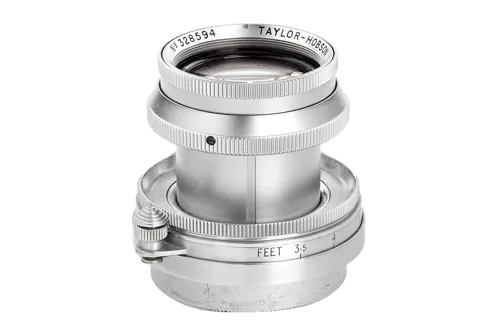
Taylor, Taylor & Hobson Anastigmat 2-inch 50.8mm f/2 (Collapsible)
LTM mount
No listings tracked for this lens right now.
The Taylor, Taylor & Hobson Anastigmat 2-inch 50.8mm f/2 (Collapsible) is a LTM-mount lens for Leica rangefinder cameras. Leica price index →
How it compares
Measured against the 108 other 50mm LTM-mount lenses in the catalogue.
Specification
About this lens
Taylor, Taylor & Hobson Anastigmat 2-inch 50.8mm f/2 (Collapsible)
The Taylor-Hobson Anastigmat 2-inch f/2 is a British collapsible standard lens made for Reid 35mm rangefinder cameras. Two inches converts exactly to 50.8mm, while modern references commonly round the lens to 50mm. Lens DB dates the Leica screw-mount version to 1951 and records six elements in four groups, rangefinder coupling, a 3.5-foot minimum focus, and an A36 accessory fitting. The Science Museum Group documents a coated example with an aperture range from f/2 to f/16 on a Reid III.
The lens uses a retractable focusing barrel and the Leica 39mm screw standard. On a correctly adjusted Reid or compatible Leica-thread body, its cam operates the camera's coincident-image rangefinder. The tube must be extended and locked before exposure. Its A36 front fitting accepts slip-on accessories of the period rather than implying a 36mm screw thread. No dependable source used here establishes the diaphragm-blade count, exact weight, or a formal series of optical revisions.
Taylor-Hobson supplied the optics, while Reid and Sigrist built the camera. The shorthand “Reid 2-inch f/2” reflects its system role but should not obscure the maker attribution or confuse it with other British lenses of the same specification.
Optical qualities
Rendering
The six-element, four-group formula gives the lens a more complex construction than the triplet and Tessar-type f/3.5 standards also used on early screw-mount cameras. A specialist Reid history describes two cemented pairs and eight air-to-glass surfaces. No original performance chart or controlled multi-copy test has been found, so the construction does not justify an absolute claim about sharpness or superiority.
At f/2, residual aberrations and focus error are more visible than after stopping down. Closing the diaphragm normally improves field evenness and contrast, while the exact balance between centre and corners depends on assembly, centring, and optical condition. Because the lens is collapsible, incomplete extension or play in the barrel can produce softness that is mechanical rather than inherent to the design.
Contrast and flare
The Science Museum example is explicitly described as coated, and the specialist Reid history states that all eight exposed surfaces received coating. This treatment reduces reflection losses in a six-element lens. A hood can still help in backlight, and a modern user should distinguish normal flare from haze, coating wear, internal dust, or degraded blackening in a surviving lens.
Out-of-focus rendering
The 50.8mm focal length and f/2 aperture provide useful subject separation at closer distances. Blade count and highlight shape are not securely documented in the sources used here. Smoothness, outlining, and stopped-down polygon shape should therefore be assessed from a known lens and aperture instead of assumed from the Taylor-Hobson name.
Close focus and calibration
Lens DB gives a 3.5-foot minimum, approximately 1.07 metres. Accurate full-aperture focus depends on agreement between the lens cam, camera roller, and film plane. A mirrorless adapter bypasses the rangefinder but still needs correct flange depth.
History
Development and Launch
Reid and Sigrist was a British precision-engineering company known for aircraft instruments before it entered camera manufacture after the Second World War. The Reid camera was developed around the Leica III pattern for British military and civilian use. Commercial cameras became available in 1951, and the Taylor-Hobson 2-inch f/2 served as the standard lens.
Pacific Rim Camera records that this was the only lens actually sold with the Reid range. A 50mm f/3.5 appeared in 1949 advertising, before cameras reached the market, but apparently was not commercialized. The f/2 Anastigmat therefore represents the established production standard rather than one option among a large factory lens family.
Production Evolution
The Science Museum's Reid III Type 2, made around 1956, confirms continued use of the coated Taylor-Hobson lens after the 1951 launch. Its collection record dates that camera type from 1953 to 1964. This supports a postwar production span but does not prove that every lens detail remained unchanged throughout it.
Surviving lenses can show minor engraving, matching-number, and barrel differences. No authoritative serial chronology or factory table was located for this audit. The broad construction, coating, collapsible mount, and rangefinder coupling are better supported than attempts to assign a precise year from a small cosmetic change.
Special Editions/Variants
The National Optical Company Anastigmat and Cooke Amotal are related names encountered on British or American 2-inch f/2 lenses, but they should not automatically be merged with the Reid Taylor-Hobson lens. Sources disagree about how closely some versions are related, and their barrels, market roles, and camera associations differ. This profile is limited to the Taylor-Hobson-branded collapsible Reid standard lens.
Collector Notes
Identification should retain the imperial 2-inch marking, f/2 aperture, Taylor-Hobson name, collapsible barrel, A36 fitting, Leica thread, and coupled cam. Check that the tube extends fully, locks without play, and reaches infinity on the intended body. Inspect coated surfaces, cemented pairs, aperture operation, and rangefinder agreement.
Auction condition, accessories, and price describe one lens, not the model. Because assemblies may have been exchanged, matching construction and calibration matter more than an unsupported rarity label.
Sources
Where to buy
Related lenses
Similar lenses you might be interested in
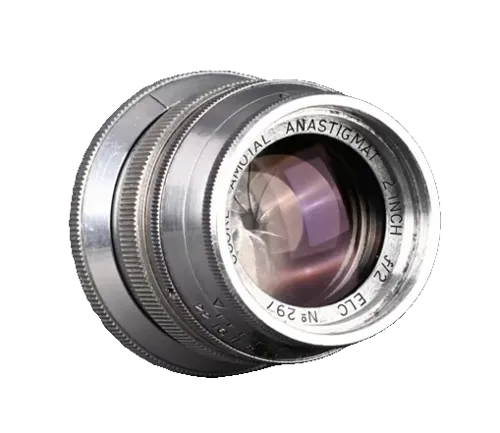
Cooke Amotal Anastigmat 2 inch f/2
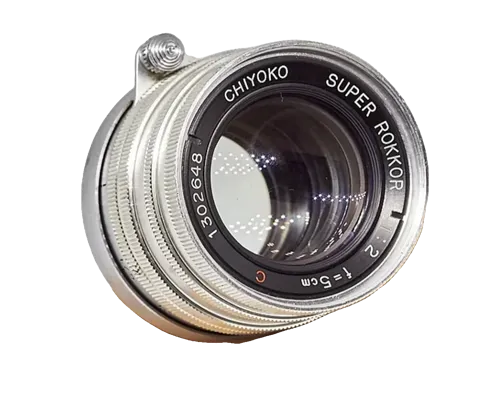
Super Rokkor 50mm f/2
![Chiyoda Kogaku Super Rokkor 50mm f/2 [C]](https://assets.leicalenslist.com/images/2063_medium.webp)
Super Rokkor 50mm f/2 [C]
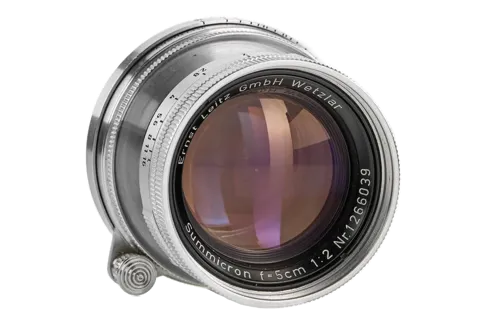
Summicron 50mm f/2 I (Collapsible)
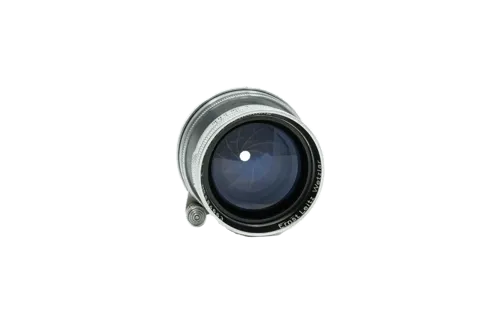
Summitar 5cm f/2
Comments