A 1933 German 75mm f/1.5 portrait lens with six elements in four groups, original coupled Leica M39 focusing and a 1m minimum distance.
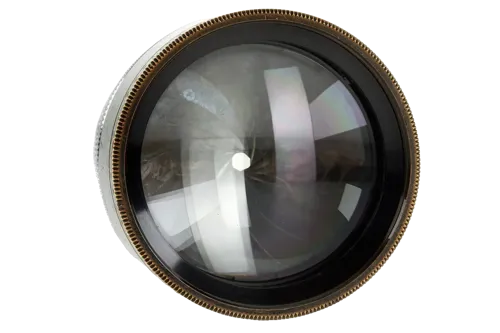
Meyer-Optik Gorlitz Kino-Plasmat 75mm f/1.5
LTM mount
No listings tracked for this lens right now.
The Meyer-Optik Gorlitz Kino-Plasmat 75mm f/1.5 is a LTM-mount lens for Leica rangefinder cameras. Leica price index →
Specification
About this lens
Meyer-Optik Gorlitz Kino-Plasmat 75mm f/1.5
The Meyer-Optik Gorlitz Kino-Plasmat 75mm f/1.5 is a high-speed German portrait lens made in an original, rangefinder-coupled Leica 39mm screw mount. Lens DB records six elements in four groups and a 1-metre minimum focusing distance. Leitz Auction documents a factory LTM example made in 1933 with a metre scale, black-painted body, bright focusing ring, and Dr. Rudolph engraving.
At f/1.5, the lens was exceptionally fast for an interchangeable 75mm rangefinder optic of its period. Its narrow depth of field makes accurate cam calibration essential, while the focal length provides a compressed portrait perspective and substantial subject separation. Most Leica screw-mount cameras require an external 75mm finder or a variable finder for precise framing.
The Kino-Plasmat name was also used for other focal lengths and for cinema-camera installations. This profile is limited to the original 75mm Leica-thread product. It does not include Contax versions, cine lenses rehoused for modern cameras, or optical cells in custom adapters. Blade count, filter fitting, weight, dimensions, and total production remain undocumented in the reliable sources used here.
Optical qualities
Rendering
The six-element, four-group formula comes from Paul Rudolph's Plasmat development work for Meyer. The cited model sources identify the element and group count but do not provide glass types, a complete sectional drawing, or factory performance curves for the Leica version. Descriptions of its rendering should therefore distinguish documented construction from modern subjective interpretation.
At f/1.5, residual spherical and chromatic aberrations, field curvature, and focus shift may be more visible than after stopping down. The exact balance varies with assembly and condition. Closing the diaphragm generally increases contrast and usable field coverage, but no single wide-open look should be treated as identical across all surviving lenses.
Contrast and flare
No consistent factory coating specification has been established for this 1933 model. A later coating on one surviving optical cell would not prove that the production lens was originally coated. Six elements create multiple reflective surfaces, so internal blackening, haze, separation, and cleaning damage can materially affect transmission and flare. A suitable hood is useful in oblique light.
Out-of-focus rendering
The combination of 75mm focal length, f/1.5 aperture, and 1-metre close focus allows strong background separation. Highlight shape depends on the undocumented diaphragm geometry, aperture setting, and subject distance. Terms such as swirl, glow, or painterly bokeh should be tied to traceable photographs from a known example rather than stated as fixed design specifications.
Rangefinder and digital use
At one metre and f/1.5, a small cam or body error can move the focus plane noticeably. Test agreement at several distances rather than relying only on infinity. An LTM-to-M adapter enables use on Leica M bodies, while digital live view can help separate optical behaviour from rangefinder error. Adaptation does not correct decentring, altered spacing, or a damaged original cam.
History
Development and Launch
Meyer was founded in Görlitz in 1896 and began cooperating with former Zeiss designer Paul Rudolph during the interwar period. The company's historical account credits this collaboration with the Plasmat family and describes the Kino-Plasmat as the world's fastest lens at the time of its early development. Rudolph's work formed the technical background for the later f/1.5 models.
The documented 75mm Leica-thread lens dates to 1933. Its dedicated coupled barrel shows that Meyer offered the formula as a complete rangefinder product, not solely as cinema optics. The engraving connecting the lens to Dr. Rudolph reflects the design lineage and is an important identifier, but inscriptions can differ among surviving examples.
Production Evolution
The available records establish the metre-scale black-paint version with a bright focusing ring. Another catalogued example uses black paint with nickel details, indicating that small finish descriptions can vary. Sources do not provide a reliable serial chronology, production total, or confirmed optical redesign for the 75mm LTM lens.
Later Meyer products, postwar coatings, and modern lens revivals should not be folded into this prewar model. The current Meyer history notes magnesium-fluoride coating from 1952, almost two decades after the documented Leica example. That date is useful for avoiding anachronistic coating claims.
Special Editions/Variants
Metre-scale original M39 examples are documented. Other Kino-Plasmat focal lengths, imperial focusing scales, Contax mounts, and cinema-camera barrels are related members of the wider design family but not cosmetic variants of this exact lens. A modern rehousing is a separate mechanical product even when it uses period Meyer glass.
Collector Notes
Identification should combine the Kino-Plasmat 1.5/7.5cm marking, Hugo Meyer or Meyer Görlitz attribution, Dr. Rudolph engraving where present, original Leica screw thread, and mechanical rangefinder cam. Verify infinity registration, one-metre focusing agreement, aperture movement, and helicoid stability before judging optical performance.
Fast prewar lenses are sensitive to haze, separation, element reversal, and incorrect reassembly. Inspect centring and internal surfaces carefully. Auction price, serial number, hood, recent service, and condition apply only to the object described and should not become generic database specifications.
Sources
Where to buy
Related lenses
Similar lenses you might be interested in
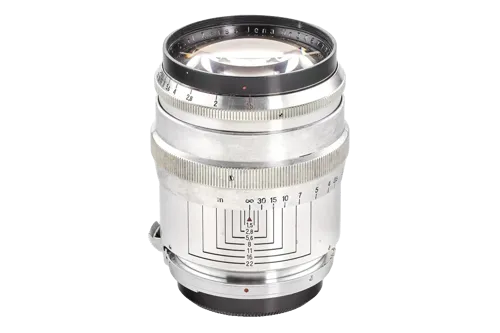
Biotar 75mm f/1.5
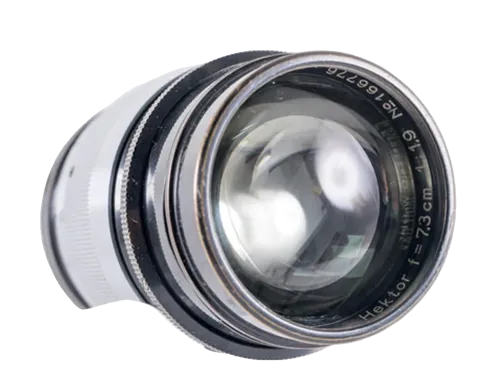
Hektor 7.3cm f/1.9
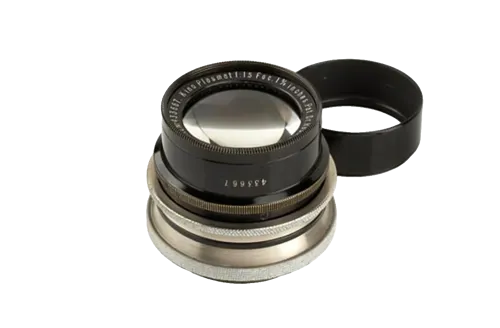
Kino-Plasmat 1 5/8-inch 41.3mm f/1.5
Color-Heliar 75mm f/2.5
Primoplan 75mm f/1.9 II
Comments