Best price Official store New
BRIGHTIN STAR MF 35mm F1.7 APO ASPH Full-Frame Lens for Leica M
Sold by Brightin Star
€1,027 ≈ $1,109
Coupon code LEICALENSLIST: 5% off at Brightin Star for the Brightin Star APO 35mm f/1.7 ASPH.
A compact 35mm f/1.7 Leica M lens with APO correction, six aspherical surfaces, close focusing to 0.3m and rangefinder coupling from 0.7m.
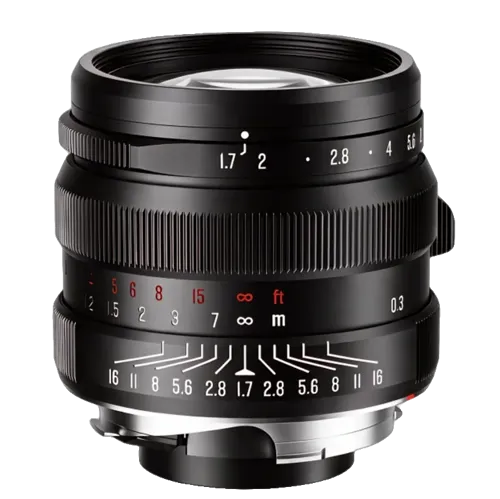
M mount
The Brightin Star APO 35mm f/1.7 ASPH is a M-mount lens for Leica rangefinder cameras. As of November 2026, it sells from €1,027 new across 1 listing, with a 30-day median of €1,027. Leica price index →
Measured against the 77 other 35mm M-mount lenses in the catalogue.
The Brightin Star APO 35mm f/1.7 ASPH is a full-frame manual-focus lens developed for Leica M-mount cameras. Its 35mm focal length, relatively fast f/1.7 aperture and compact metal construction make it suitable for street photography, documentary work, environmental portraits and available-light photography.
The optical design contains eleven elements in seven groups. Three double-sided aspherical elements provide six aspherical surfaces, while the apochromatic design is intended to suppress longitudinal and lateral chromatic aberration. Brightin Star developed the lens for high-resolution digital sensors, although practical image quality also depends on focus accuracy, camera calibration and production consistency.
The lens weighs approximately 266g and measures about 43mm in length. An eleven-bladed diaphragm maintains a rounded aperture opening, while the supplied metal hood helps shield the front element from oblique light.
Rendering
The APO and aspherical construction is designed to combine high resolution with controlled colour fringing, distortion and field curvature. At the time of introduction, most published performance claims came from the manufacturer and launch material. Independent testing across multiple production samples remains important before assigning the lens a definitive rendering character.
At maximum aperture
At f/1.7, the lens provides useful subject separation and supports photography in lower light. The shallow focus zone makes accurate rangefinder calibration especially important. Residual spherical aberration, flare and longitudinal colour fringing should be evaluated in real photographs rather than inferred solely from the APO designation.
Stopped down
Stopping down increases depth of field and should make focus placement less critical. The eleven-bladed diaphragm is intended to retain a relatively rounded opening through the wider and middle apertures. Smaller apertures are useful for layered street scenes, architecture and landscapes where consistent detail across the frame is more important than maximum subject separation.
Close focusing
The focusing mechanism extends to approximately 0.3m and uses a long 307-degree rotation. This provides fine manual control at close distances but requires considerably more movement than a conventional rangefinder lens.
Rangefinder coupling operates to approximately 0.7m. Focusing between 0.7m and 0.3m therefore requires live view, an electronic viewfinder or an adapted mirrorless camera. Framing at short distances must also account for parallax when the optical viewfinder is used.
Development and Launch
Brightin Star first presented the APO 35mm f/1.7 ASPH publicly during 2026. The lens was positioned as a high-resolution Leica M-mount design combining apochromatic correction, aspherical elements and unusually close focusing in a compact metal body.
The project followed the growing availability of modern independent M-mount lenses designed for both traditional rangefinder operation and live-view photography. Its 0.3m minimum distance reflects this hybrid approach, retaining mechanical rangefinder coupling for normal distances while allowing substantially closer focusing with electronic assistance.
Production Evolution
Early presentations and campaign material described a final configuration of eleven elements in seven groups, six aspherical surfaces, an eleven-bladed diaphragm, 0.3m minimum focus and approximately 266g weight. Specifications published during development should be checked against the delivered production version, because prototype details can change before commercial release.
Special Editions/Variants
No separate optical generations or factory special editions have been confirmed. Differences in prototype finish, campaign presentation or supplied accessories should not automatically be treated as distinct lens versions.
Collector Notes
Confirm that an example is the full-frame APO M 35mm f/1.7 ASPH rather than Brightin Star’s earlier APS-C 35mm f/1.7 lens. The two products share the same focal length and aperture but have different formats, mounts, optical designs and intended applications.
Check the rangefinder calibration at several distances between infinity and 0.7m. For closer work, inspect focus through live view because the mechanical rangefinder no longer provides coupled confirmation. The long focusing rotation should move evenly without binding, while the aperture ring and eleven-bladed diaphragm should operate consistently.
Official-store listings are affiliate links: buying through them supports Leica Lens List at no extra cost to you.
Official store Official-store listings are affiliate links. Buying through one supports Leica Lens List at no extra cost to you, and never changes where a listing sits in this table.
Every shop grades differently. Leica Classic uses letters, Ffordes uses E++ and E+, German dealers write "Zustand B", Japanese dealers write A−. We map all of them onto the one ladder below. Where a shop states its own grade, we print it under ours.
As of November 2026, the Brightin Star APO 35mm f/1.7 ASPH sells from €1,027 new, with a 30-day median of €1,027, across 1 active listing.
As of November 2026, the Brightin Star APO 35mm f/1.7 ASPH is sold by 1 shop (1 listing), from €1,027 new: all compared cheapest-first on this page.
The Brightin Star APO 35mm f/1.7 ASPH takes 39 mm screw-in filters (E39).
The Brightin Star APO 35mm f/1.7 ASPH focuses down to 0.3 m; below 0.7 m the rangefinder no longer couples, so use live view or an EVF for the close range.
The Brightin Star APO 35mm f/1.7 ASPH weighs 266 g, lighter than 34% of the 77 other 35mm M-mount lenses in the catalogue.
The Brightin Star APO 35mm f/1.7 ASPH has a Leica M mount, so it fits every Leica M body natively and mirrorless cameras with an M adapter. It carries no 6-bit code, so select the lens profile by hand on a digital M.
The Brightin Star APO 35mm f/1.7 ASPH was produced from 2026.
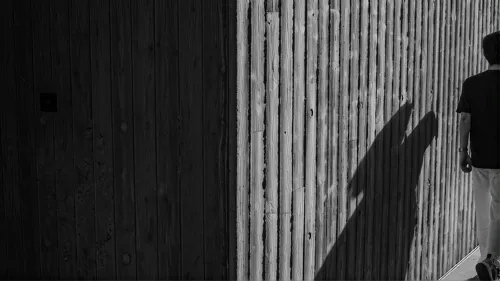
No reviews yet. Own this lens? Be the first.
Write a review of the Brightin Star APO 35mm f/1.7 ASPHSimilar lenses you might be interested in
Compare the APO 35mm f/1.7 ASPH with other 35mm lenses that have sample photos:

Comments