An exceptionally rare Carl Zeiss Jena 5cm f/1.4 Biotar in standardized coupled Leica screw mount, with six elements in four groups.
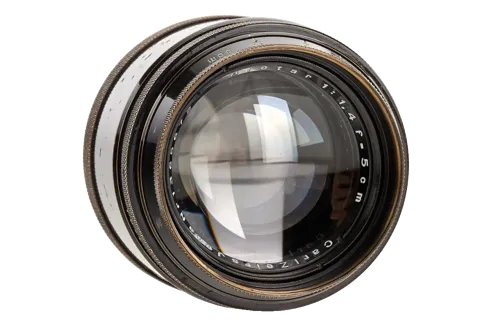
Carl Zeiss Jena Biotar 5cm f/1.4 (LTM, Rangefinder-Coupled)
LTM mount
No listings tracked for this lens right now.
The Carl Zeiss Jena Biotar 5cm f/1.4 (LTM, Rangefinder-Coupled) is a LTM-mount lens for Leica rangefinder cameras. Leica price index →
How it compares
Measured against the 108 other 50mm LTM-mount lenses in the catalogue.
Specification
About this lens
Carl Zeiss Jena Biotar 5cm f/1.4 (LTM, Rangefinder-Coupled)
The Carl Zeiss Jena Biotar 5cm f/1.4 in rangefinder-coupled Leica screw mount is one of the rarest original high-speed lenses made for early Leica cameras. Unlike modern Biotar conversions, this version was manufactured from the outset as a photographic lens for the 24×36mm Leica format.
Optical qualities
Rendering
The lens uses six elements in four groups in an asymmetric double-Gauss arrangement. This design provided exceptional speed for the period but could not deliver modern levels of correction across the entire 24×36mm frame.
At f/1.4, central subjects can show useful detail surrounded by lower contrast, spherical glow and softer peripheral rendering. Field curvature, coma and reduced corner definition may remain visible, particularly at close distances. Stopping down improves contrast and sharpness while preserving a distinctly pre-war tonal character.
Rangefinder use and compatibility
Mechanical rangefinder coupling makes this version substantially more practical than the earlier Non-Standard lens. Nevertheless, the extremely shallow depth of field at f/1.4 places high demands on the calibration of both camera and lens.
Age, mechanical wear and previous servicing can affect focusing accuracy. Any lens intended for regular use should therefore be checked for correct infinity focus and agreement with the camera’s rangefinder.
At maximum aperture
Maximum-aperture performance should be evaluated with a correctly calibrated camera. A coupled rangefinder measures distance through a mechanical cam and does not inspect the image plane directly. Small errors in the body, mount or lens can therefore shift the sharp plane. Subject movement and field curvature may also be mistaken for optical softness. A clean, properly assembled lens should be tested at several distances before conclusions are drawn.
The widest setting provides the greatest light transmission and the least depth of field available from the design. Contrast can be reduced by residual aberrations, internal reflections or aged coatings. Bright point sources may show glow or flare. These effects vary between examples and should not be presented as a fixed signature of every surviving lens.
Stopped down
Closing the diaphragm increases depth of field and generally improves consistency across the 35mm frame. Middle apertures are often the practical choice for documentary work, landscapes and architecture. The smallest aperture provides more depth but is not automatically the sharpest setting because diffraction gradually reduces fine contrast.
Aperture shape depends on blade count and mechanical condition. Oil, bent blades or an incorrectly assembled iris can change both operation and out-of-focus highlights. Published blade counts should remain tied to the exact barrel version rather than copied between mounts.
Handling and compatibility
Contax and Kiev rangefinder lenses use either the internal standard-lens bayonet or the external bayonet. These interfaces serve different mechanical purposes even though they belong to the same camera system. Similarity to Nikon S or another rangefinder mount does not guarantee correct registration, coupling or infinity focus. A suitable adapter must reproduce the required focusing mechanism and keep the rear assembly clear of internal camera parts.
History
Development and Launch
The optical calculation was completed in 1929 as an adaptation of Willy Merté’s fast Biotar design for the full Leica frame. Expanding the image angle while retaining an aperture of f/1.4 presented a considerable optical challenge. Production remained extremely limited, making every original Leica screw-mount version historically significant.
The rangefinder-coupled construction appeared after Leica had standardized its screw mount and introduced cameras with built-in coupled rangefinders. Its focusing mechanism communicates lens movement mechanically to the camera’s rangefinder, allowing more precise focusing than the earlier uncoupled version.
Production Evolution
The coupled version followed standardization of the Leica screw mount and the introduction of built-in coupled rangefinders. It must remain separate from the individually adjusted, uncoupled non-standard form.
Special Editions/Variants
No regular special edition is confirmed. Original coupled Leica screw-mount examples, uncoupled non-standard lenses and later conversions represent different mechanical identities.
Collector Notes
This version must be distinguished from both the uncoupled LTM Non-Standard Biotar and the later Pentaflex 16 lenses converted to Leica M. Its combination of an original Leica screw mount, mechanical rangefinder coupling and a genuine pre-war full-frame optical calculation gives it a separate place in the Biotar family.
Surviving lenses may differ in finish, focusing scale and coating. These variations do not change the defining characteristics of the profile: an original Carl Zeiss Jena 5cm f/1.4 designed for the Leica format with integrated rangefinder coupling.
Collectors should verify the engraved maker and model, native mount, focusing mechanism and rangefinder cam instead of relying on a seller title. A later conversion is not evidence of a factory variant, while cosmetic engraving changes do not automatically prove a new optical version. Serial numbers can support comparison when used with specialist records, but an isolated number does not establish a production date.
Check focusing travel, aperture action, glass condition and signs of incorrect reassembly. Rangefinder agreement should be tested at close, middle and distant settings. Caps and cases add context but do not change the identity of the lens.
Sources
Where to buy
Related lenses
Similar lenses you might be interested in
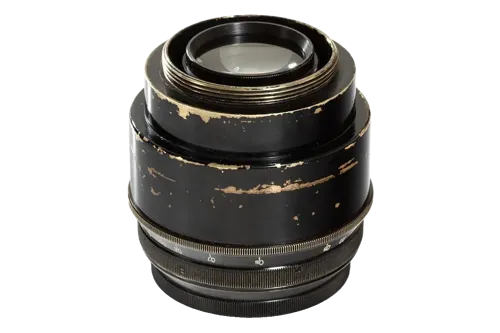
Biotar 5cm f/1.4 (LTM Non-Standard, Uncoupled)
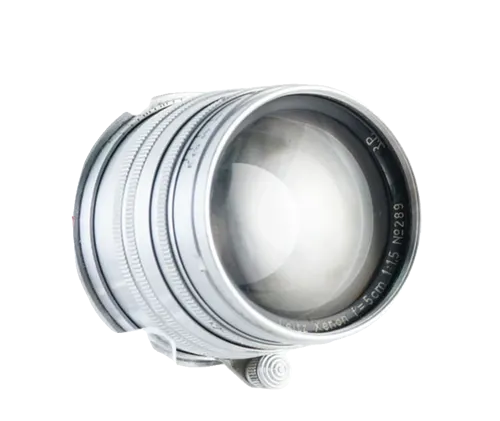
Xenon 50mm f/1.5
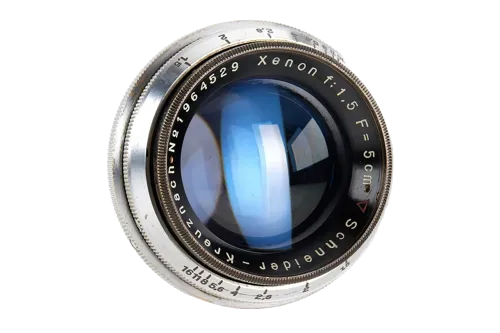
Xenon 50mm f/1.5 (Rigid)
Sonnar T 6cm f/1.5
Type S1 50mm f/1.8
Comments