Best price Official store New
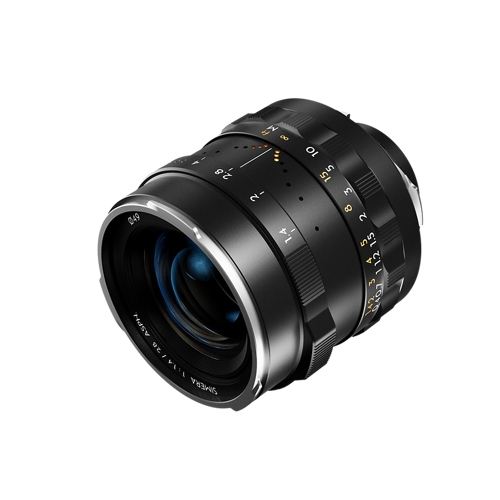
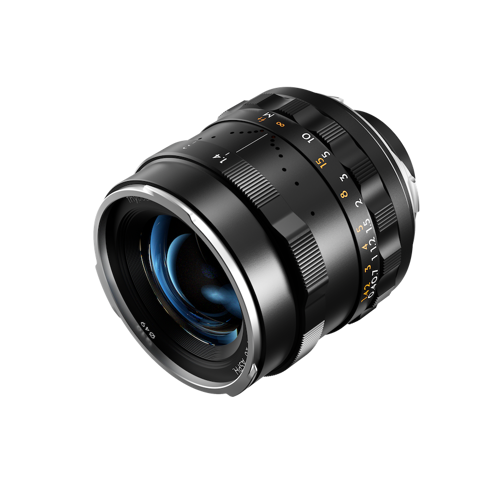
Official 7Artisans Store M 28mm f/1.4 Full-frame lens for Leica M
Sold by 7Artisans
€298 ≈ $321
Coupon code LEICALENSLIST: 5% off at 7Artisans for the 7artisans 28mm f/1.4.
Copied!
The 7artisans 28mm f/1.4 is a fast manual wide-angle in Leica M mount, notable as an affordable alternative to the 28mm Summilux for rangefinder and adapter users.
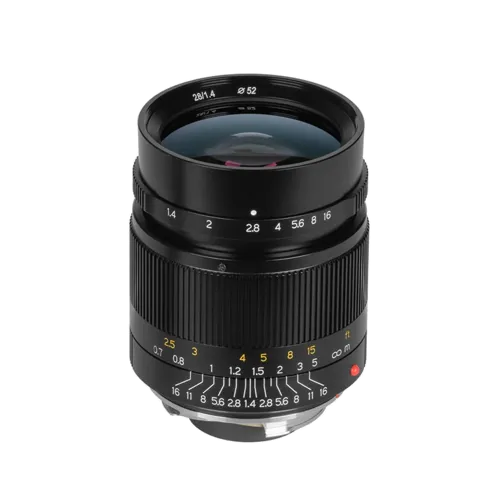
M mount
The 7artisans 28mm f/1.4 is a M-mount lens for Leica rangefinder cameras. As of October 2026, it sells from €298 used across 1 listing, with a 30-day median of €298. Leica price index →
Measured against the 37 other 28mm M-mount lenses in the catalogue.
Among the budget Chinese M-mount lenses of the late 2010s, the 7artisans 28mm f/1.4 stood out because it abandoned the simple Sonnar formulas the company had used until then. Its founder Li Qing has said the goal was a 28mm fast enough to separate it from the f/2.8 lenses and smartphone modules that share the focal length, with even performance across the frame rather than the bokeh-first priorities of a portrait lens [2]. The result was a complex 11-element, 9-group design that pairs a double-sided aspherical element with ED and high-refractive glass, a formula the company said took six months to compute on two workstations and was its first to use a double-sided asphere. For many buyers it became the cheap stand-in for Leica's own 28mm f/1.4 Summilux ASPH, which costs many times more [1].
Externally the lens borrows heavily from Leica M styling, down to a red dot and engraved, paint-filled markings, and several reviewers note it is hard to tell apart from a genuine Leica at a glance [3]. The all-metal barrel feels dense for its size, the focus ring has firm, well-damped resistance, and the 13-blade aperture uses full-stop clicks. A distinctive feature is the user-adjustable rangefinder coupling: 7artisans supplies a small screwdriver so the owner can calibrate focus to a specific body, and the brass cam can even be removed if the lens will only be used on mirrorless cameras through an adapter. The lens ships with a rectangular hood and a stick-on focus tab. Despite the M bayonet, the lens is not rangefinder-coupled in the conventional plug-and-play sense and instead relies on this self-calibration; with a 0.7 m minimum focus distance it is often paired with a close-focus helicoid adapter on Sony and other mirrorless bodies.
The most important variant point is that the lens was sold in two optical versions that look nearly identical. The standard version is optimized for Leica sensors and film, while the FE-Plus version reworks element spacing for the thicker filter stack of Sony cameras; both keep the Leica M mount and can only be told apart by a small "FE-PLUS" mark on the bayonet. The designer confirmed the difference is in the optical design, specifically the angle of incidence in the corners, not just coatings, so buyers are advised to choose the version matched to their camera. An early run also suffered an obvious ring flare wide open, which was corrected on later and all FE-Plus copies.
Rendering The lens has a fast-wide character: usable central sharpness and contrast wide open at most distances, with a documented midzone dip caused by field curvature between f/1.4 and f/2.0 that clears as the lens is stopped down. Across-frame results become good by f/2.8 and peak around f/5.6 to f/8. Bokeh is regarded as smooth for a wide-angle lens at close and half-body distances, with low cat's-eye effect and little onion-ring structure, though it can become busier at full-body portrait distances.
Contrast and color Contrast wide open is generally praised, but the lens shows a noticeable green color cast in the corners on digital sensors, similar to other fast rangefinder wide-angles.
Flare resistance Flare control on corrected copies is better than expected for the price, though backlit scenes can produce green or purple ghosts. Early non-corrected examples are prone to a pronounced ring-flare pattern wide open that largely disappears with the slightest stopping down.
Distortion and vignetting Distortion is minor and slightly wavy. Light falloff is strong wide open, around 2.5 EV, improving to roughly 1.9 EV by f/2.8.
Aberrations Lateral chromatic aberration is minor and easily corrected, while longitudinal CA and some purple fringing appear along high-contrast edges wide open. Coma is visible in the corners at f/1.4 but largely cleans up by f/2.0 and is gone by f/2.8, which some reviewers found surprisingly good for astrophotography. The lens also exhibits focus shift on stopping down, so focusing at working aperture is recommended.
Collector and user notes Opinions diverge sharply: some reviewers consider it a bargain that rivals far costlier optics, while others found their copies too soft wide open or affected by decentering and quality-control issues.
Development and Launch 7artisans, a brand whose name refers to a group of Chinese camera enthusiasts who pooled their skills after a 2015 dinner, built its early reputation on inexpensive Sonnar-type M-mount lenses. The 28mm f/1.4 marked a deliberate step up in ambition, conceived by founder Li Qing as a technically demanding wide-angle that could justify itself against smartphone cameras through its speed and shallow depth of field. The optical work was carried out with the company's partner DJ-Optical and engineer Mr. Du.
Production Evolution The lens appeared in a standard Leica-optimized form and later in an FE-Plus version reworked for Sony's filter stack, both retaining the M mount. An early production batch had a strong ring-flare problem wide open that was subsequently corrected, and the FE-Plus version added a click stop at f/11 that the earlier Leica version lacked.
Collector Notes The two versions are visually almost indistinguishable apart from the small "FE-PLUS" bayonet marking, so verifying which optical variant a copy is matters before buying, especially for film or Leica use. Centering and quality control are recurring concerns reported by users, and at least one owner reported dust ingress over time, so checking a copy's centering, flare behavior wide open, and the adjustable rangefinder cam is worthwhile. Note that LeicaLensList records this lens as not rangefinder-coupled; the barrel does carry a self-adjustable coupling cam that some users employ on M bodies, but it is not a conventional factory-coupled M lens. Accessories worth confirming include the rectangular hood and the supplied calibration screwdriver and focus tab.
About the usual price. The lowest listing is around the 30-day average.
Official-store listings are affiliate links: buying through them supports Leica Lens List at no extra cost to you.
Over the last 18 weeks the median price for the 7artisans 28mm f/1.4 has risen, ranging from €224 to €298 (now €298).
Weekly price (EUR). Median (Good or better) and lowest (Good or better) across 18 weeks. The full figures follow in the table below.
| Week | Median | Lowest |
|---|---|---|
| Jun 1, 2026 | €289 | €208 |
| Jun 8, 2026 | €289 | €208 |
| Jun 15, 2026 | €253 | €208 |
| Jun 22, 2026 | €298 | €298 |
| Jun 29, 2026 | €298 | €298 |
| Jul 6, 2026 | €298 | €298 |
| Jul 13, 2026 | €298 | €298 |
| Jul 20, 2026 | €298 | €298 |
| Jul 27, 2026 | €298 | €298 |
| Aug 3, 2026 | €298 | €298 |
| Aug 10, 2026 | €298 | €298 |
| Aug 17, 2026 | €298 | €298 |
| Aug 24, 2026 | €298 | €298 |
| Aug 31, 2026 | €298 | €298 |
| Sep 7, 2026 | €298 | €298 |
| Sep 14, 2026 | €298 | €298 |
| Sep 21, 2026 | €298 | €298 |
| Sep 28, 2026 | €298 | €298 |
Official store Official-store listings are affiliate links. Buying through one supports Leica Lens List at no extra cost to you, and never changes where a listing sits in this table.
Every shop grades differently. Leica Classic uses letters, Ffordes uses E++ and E+, German dealers write "Zustand B", Japanese dealers write A−. We map all of them onto the one ladder below. Where a shop states its own grade, we print it under ours.
As of October 2026, the 7artisans 28mm f/1.4 sells from €298 used, with a 30-day median of €298, across 1 active listing.
As of October 2026, the 7artisans 28mm f/1.4 is sold by 1 source (1 listing), from €298 used: all compared cheapest-first on this page.
Similar lenses you might be interested in
Comments