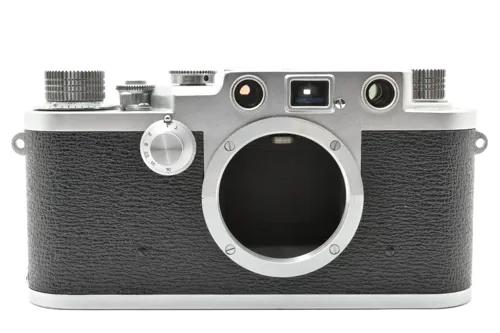
3-f
LTMNicca 3-F is a rare Japanese LTM rangefinder with Leica IIIf styling, flash sync, 50mm finder and strong collector appeal.
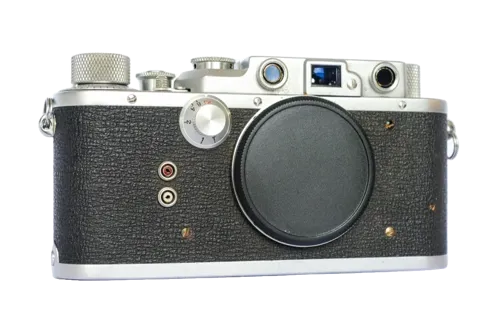
3-S
LTMNicca 3-S is a 1954 Japanese LTM rangefinder with Leica III-style body, slow speeds, flash sync and 1/500s cloth shutter.
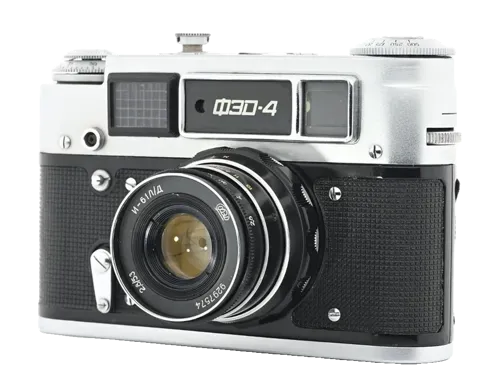
4
M39FED-4 is a Soviet M39 rangefinder camera with a selenium light meter, slow speeds to 1 second, mechanical self-timer and 1/500s cloth shutter.
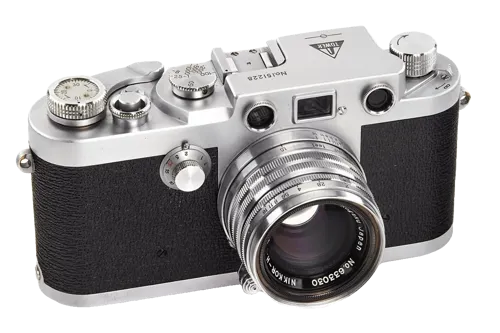
45
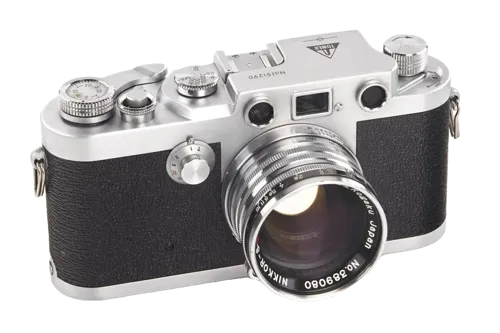
LTMTower 45 is a 1957 Sears-market LTM rangefinder built by Nicca, with lever wind, hinged loading back and a cloth shutter reaching 1/1000s.
46
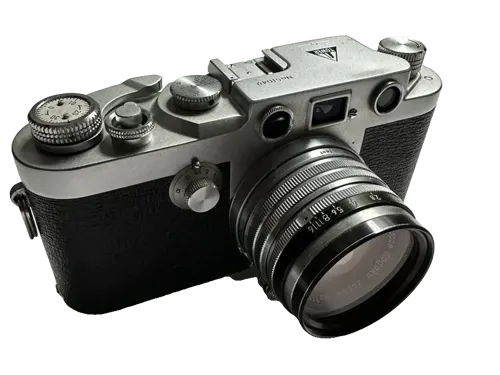
LTMTower 46 is a 1957 Sears-market Nicca LTM rangefinder, supplied with a 50mm f/1.4 Nikkor and featuring a cloth shutter to 1/1000s.
48
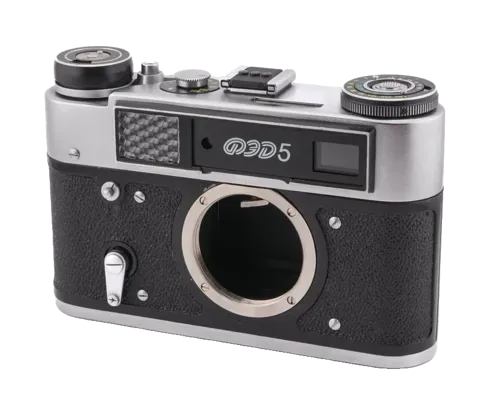
LTMTower 48 is a late-1957 Sears-market LTM rangefinder built by Nicca, with lever wind, automatic flash sync and a cloth 1/500s shutter.
5
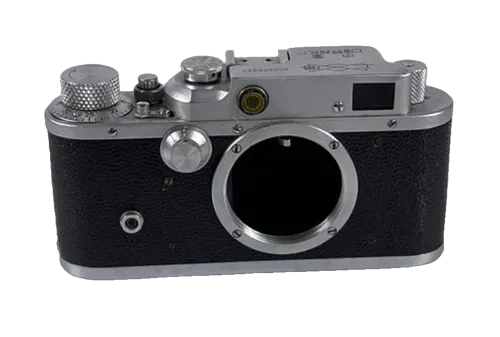
M39FED-5 is a Soviet M39 rangefinder family combining the metered FED-5, meterless FED-5V / 5B and bright-line FED-5S / 5C variants.
58-II
LTMShanghai 58-II is a Chinese LTM rangefinder camera with 39mm Leica screw mount, combined rangefinder/viewfinder and Leica-inspired body design.
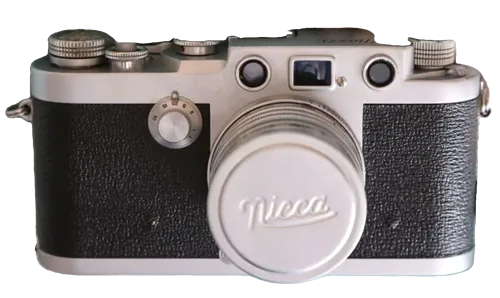
5-L
LTMNicca 5-L is a rare 1957 LTM collector camera with lever wind, hinged back, 1/1000s shutter and close ties to Tower 45 / 46.
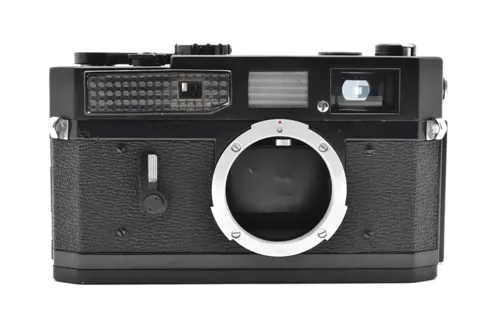
7
LTMCanon 7 is a 1961 LTM rangefinder with selenium meter, 0.8x finder, metal shutter and special bayonet for the 50mm f/0.95.
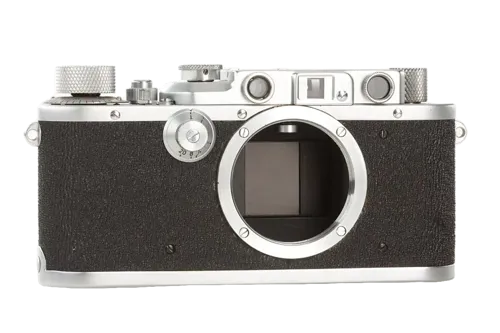
72
LTMLeica 72 is a rare half-frame LTM rangefinder with 18 × 24mm format, producing 72 exposures on a standard 35mm film roll.
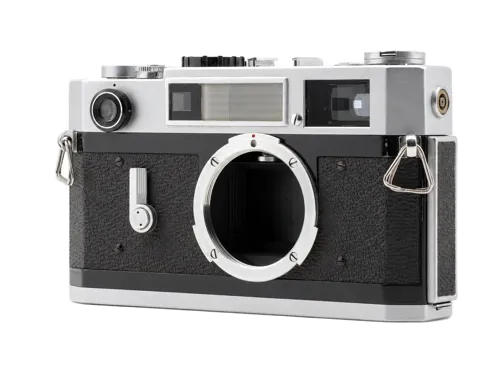
7S
LTMCanon 7S is a 1965 LTM rangefinder with CdS meter, metal 1/1000s shutter, accessory shoe, projected framelines and f/0.95 bayonet support.
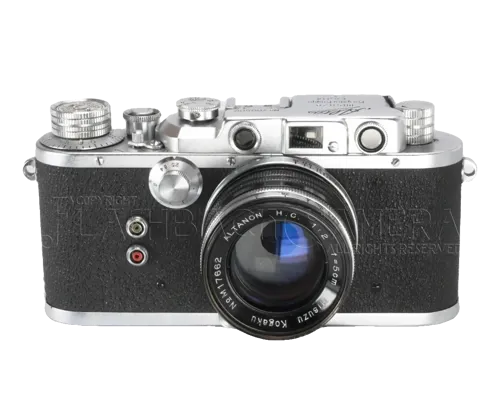
Alta 35
LTMReise Alta 35 is a rare 1957 Japanese LTM rangefinder, distributed by Misuzu Kogaku and derived from the late Chiyotax IIIF camera body.
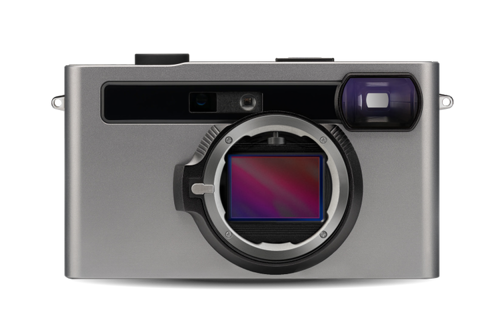
APS-C
MThe Pixii (APS-C) is the original connected digital rangefinder released by Pixii SAS. Featuring a 26-megapixel APS-C BSI sensor (Model A1571) and a unique screen-less design, it offers a distinct 1.5x crop factor shooting experience, relying on smartphone connectivity for image review and deep settings control.
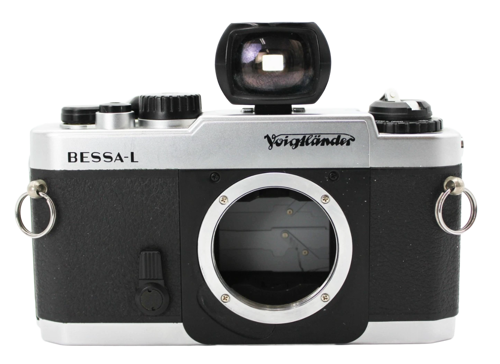
Bessa L
LTMIntroduced in 1999, the Voigtländer Bessa L is a bizarre, brilliant, and incredibly specialized 35mm film camera. It has no built-in viewfinder and no rangefinder! Instead, it is a dedicated "scale-focus" or "blind" body designed specifically to be paired with ultra-wide-angle LTM lenses and external shoe-mounted viewfinders. It was the spark that ignited the entire modern Voigtländer renaissance.