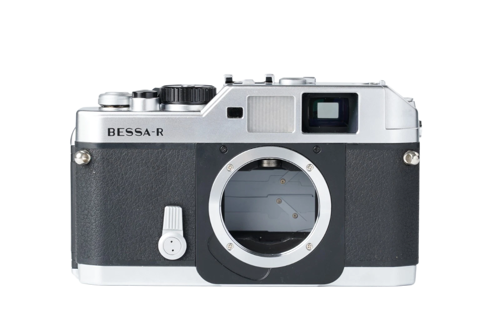
Bessa R
LTMIntroduced in 2000, the Voigtländer Bessa R was the camera that single-handedly democratized rangefinder photography for a modern audience. While we have spent a lot of time discussing M-mount cameras, the Bessa R famously utilizes the classic **M39 Leica Thread Mount (LTM)**. Featuring a spectacularly bright viewfinder, through-the-lens (TTL) metering, and a blazing fast 1/2000s mechanical shutter, it is widely considered the ultimate modern body for vintage screw-mount lenses.
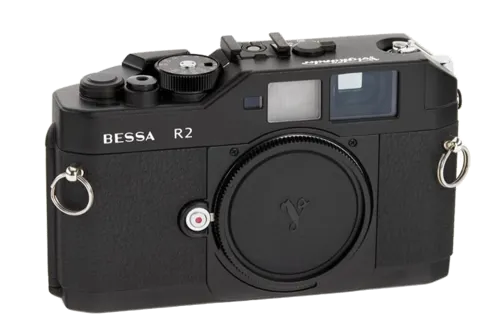
Bessa R2
MVoigtländer Bessa R2 is a 2002 M-mount film rangefinder with 0.68x finder, TTL meter, 1/2000s shutter and 35/50/75/90 framing.
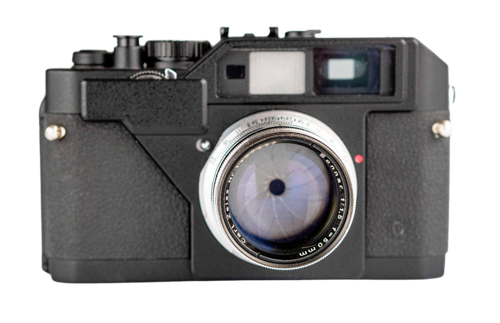
Bessa R2C
Contax RFThe Voigtlander Bessa R2C and R2S are rare, specialized rangefinder cameras released in 2002. Based on the Bessa R2 chassis, they were designed to accept historical lenses from the Contax RF system (R2C) and the Nikon S system (R2S), offering modern metering and a high-speed metal shutter for vintage glass enthusiasts.
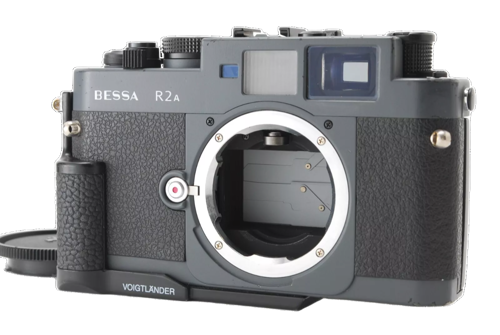
Bessa R2M/ Bessa R2A
MThe Voigtlander Bessa R2A and R2M are 35mm M-mount rangefinder cameras released by Cosina in 2004. Offering a 0.70x magnification viewfinder, the series split into two distinct models: the R2A features an electronic shutter with Aperture Priority auto-exposure, while the R2M features a fully mechanical shutter that operates without batteries.
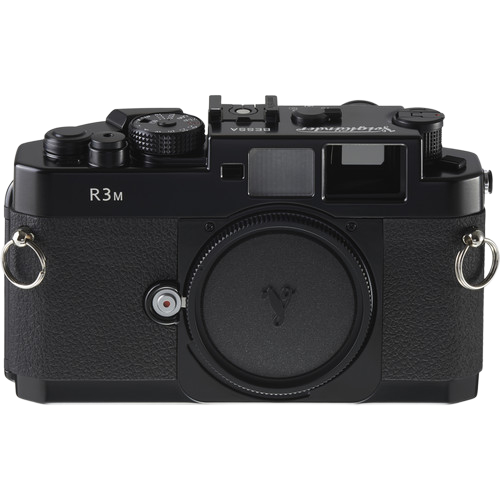
Bessa R3A / Bessa R3M
MThe Voigtlander Bessa R3A and R3M are highly specialized 35mm rangefinder cameras introduced by Cosina in the mid-2000s. They are famous for featuring a life-size 1.0x magnification viewfinder, allowing photographers to shoot with both eyes open. The R3A offers an electronic shutter with Aperture Priority, while the R3M features a fully mechanical shutter.
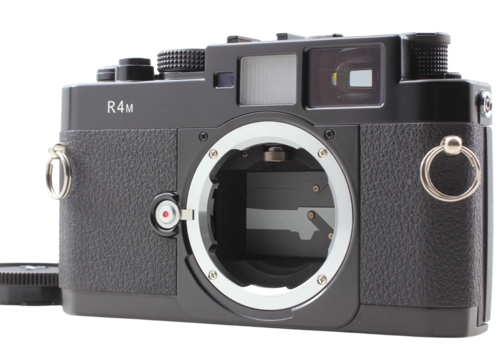
Bessa R4A / Bessa R4M
MThe Voigtlander Bessa R4A and R4M are highly specialized 35mm M-mount rangefinder cameras released by Cosina in 2007. They hold a unique place in photographic history as the only interchangeable-lens rangefinders ever produced with a built-in viewfinder capable of natively displaying framelines for ultra-wide 21mm and 25mm lenses, eliminating the need for external shoe-mounted finders.
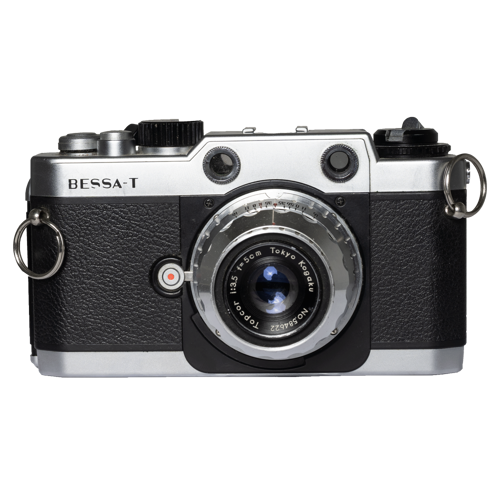
Bessa T
MThe Voigtlander Bessa T is a unique 35mm rangefinder camera released in 2001. Designed by Cosina, it features a built-in high-magnification rangefinder but lacks an integrated viewfinder, requiring external viewfinders for composition. It served as a platform for ultra-wide lenses and marked the revival of the Voigtlander brand.
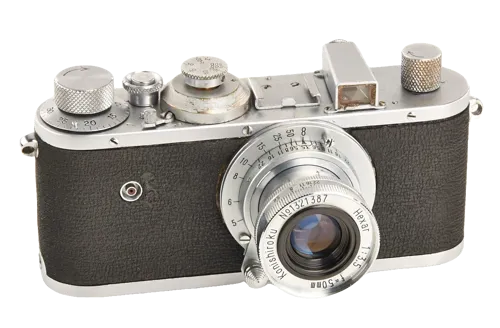
Chiyoca 35
LTMReise Chiyoca 35 is a scarce 1951 Japanese LTM viewfinder camera, styled after the Leica Standard and usually paired with a 50mm Hexar.
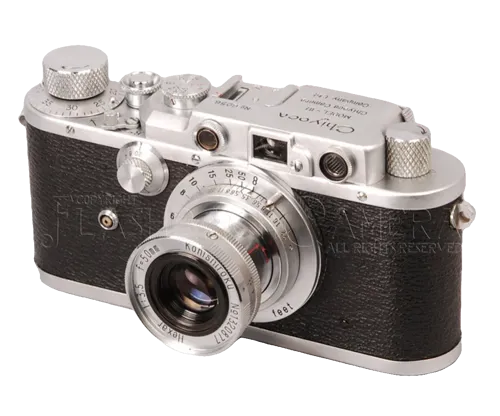
Chiyoca IIF
LTMReise Chiyoca IIF is a rare 1953 Japanese LTM rangefinder with coupled focusing, cloth shutter and early two-post flash synchronization.
Chiyotax IIF
LTMReise Chiyotax IIF is a scarce 1954 LTM rangefinder with coupled focusing, slow speeds to one second and a short early production run.
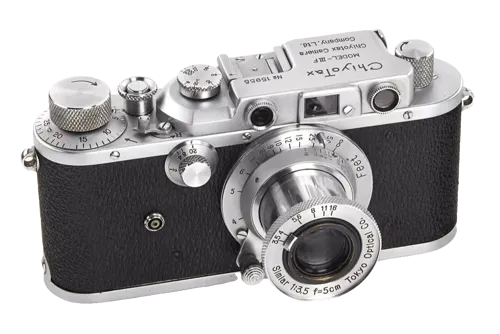
Chiyotax IIIF
LTMReise Chiyotax IIIF is a scarce 1955 Japanese LTM rangefinder with slow speeds, cloth shutter and important Leica-copy collector variants.
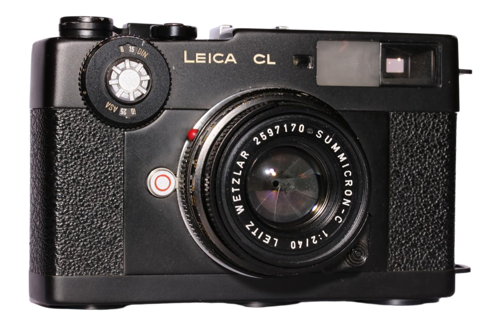
CL
MThe Leica CL is a compact 35mm film rangefinder released in 1973. Developed in collaboration with Minolta, it was designed as a smaller, lighter, and more affordable alternative to the Leica M5. It features a unique vertically traveling shutter, TTL metering, and was the first camera to popularize the 40mm focal length in the M-system.
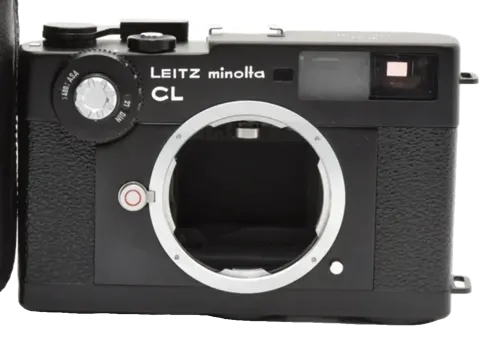
CL
MMinolta CL is a compact M-mount film rangefinder related to the Leica CL, with TTL metering, 40/50/90 framelines and 1/1000s shutter.
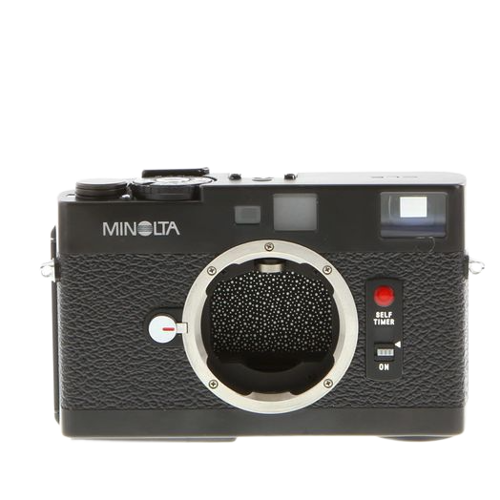
CLE
MThe Minolta CLE is an advanced 35mm rangefinder released in 1980. As the spiritual successor to the Leica CL, it was the first M-mount camera to feature Aperture Priority Auto Exposure (AE) and Through-The-Lens (TTL) flash metering, technological milestones that Leica would not replicate for nearly two decades.
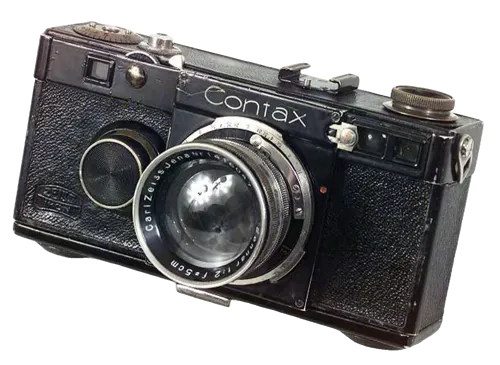
Contax I
Contax RFThe Zeiss Ikon Contax I is a 1932 Contax RF camera with a metal focal-plane shutter, long-base rangefinder and major collector significance.